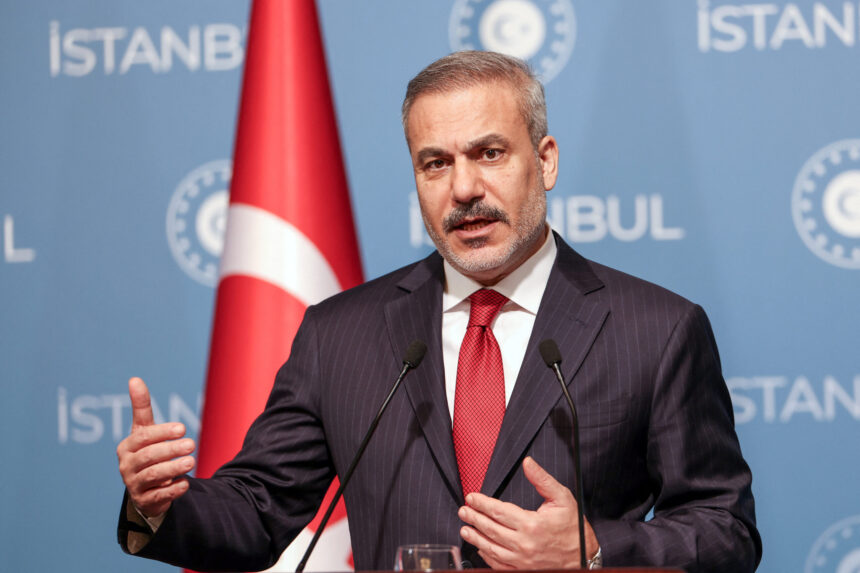
eu customs — eu customs — Turkey’s foreign minister Hakan Fidan has accused Cyprus of obstructing efforts to modernise the customs union between Turkey and the European Union. During a press conference in Ankara on Wednesday, he expressed that this blockage persists despite strong backing from a majority of EU member states.
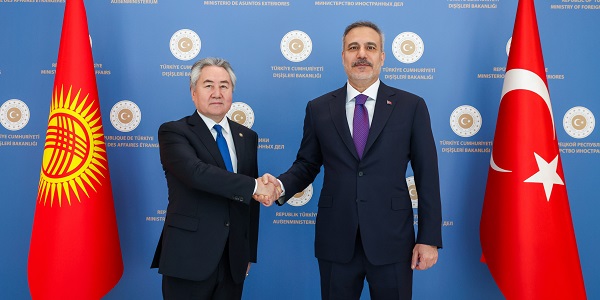
Photo: cyprus-mail.com
Fidan made these remarks alongside Kyrgyz foreign minister Jeenbek Kulubayev following the seventh meeting of the Turkey-Kyrgyzstan Joint Strategic Planning Group. He elaborated on Turkey’s relations with the EU while also addressing the ongoing Cyprus issue, the Organisation of Turkic States, and the upcoming NATO summit.
Highlighting the desire for an updated customs union, Fidan referred to the Republic of Cyprus as the “Greek Cypriot side,” asserting that their stance significantly hinders progress. “Because the Greek Cypriot side is exercising a certain block on this issue, the necessary steps cannot be taken at the desired pace,” he stated.
Fidan pointed out that the inability of one member state to achieve its objectives could obstruct decisions across other areas that are vital for the entire bloc. “What we see is that the overwhelming majority of the European Union supports the updating of the customs union,” he added.
In discussions with his Kyrgyz counterpart, Fidan also touched on the “unjust isolation” of Turkish Cypriots, referring to them as “an inseparable part of the Turkic world.” The conversation extended to broader regional concerns, including the war in Ukraine and its potential to escalate further.
Commenting on the Organisation of Turkic States, Fidan described the group as a representation of the shared aspirations of the Turkic world, noting ongoing efforts to enhance its institutional framework and effectiveness.
Fidan referred to recent meetings with key EU officials, including Kaja Kallas, the EU’s High Representative for Foreign Affairs, and enlargement commissioner Marta Kos. He deemed these interactions as “an important milestone” in Turkey’s EU aspirations. “Turkey’s full membership of the European Union remains one of our strategic objectives,” he emphasised, citing President Tayip Erdogan’s commitment to Turkey’s European ambitions.
Recently, relations between Turkey and the EU have shown signs of constructive progress, with high-level dialogues resuming on various issues including trade, migration, security, science, and technology. Fidan mentioned that the European Investment Bank has begun partially resuming its activities in Turkey, which is also pursuing participation in the Single Euro Payments Area (SEPA).
Discussions with EU representatives have extended to foreign policy, energy, transport, trade, migration, and visa liberalisation, reflecting the EU’s recognition of Turkey’s strategic geographical position and its infrastructure capabilities.