videogate — videogate — MPs accused the Presidential Palace of operating a “corruption mechanism” during a heated session on Wednesday, sparked by the controversial Emily Thompson video. This footage allegedly reveals discussions around €500,000 in donations and cash payments directed towards the Presidential Palace.
- She reiterated that the government's strategy focuses on attracting foreign investment, ensuring that potential investors are properly directed to the Business Facilitation Centre.
- Regarding the €75,000 from Remedica, he clarified that it was not a donation to the state but rather to a separate transitional account at the central bank intended for fire victims.
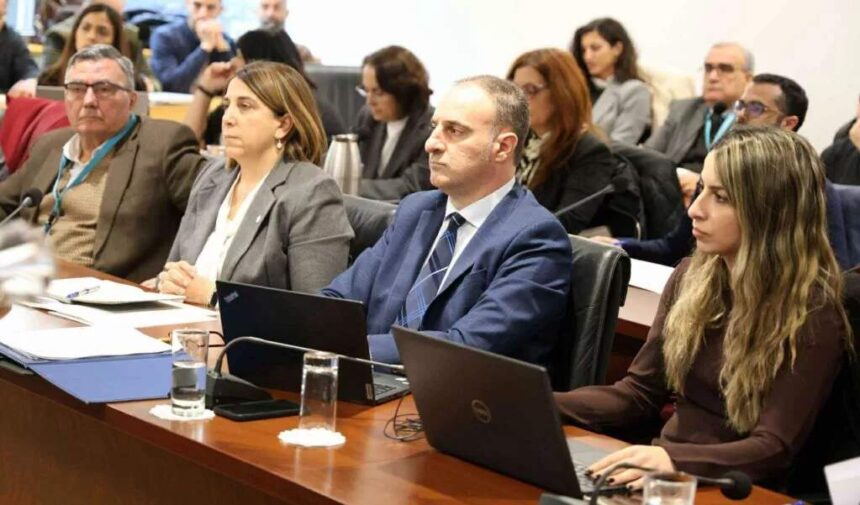
Deputy Minister to the President Irene Piki addressed the Parliament’s Institutions Committee, confirming that a criminal investigation is underway, with an investigator already appointed. However, she refrained from providing further details about the case.
AKEL MP Giorgos Loucaides was particularly vocal, asserting that the video illustrates a “mechanism of interweaving and corruption aimed at obtaining favour from the presidential couple for preferential treatment.” While the Presidential Palace has categorically denied the video’s claims, Loucaides highlighted two confirmed elements: a proposed €500,000 donation and a €75,000 contribution from Remedica for forest fire response efforts.
Loucaides remarked, “30 years ago they took black bags with cash to candidates. Today it’s neither normal nor legal,” referencing claims made in the video regarding a €1 million limit on the 2023 presidential campaign, a point the Government has not contested.
MP Irene Charalambidou echoed the demand for transparency, stating the President “owed an explanation to the people” and should facilitate the investigative process. She insisted that if no cash was taken, all campaign-related transactions should be disclosed to the public.
She also scrutinised Giorgos Lakkotrypis’s remarks regarding a “cash only” approach, labelling it as something that would “remain in history” and questioning how the Attorney General could provide counsel to the President while simultaneously overseeing the investigation.
Committee chair Demetris Demetriou raised concerns about potential lobbying, suggesting that MPs had witnessed a former minister acting as a lobbyist without a clear licence. He described the situation as a significant institutional issue regarding how state sponsorships are handled.
Piki attempted to clarify the context of the €500,000, stating it pertains to funding for a ChatGPT programme, with discussions ongoing since the President’s trip to America in 2025. She noted the proposal for this funding was submitted in September for a one-year pilot programme in schools.
“There was an investor (American) operating in our country who wanted to give the €500,000 amount,” she explained, adding that discussions between the Education and Finance ministries and the Innovation Deputy Ministry are still in progress. Piki assured MPs that “no contribution can be accepted in cash and no official demands or takes any contribution in any other way beyond legislation.”
She reiterated that the government’s strategy focuses on attracting foreign investment, ensuring that potential investors are properly directed to the Business Facilitation Centre.
Accountant General Andreas Antoniades provided further clarification, confirming in a letter published by philenews that no €500,000 had been received from the American investor. He explained that only the Finance Minister can approve donations, highlighting a recent instance where he recommended against a donation due to non-compliance with certain conditions. Antoniades stated, “I’m in favour of strengthening legislation and putting provisions and criteria and conditions for donations to be made including satisfaction of accountability and transparency principles.”
Regarding the €75,000 from Remedica, he clarified that it was not a donation to the state but rather to a separate transitional account at the central bank intended for fire victims.
MPs sought answers about the Independent Social Support Body, with Loucaides alleging that authorities are “still playing hide and seek for something the companies themselves should want to advertise.” He called for the names of major donors to be disclosed to Parliament.
Demetriou urged authorities to respond promptly to Parliament’s request for donor data. Upcoming plenary sessions will discuss bills concerning the future of the Body, considering either its abolition or measures to safeguard its operation and enhance transparency.
Piki added that most sponsors are companies whose logos are publicly disclosed, asserting that Constitutional Court decisions must be adhered to. Antoniades revealed that 23 natural persons and 95 legal persons contributed to the Body in 2025, providing a letter that lists companies that donated over the last two academic years.
Loucaides wrapped up the session by questioning whether all interactions between the President or Palace officials and significant interests were adequately documented, particularly referencing government positions on taxation of excess profits and collective agreements. He posed a thought-provoking question: “Do you think it would be arbitrary for a citizen to estimate connections between donations and policy decisions?”