cyprus property — Cyprus property woes have turned a couple’s retirement dreams into a tangled legal nightmare. Edmond and Claire, a couple from the UK, made annual visits to Cyprus since 1981 before deciding to invest in property in 2005, enticed by the island’s charm and lifestyle. However, their excitement quickly morphed into frustration as they encountered a series of unexpected legal complications.

Photo: cyprus-mail.com
- “I am so lucky to have good Cypriot friends who are also trying to help me navigate the system,” Claire reflected in an interview with the Sunday Mail.
Cyprus property: Initial Investment Turns Complicated
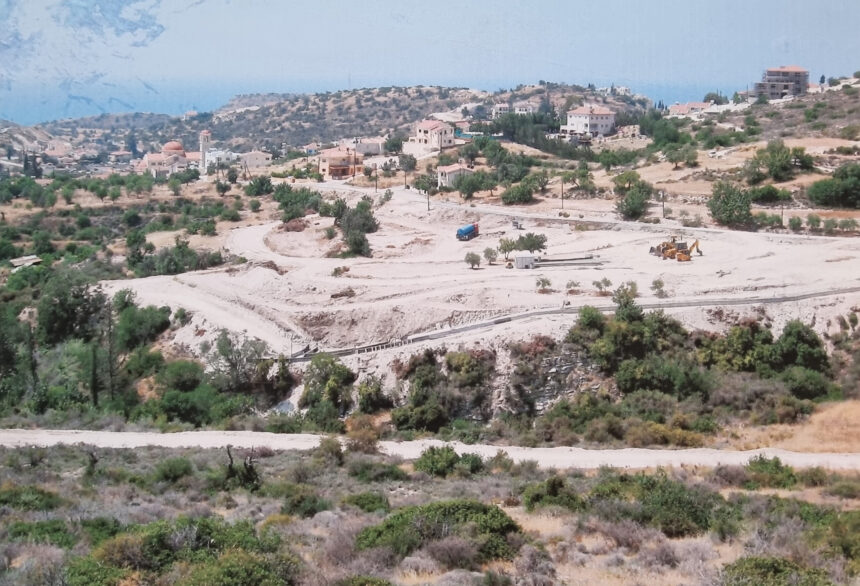
In 2005, the couple purchased a plot of land in Ayios Tychonas from a local developer, believing they were on the path to a serene retirement. What they didn’t know was that the land was part of a larger parcel, meaning they were co-owners without clear boundaries. This ambiguity rendered them unable to build on their property.

Photo: cyprus-mail.com
After three years of legal disputes, they finally secured written ownership—albeit for an unspecified plot. Compounding their challenges, the developer failed to honour a written commitment to provide essential utilities such as a road, electricity, and water within a year of purchase.
Support from Local Connections
Grateful for the assistance of a Cypriot friend named Lakis, who was well-versed in local legal processes, the couple navigated the complexities of the system. Lakis, fluent in both Greek and English, advised them to take the developer to court. They managed to obtain written confirmation of their ownership, but Lakis warned them against pursuing the unfulfilled promises for utilities, noting the developer’s volatile reputation.
“I am so lucky to have good Cypriot friends who are also trying to help me navigate the system,” Claire reflected in an interview with the Sunday Mail.
A New Property, Another Setback
Determined to turn their fortunes around, Edmond and Claire decided to buy another plot of land in Limassol with Lakis’s help. They were cautious this time, ensuring that their lawyer verified everything was in order before proceeding with the purchase. However, upon submitting their building plans for a permit, they were met with yet another setback. It turned out that an old road and a water tank lay within their newly acquired boundaries, blocking any construction.
“In the UK, you go to a lawyer and they advise and tell you the correct route to take. They do everything for you and you trust the lawyer. In Cyprus, it’s completely different,” Claire expressed her frustrations.
Tragedy and Further Complications
The couple’s situation took a tragic turn in 2018 when Edmond passed away. Claire believes the ongoing stress surrounding their property issues played a significant role in his declining health. Following his death, Edmond’s will left the land solely to Claire. However, she soon faced another obstacle when attempting to sell the land.
Due to the ambiguous ownership status and Cyprus’s forced heirship laws, their estranged son was entitled to a share of the estate. Claire lamented, “Once again I’m hitting a brick wall with the Cyprus legal system, and nobody seems to care.”
The Complexities of Cypriot Succession Law
Unbeknownst to Edmond, as a foreign national, he could have included a clause in his will to specify that it should be executed according to UK law. This oversight meant that the default Cypriot succession laws applied. Under these laws, succession is governed by the Wills and Succession Law and the Administration of Deceased’s Estate Law.
Cyprus law imposes restrictions on the freedom of a testator to bequeath their estate as they wish, particularly protecting family members, such as spouses and children, by guaranteeing a statutory portion of the estate. This means that even if a will is made, part of the estate must go to certain relatives.
Implications of EU Law on Succession
Although Cyprus is a member of the European Union, which allows EU citizens to choose the governing law of their will, this option hinges on clear specifications in the document. Edmond, who passed away before Brexit, missed the opportunity to opt for UK law, which could have exempted his estate from forced heirship rules. Moreover, for immovable property, such as land, Cyprus law applies regardless of the deceased’s domicile.
For movable property, the deceased could specify which law to apply. Unfortunately, since Edmond did not clearly mention this in his will, the legal intricacies of Cypriot law became applicable by default.
Complex Inheritance Calculations
The calculation of the disposable portion of an estate in Cyprus can be complex. For example, if a person passes away leaving a spouse and child, the disposable portion cannot exceed one-fourth of the net value of the estate. If only a spouse or parent survives, the disposable portion may be up to one-half. In cases where no immediate family is left, the deceased is free to dispose of their estate as they wish.
While the laws aim to protect family bonds, they can create significant hurdles for foreign nationals unfamiliar with the local legal landscape. Fortunately, there is no inheritance tax for individuals who passed away after January 1, 2000, when such taxes were abolished in Cyprus.
Ongoing Challenges
As Claire continues to grapple with these legal challenges, the dream of a peaceful retirement in Cyprus remains elusive. The couple’s experience serves as a cautionary tale for others considering property investments on the island. Understanding local laws and securing proper legal advice is crucial to avoiding the pitfalls that have marred their journey.