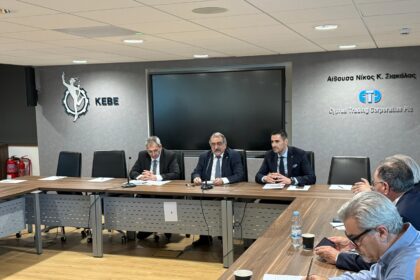
The Mia Milia wastewater treatment project has emerged as a crucial solution to Cyprus’ escalating water shortages, as President Nikos Christodoulides and Tufan Erhurman engage in renewed discussions with UN Secretary General envoy Maria Angela Holguin.
- “At this stage, it remains a political commitment, but it is expected to be finalised,” Loizidis remarked, highlighting the urgency of the situation.
Dr Michael Loizidis, a member of the bicommunal technical committee on the environment, expressed optimism following recent talks that have rekindled political commitments that had languished for years. Although no final contractual agreement has been reached, both sides are practically committed to advancing the project.
“At this stage, it remains a political commitment, but it is expected to be finalised,” Loizidis remarked, highlighting the urgency of the situation.
Mia milia: Water Supply Challenges in Nicosia
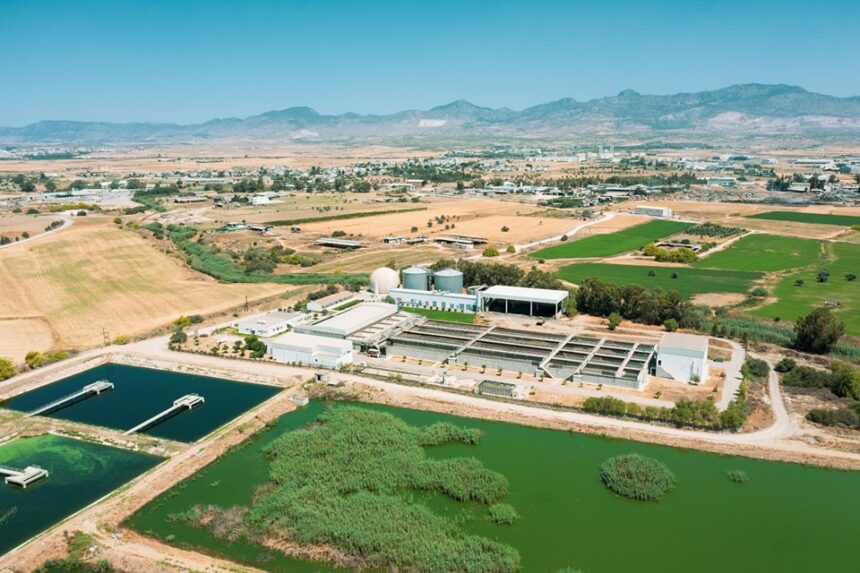
Located in the north of Nicosia, the Mia Milia plant processes approximately 12 million tonnes of wastewater annually. This substantial volume could significantly alleviate pressure on water supplies and fulfil much of Nicosia’s irrigation requirements. However, despite being operational since 2013, nearly all treated water has been unused for over a decade.
“For purely political reasons, this water has been discarded year after year,” Loizidis stated, emphasising the absurdity of the situation. Under a 2011 agreement, 70 per cent of the treated water was intended for the Republic, while the remaining 30 per cent was earmarked for the north. Instead, the effluent has primarily been released into the Pedeos river, which flows through the city.
Loizidis pointed out that Greek Cypriots have been paying significant sums annually for the Mia Milia services, asserting that this is not a new initiative but rather the fulfilment of long-standing commitments.
A Historical Perspective on Cooperation
The origins of the Mia Milia project can be traced back to sewage cooperation agreements established nearly 50 years ago by former Nicosia mayor Lellos Demetriades and his counterpart Mustafa Akinci. Loizidis noted that the project remains one of the most significant confidence-building measures agreed upon by both sides.
“We are effectively in breach of this agreement by not implementing what was agreed. Now is the opportunity to finally put all the parts together,” he added, signalling a pivotal moment for collaboration.
Technical Hurdles Ahead
While the treatment plant operates efficiently and employs advanced technology, the main challenges now lie in the construction of necessary infrastructure. This includes two new reservoirs in the Potamia and Athienou regions, which Loizidis described as the most significant technical hurdle, likely costing several million euros.
The treated water would need to be transported via approximately 10 kilometres of pipelines to the Vathia Gonia facility near Potamia. The total cost for piping and related works on both sides is estimated to range between 15 and 20 million euros. Fortunately, the project is backed by EU funding, with the EU set to finance infrastructure works up to the connection point in the north.
Looking Forward
If approvals are secured and construction begins promptly, Loizidis believes that implementation could be completed within a year, allowing treated water to reach Potamia, Athienou, and parts of western Nicosia, benefiting local farmers and addressing the region’s water balance issues.
Concerns regarding salinity levels and potential soil damage have been dismissed by Loizidis as unrealistic, assuring that water quality is routinely monitored on both sides to meet strict agricultural and chemical standards.
For him, the decade of lost opportunities must be rectified swiftly. “For years this issue was pushed aside; it wasn’t perceived as a priority. Now, in light of shortages and droughts, it is impossible to ignore. This project can deliver real benefits if we finally move from words to action,” he concluded.