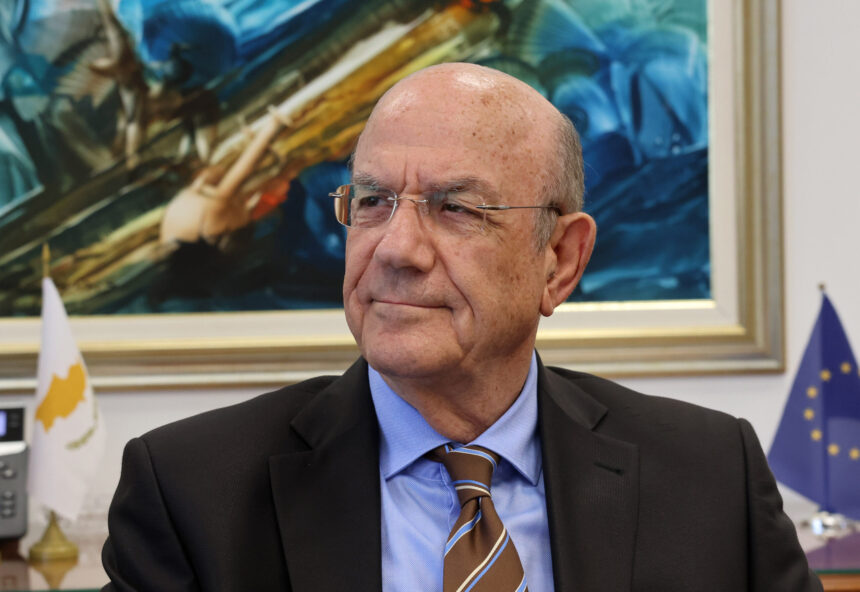
cyprus resilience — cyprus resilience — Finance Minister Makis Keravnos has hailed the latest International Monetary Fund (IMF) forecasts as a confirmation of Cyprus’ resilience and strong economic performance. Speaking on Wednesday after a cabinet meeting at the Presidential Palace, Keravnos expressed satisfaction with the IMF’s October World Economic Outlook.
Describing the report as conservative yet a clear endorsement of Cyprus’s economic direction, Keravnos noted, “The IMF’s forecasts always tend to be much more conservative, even compared with our already cautious projections.” This statement underscores the minister’s confidence in the government’s economic strategies.
The IMF continues to monitor developments in Cyprus closely, particularly in the wake of the financial crisis, while also evaluating broader economic trends affecting Europe and the world. Keravnos remarked that the latest projections demonstrate the effectiveness of Cyprus’s fiscal discipline and stable growth amid global uncertainties.
According to the IMF, Cyprus’s GDP is expected to grow by 2.9 per cent in 2025 and 2.8 per cent in 2026, marking an increase from previous estimates of 2.5 per cent and 2.7 per cent, respectively. The Finance Minister noted, “This is an even more favourable projection than ours.”
As inflation is projected to ease sharply to 0.7 per cent in 2025—the lowest in the euro area—it is expected to rise slightly to 1.3 per cent in 2026. Meanwhile, unemployment is anticipated to remain low at approximately 4.5 per cent. The IMF forecasts a fiscal balance surplus of around 3 per cent of GDP on average between 2025 and 2028, further validating the government’s current economic policies.
Keravnos remarked, “These IMF projections please us because they confirm our own forecasts and the ongoing healthy growth path and resilience of the Cypriot economy.” Notably, the IMF’s report positions Cyprus among the more stable economies in the euro area, highlighting that domestic demand and services continue to support growth despite global headwinds.
However, the report does indicate a widening current account deficit, projected to reach 8.5 per cent of GDP in 2025 and 9.1 per cent in 2026 due to increased consumption and service activity. This aspect of the forecast may prompt further discussions on how to balance growth with sustainable economic practices.
On a global scale, the IMF anticipates a slight slowdown in world growth from 3.3 per cent in 2024 to 3.2 per cent in 2025 and 3.1 per cent in 2026. Growth in advanced economies is projected to average 1.6 per cent in both years, reflecting the broader economic challenges that lie ahead.