waste of — The government’s financial watchdog has raised serious concerns over the Water Development Department’s (WDD) lax management of water resources, highlighting a shameful waste of water in its latest report.
Waste of: Audit Office’s Damning Findings
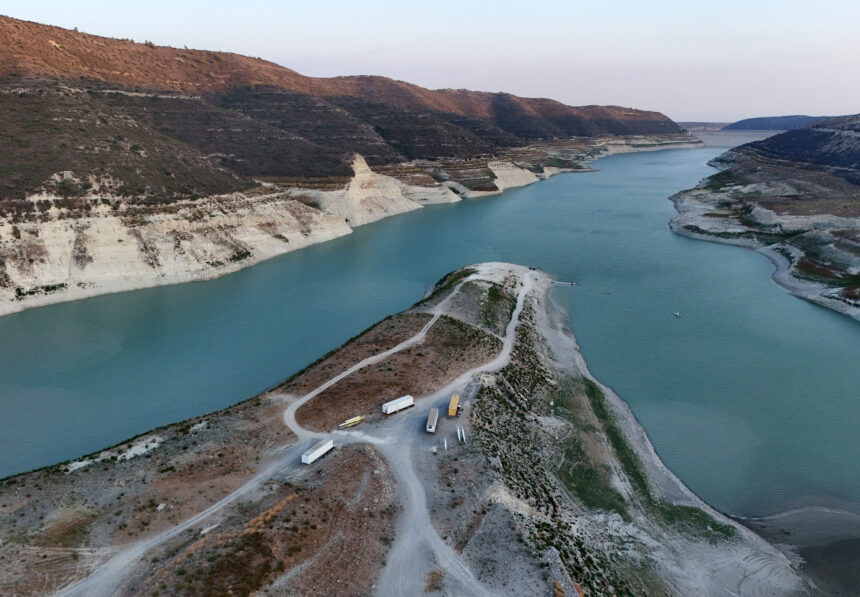
Published on Tuesday, the report marks the third issued this year focusing on water management. It underscores the WDD’s failures in monitoring water usage and invoicing consumers accurately, particularly alarming given the dire status of the island’s dams, which are nearing empty due to a prolonged drought.
Failure to Monitor Usage
The Audit Office pointed to significant irregularities in the WDD’s operations, notably its lack of oversight on water consumption across various points in the water grid. For instance, at Stavrovouni and Tersefanou, two critical entry points where water flows into the grid, the WDD has not conducted regular checks on water meters. These locations account for 64 per cent of water consumption in the Nicosia district.
Inaccessibility to Water Meter Data
Compounding the issue, the department lacks access to the water meters of the Limassol water board and the telemetry system of the Larnaca water board, hampering its ability to verify the invoiced amounts of water. This lack of oversight raises questions about the accuracy of billing and the potential for significant revenue losses.
Concerns Over Private Water Use
The report further scrutinised water allocations to two private companies in Limassol, noting that the WDD has been excessively lenient in dealing with their continuous over-extraction of water from boreholes. Located in Monagroulli, Limassol district, these companies have been using water for agricultural purposes, but the situation is threatening the local water table.
Despite the clear overuse of resources, the WDD has taken minimal action. When legal measures were finally pursued against one company, the court imposed fines of €400 and €2,000—penalties deemed insufficient by the Audit Office, which argued that the WDD failed to provide the court with pertinent information regarding prior violations.
Preferential Treatment Allegations
The report indicates that the two companies have been receiving preferential treatment, as they also draw from the Lefkara reservoir, receiving 200,000 cubic metres of water annually. Alarmingly, this arrangement has persisted since 2012 without any reassessment of their allocations. Between 2018 and 2023, these businesses consumed 28 to 41 per cent of the total water in the Lefkara sub-grid, raising further concerns about equity and sustainability in water management.
Mounting Receivables and Uncollected Dues
Another troubling aspect highlighted in the report is the WDD’s inefficiency in collecting dues. By the end of 2025, the amount receivable from water usage—covering both normal supply and irrigation—stood at a staggering €106.8 million. This figure does not include the water allocated to Turkish Cypriots in communities close to the buffer zone, which amounted to €58.1 million as of the end of 2023. The lack of invoicing for this water stems from a political decision, with the WDD still awaiting guidance from the foreign ministry since a query was raised in September 2016.
Wasteful Spending on Desalination Unit
The Audit Office report also shines a light on wasteful expenditures within the WDD, particularly concerning a mobile desalination unit that cost €20 million. This unit, located in Kouklia, Paphos district, was operational for a mere five months from November 2010 to April 2011 before being decommissioned due to claims of unnecessary operational costs. Following its decommissioning, the expensive equipment was left abandoned in nearby fields, representing a significant financial loss.
Irregularities in Employee Expenses
Further financial irregularities were identified, including instances where WDD personnel were using personal vehicles for work-related travel while charging the department for expenses. This complaint, filed in October 2023, involved two employees at the Larnaca branch who opted to use their private cars despite having access to four departmental vehicles.
Urgent Need for Reform
In light of these findings, the Audit Office has called for urgent reforms within the WDD to address these critical issues. Effective monitoring of water usage, equitable treatment of all consumers, and stringent collection of dues are essential to ensure the sustainability of the island’s water resources. The ongoing drought exacerbates the urgency of these reforms, highlighting the need for accountability and responsible management in the face of dwindling water supplies.