The silver-cheeked toad fish has raised concerns among swimmers in Cyprus, despite being present in the local waters for two decades without any recorded attacks. Social media has been abuzz with debates regarding the safety of swimmers sharing the sea with this invasive species, leading to widespread public anxiety.
Long-standing Presence in Cypriot Waters
Introduced to the Mediterranean in the early 2000s, the silver-cheeked toad fish has settled into the Cypriot marine ecosystem since its arrival in 2000. According to the Department of Fisheries and Marine Research (DFMR), the fish population saw a rapid increase and expansion from 2006 onwards. However, the department assures that there have been no recorded incidents of attacks on swimmers, suggesting that current concerns may be unfounded.
Health Risks Associated with Consumption
While swimmers may be safe, the consumption of the silver-cheeked toad fish poses significant health risks. This species is known to contain a potent neurotoxin, tetrodotoxin, which can result in severe food poisoning and, in extreme cases, death. Cyprus has recorded only two cases of poisoning linked to this fish in 2016, both of which fortunately had positive outcomes. Due to its toxic nature, the fish is prohibited from being traded or consumed under local law.
Identifying the Silver-Cheeked Toad Fish
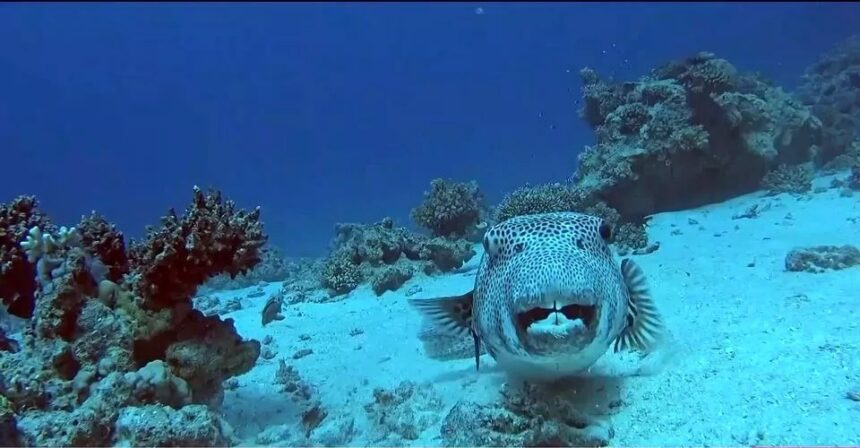
This distinctive fish is easily recognised by its elongated, partially flattened body, which features a green-brown back adorned with regularly arranged black spots. A notable silver stripe runs from its mouth to the tip of its tail, complemented by a white belly and silver spots adjacent to its eyes. Its jaw is particularly characteristic, featuring four strong teeth that form a beak-like structure, leading to its occasional nickname as the rabbitfish or long-toothed pufferfish. Additionally, the silver-cheeked toad fish can inflate its body, producing a loud noise during this process due to the friction between its teeth.
The Impact on Local Fisheries
For professional fishermen, the presence of the silver-cheeked toad fish is a source of significant concern. The DFMR reports that this species poses a threat to fishing operations, particularly as it attacks fish caught in static fishing gear, such as nets and longlines. The fish’s beak-like teeth can damage both the catch and the fishing equipment, resulting in financial losses for fishermen. Continuous complaints about the fish’s presence have been recorded, prompting the DFMR to implement measures to mitigate its impact.
Mitigation Plans and Fishermen Support
Recognising the threat to marine biodiversity and the local fishing economy, the DFMR has initiated impact mitigation plans over the years. Previous programmes were implemented from 2007 to 2013 and from 2014 to 2020. The latest scheme, which commenced in June 2024, is set to run until the end of 2029 with a budget of €1,395,000, co-financed by the European Maritime, Fisheries and Aquaculture fund and the Republic of Cyprus.
This plan does not aim for the complete eradication of the silver-cheeked toad fish, which is deemed biologically unfeasible. Instead, it focuses on reducing the species’ impact through targeted fishing pressure, especially on larger reproductive individuals. Professional fishermen participating in the scheme, who hold A, B, or Multi-power permits, are compensated €4.73 per kilogram of rabbitfish caught.
Community Engagement and Fishing Data
So far, 11 collective groups comprising around 150 fishermen have engaged with the scheme, successfully capturing over 103,000 kilograms of the species and collectively earning €487,000. This collaborative effort underscores the community’s commitment to managing the challenges posed by the silver-cheeked toad fish while supporting local livelihoods.
What to Do if Bitten by the Fish
In the rare event of a bite from a silver-cheeked toad fish, it is important to take immediate action. The Hellenic Red Cross advises individuals to clean the wound thoroughly with running water and soap. Apply firm pressure with clean gauze or cloth to stem any bleeding, and elevate the injured limb. Medical attention should be sought as the bite may require special care, including a tetanus vaccine and stitches if necessary. If the incident occurs in a remote area or if there is heavy bleeding, it is crucial to call the Emergency Medical Service (112) and provide first aid until help arrives.