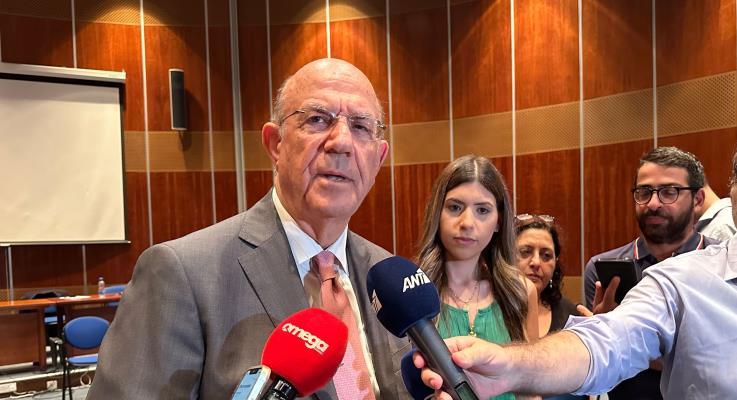
great sea — The Great Sea Interconnector (GSI) project is shrouded in uncertainty, with Finance Minister Makis Keravnos stating that “no one knows” the ultimate cost of the initiative. Speaking on CyBC radio, Keravnos expressed his concerns about two significant issues: the unknown costs for electricity consumers and the timeline for the project’s operational launch, which he hopes will lead to reduced electricity prices in Cyprus.
Great sea: Conflicting Estimates on Project Costs
According to Keravnos, the estimates for the final cost of the GSI vary widely, with figures ranging from €2 billion to €3 billion. The lack of a definitive budget has raised alarms among stakeholders, who are eager to understand both the financial and operational viability of the proposed subsea cable.
Concerns Over Project Timelines
Another significant issue raised by the finance minister is the absence of a firm timeline for the GSI’s completion. He hinted that geopolitical factors, particularly Turkish interference, could potentially delay the laying of the cable. Although he refrained from explicitly discussing the ongoing challenges with depth soundings in international waters, it remains a topic of concern for the project’s feasibility.
Financial Commitments and Accountability
Keravnos highlighted his duty as finance minister to seek clarity on the project’s viability, particularly regarding the €125 million that Cyprus is expected to contribute towards the GSI until 2030. “I get asked about these issues, and whenever I give an answer, reactions follow,” he remarked, emphasising the sensitivity surrounding the project.
His cautious approach aligns with the broader sentiment within the government, as both President Nikos Christodoulides and the cabinet appear to share his reservations. While Keravnos approaches the matter from a technocratic perspective, the president must also navigate the diplomatic aspects, particularly in maintaining strong relations with Greece.
The Role of Admie in GSI
The Greek state holds a 51 per cent stake in Admie, the project promoter for the GSI and Greece’s independent power transmission operator. This connection underscores the importance of collaboration between Cyprus and Greece in bringing the project to fruition. However, as reported by the daily Politis, Keravnos’ approval is essential for any funds to be disbursed towards the interconnector project.
Budgetary Restrictions on Fund Disbursement
Under article 167 of the constitution, no payments can be made unless included in the state budget. Even if an amount is logged, actual disbursement requires formal approval from the finance ministry, which subsequently directs the state treasury to release funds. The €25 million earmarked for Admie this year has been logged in the state budget but remains ‘frozen’ pending further clarifications on the project’s viability.
Funding Dilemmas and Future Commitments
When asked why the €25 million was included in the budget despite claims of the GSI project’s financial uncertainty, Keravnos explained that the allocation was based on prior decisions made by the Cyprus Energy Regulatory Authority (CERA) and a memorandum of understanding with Greece. However, he also pointed out that the memorandum contains “many terms and conditions,” making it more of an administrative alignment than a commitment for immediate disbursement.
Broader Implications for Energy Infrastructure
Given the complications surrounding other major energy projects, such as the stalled LNG terminal at Vasiliko, the government must exercise caution regarding energy infrastructures. The GSI’s uncertain status adds to the growing list of challenges facing Cyprus as it seeks to enhance its energy security and sustainability.
As the GSI project continues to evolve, the Cypriot government is under pressure to provide clarity on its financial implications and operational timeline. With the stakes high for both consumers and the broader energy landscape, addressing these uncertainties will be crucial in determining the future of the interconnector.