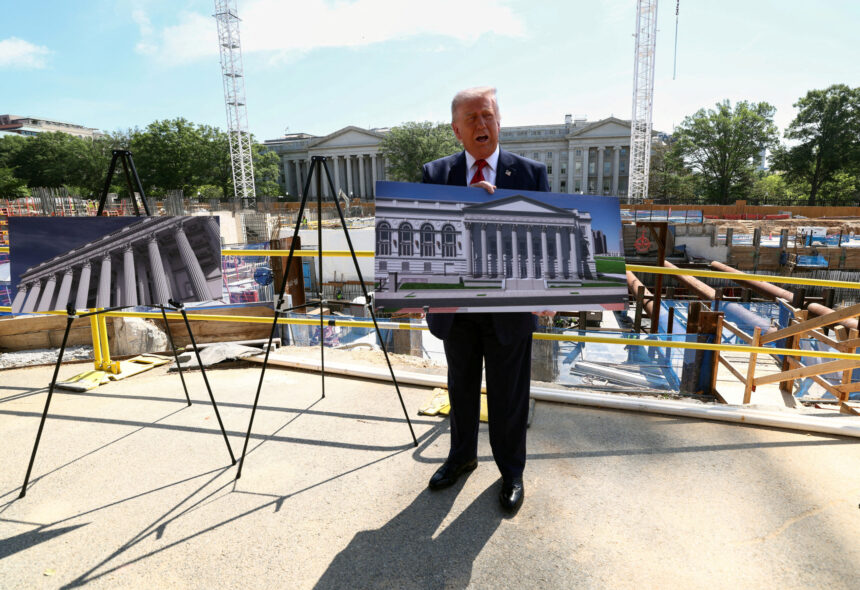
Trump’s focus on his ballroom project has raised eyebrows as Americans grapple with rising gas prices and economic uncertainty. Standing before the ongoing construction at the White House, President Donald Trump has made numerous appeals for patience from the public, labelling the costs of the ballroom as “peanuts.” His dismissive tone regarding the economic impact of the ongoing Iran war has drawn concern from within his own party as the midterm elections approach.
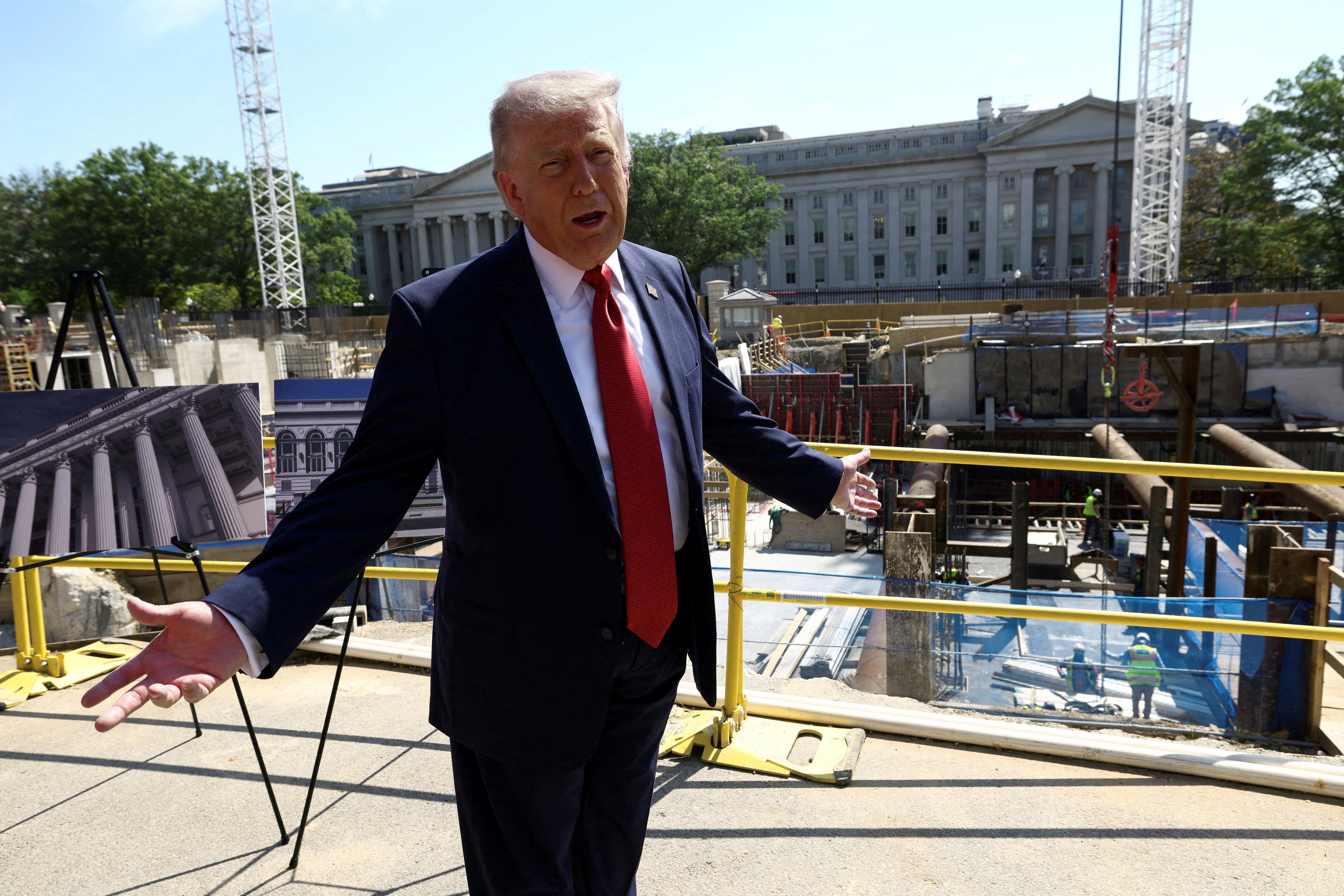
Photo: cyprus-mail.com
Trump’s remarks reflect a growing disconnect with voters, many of whom are struggling to manage their budgets as fuel prices soar. A recent review shows Trump has mentioned the ballroom project over 40 times this year alone, indicating a prioritisation of legacy-building over pressing economic issues. In stark contrast, his references to the economy appear far less frequent, leaving some Republican lawmakers unsettled.
As gas prices continue to climb, Trump’s comments have seemed increasingly tone-deaf. “I appreciate everybody putting up with it for a little while. It won’t be much longer,” he said, seemingly oblivious to the financial strain faced by many households. This has led to growing frustration among constituents, with some Republicans fearing that his focus on the ballroom may distract from crucial electoral battles this November.
Despite a White House official’s assertion that the ballroom project is about “legacy, not vanity,” critics argue that Trump’s fixation on the ballroom, along with plans for a 250-foot Independence Arch, reflects a misalignment with voter priorities. A senior Republican operative highlighted that voters are increasingly perceiving Trump as preoccupied with vanity projects rather than addressing their more immediate financial concerns.
In conversations with reporters and on social media, Trump continues to pivot back to the ballroom, using it as a platform to promote his vision of American grandeur, often juxtaposing it with international comparisons. Following a meeting with Chinese President Xi Jinping, Trump took to Truth Social to declare, “China has a Ballroom, and so should the U.S.A.!” This approach may resonate with his base but risks alienating those who prioritise economic stability over architectural ambitions.
Republican Senator Cynthia Lummis recently remarked that the attention devoted to the ballroom is “absolutely” disproportionate to its significance, echoing the sentiments of voters who feel their economic struggles are being overlooked. Trump has reportedly raised $400 million for the project through private donations, yet the Secret Service’s request for $1 billion in taxpayer funding for security enhancements has met with resistance, even from his party members.
The upcoming midterms add to the urgency of this situation. As Republicans brace for a challenging electoral landscape, the focus on Trump’s legacy projects, particularly the ballroom, has left some questioning whether he is still in tune with voter sentiment. Amidst rising fuel costs and ongoing geopolitical tensions, the president’s prioritisation of construction projects over economic discourse has raised eyebrows among both supporters and detractors.
Trump’s retorts to questions about economic concerns have often included claims of victory over inflation, despite contradicting data. He cites the stock market’s performance and foreign investment inflows as indicators of success, but many remain unconvinced that such metrics reflect the reality of everyday Americans. The administration’s earlier predictions of regular trips to advocate for Republican candidates and address economic issues have largely fallen by the wayside, with Trump opting for a more insular approach.
In the wake of political turmoil and public dissatisfaction, Trump has increasingly highlighted construction sites tied to his initiatives as symbols of progress. This week, he showcased the ballroom construction to reporters, emphasising its security features and the importance of such projects in his vision for the country. This focus on grand designs comes at a time when practical issues are at the forefront of many voters’ minds.
With November looming and polls indicating public disapproval of the ballroom project, the political ramifications of Trump’s fixation on legacy may prove significant. The recent decision to drop the $1 billion security proposal from a Senate spending bill marks a potential turning point, reflecting a growing recognition within Republican ranks that voters are prioritising economic realities over ambitious architectural statements.