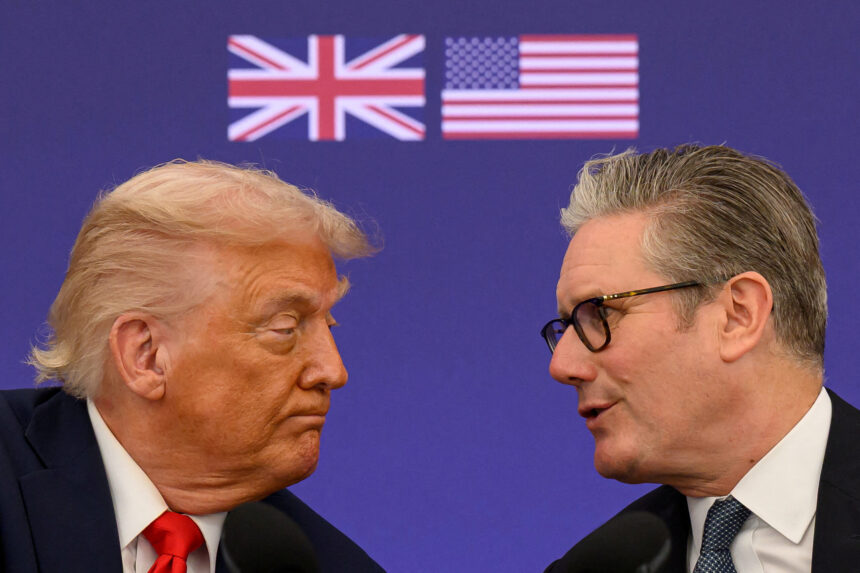
trump comments — trump comments — Keir Starmer has labelled Donald Trump’s remarks about European troops in Afghanistan as “insulting and frankly appalling.” This criticism comes amidst a wave of discontent from various European officials and veterans, highlighting the ongoing tension between the US and its NATO allies.
During a press briefing, the British Prime Minister expressed his dismay at Trump’s suggestion that European forces were not fully committed, stating, “I consider President Trump’s remarks to be insulting and frankly appalling, and I’m not surprised they’ve caused such hurt for the loved ones of those who were killed or injured.” His comments reflect a deep-seated frustration, especially given the significant sacrifices Britain made during the conflict, losing 457 service personnel, its deadliest military engagement since the 1950s.
Starmer’s remarks are particularly striking as he has often refrained from directly confronting Trump in public discourse. When pressed on whether he would seek an apology from the US leader, he remarked, “If I had misspoken in that way or said those words, I would certainly apologise.” This highlights the gravity of the situation, not only for the British government but for the collective memory of those who served in Afghanistan.
Trump’s incendiary comments were made during an interview with Fox Business Network, where he asserted that the US had “never needed” its transatlantic allies. This statement follows a series of controversial remarks made by Trump that have strained US-European relations, including his recent comments at the World Economic Forum in Davos regarding Greenland.
European leaders have not held back in their criticism. Dutch Foreign Minister David van Weel condemned Trump’s remarks as “untrue and disrespectful,” echoing the sentiments of many who have served alongside American forces. Prince Harry, a veteran who served in Afghanistan, also weighed in, emphasising the need for truth and respect regarding the sacrifices made by service members.
Roman Polko, a retired Polish general, went further, stating, “We paid with blood for this alliance. We truly sacrificed our own lives.” This sentiment resonates deeply among those who served in NATO missions, further compounding the outrage at Trump’s dismissive comments. Alistair Carns, the UK’s veterans minister, labelled Trump’s claims as “utterly ridiculous,” affirming the bond forged between troops on the battlefield.
The historical context of NATO’s Article 5, which pledges collective defence, underscores the importance of unity among member states. This commitment has only been invoked once, following the September 11 attacks, when allies rallied to support the US. For many, Trump’s remarks threaten to undermine the very fabric of this alliance, risking the cooperation that has been vital in numerous military engagements, including Afghanistan.
Criticism of Trump’s military service record has also resurfaced, with references to his avoidance of the Vietnam War draft due to medical deferments. Ed Davey, the leader of the UK’s Liberal Democrats, highlighted this hypocrisy, stating, “How dare he question their sacrifice?” Such remarks only serve to deepen the divide between Trump and his European counterparts.
Defence Minister Wladyslaw Kosiniak-Kamysz from Poland reiterated that the sacrifices made during the war “must not be diminished,” reflecting a broader concern among European nations about their contributions to NATO-led missions. This sentiment was echoed by Danish parliament member Rasmus Jarlov, who termed Trump’s comments as “ignorant.”
As we reflect on the human cost of the Afghanistan conflict, it’s clear that the sacrifices extend beyond borders. The US lost approximately 2,460 troops, a figure that is alarmingly comparable to the losses suffered by coalition partners like Britain and Denmark. The shared grief and honour of these sacrifices are not mere statistics; they represent the lives of individuals who dedicated themselves to the mission.
In the wake of Trump’s remarks, the discourse surrounding NATO and the sacrifices made by its members continues to evolve, revealing underlying tensions that could have lasting implications for international relations. The collective memory of those who served in Afghanistan serves as a reminder of the complexities and challenges that alliances face in an increasingly polarised world.