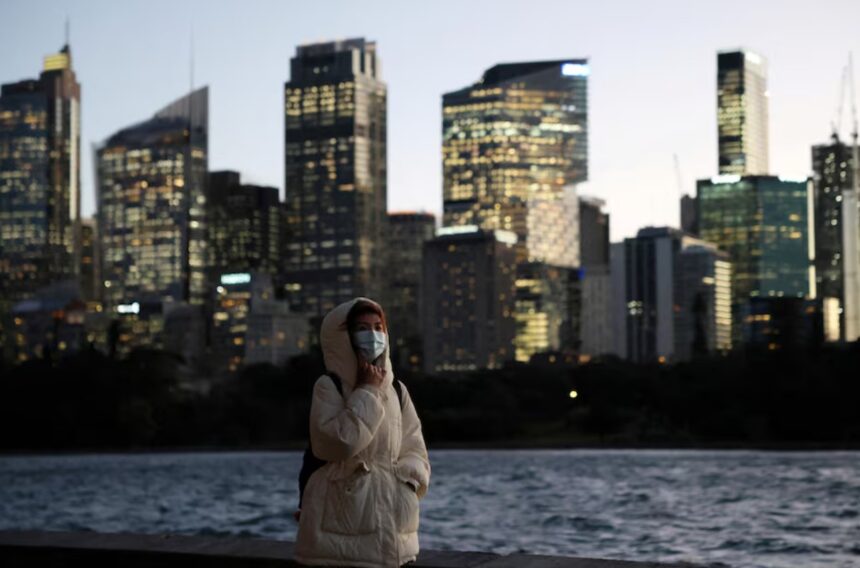
stagflation risk — Australia is increasingly facing stagflation risk as rising prices and declining business activity take their toll on the economy. The ongoing conflict in the Middle East has led to profit warnings from key Australian companies, indicating a worrying trend in corporate health.
Stagflation risk: Corporate Warnings Signal Economic Strain
Qantas Airways (QAN.AX), the nation’s leading airline, alongside Westpac Banking Corp (WBC.AX), the second-largest lender, have both indicated that their earnings could be adversely impacted by the surge in fuel prices and the associated effects on consumer spending. These developments are alarming for investors and economists alike, as they highlight the direct repercussions of international conflicts on domestic economies.
Impact of Rising Fuel Prices on Major Companies
Qantas has announced that its jet fuel expenses for the latter half of its financial year, ending in June, could escalate by A$800 million (approximately $567 million), representing a 32 per cent increase from earlier forecasts. This significant jump is attributed to soaring oil prices, prompting the airline to cut back on flights and raise fares.
“Jet fuel prices have more than doubled and remain highly volatile,” Qantas noted in a market update, emphasising the need to closely monitor the ever-changing economic landscape. The airline has also decided to suspend a planned A$150 million share buyback due to this increased uncertainty.
Banking Sector Faces Tougher Outlook
Westpac has taken proactive measures by increasing its credit provisions, recognising that borrowers may encounter a more challenging financial environment due to rising prices and escalating interest rates. The bank’s provisioning levels are now at their highest point since the COVID-19 pandemic, reflecting a cautious approach to the current economic climate.
“With the supply shock from the energy market disruption expected to result in higher inflation and higher interest rates, an expected slowing in economic growth will create a more challenging environment for some customers,” Westpac commented.
Business and Consumer Confidence Plummets
The financial updates from these major companies coincide with alarming surveys indicating a sharp decline in business confidence and consumer sentiment. According to National Australia Bank, its index of business confidence plummeted by 29 points to -29 in March, a drop reminiscent of major crises, including the pandemic in 2020. Concurrently, a separate survey revealed that consumer sentiment fell by 12.5 per cent in April, reaching its lowest level in over two years.
Long-Term Implications of Ongoing Conflict
The warnings issued by Westpac, in particular, have surprised investors, contributing to a 3.7 per cent drop in the bank’s shares, while Qantas shares fell by 1 per cent. Omkar Joshi, chief investment officer at Opal Capital Management, remarked, “Westpac is interesting because they’re talking about potentially higher bad debts on some of their energy-exposed customers.”
Investors are increasingly concerned that the prolonged nature of the Middle East conflict will result in more substantial financial repercussions for businesses, leading to further profit warnings and a potential downturn in the economy.
Sector-Wide Disruptions and Broader Economic Risks
The ramifications of the Middle East conflict are not limited to Australian firms. In New Zealand, a2 Milk (ATM.NZ) has also lowered its fiscal 2026 profit guidance, citing supply chain disruptions linked to the ongoing conflict. Such disruptions underscore the interconnectedness of global markets and the potential for widespread economic consequences.
Joshi expressed concerns that the risk of recession or stagflation is becoming increasingly tangible, stating, “And has the risk increased in the last six weeks? I’d say definitely it has.” This sentiment reflects a growing consensus among economists that the combination of rising prices and falling economic activity could lead to a challenging economic landscape for the foreseeable future.
Looking Ahead: Economic Forecasts and Concerns
As the situation evolves, the Reserve Bank of Australia is closely monitoring these developments. Deputy Governor Andrew Hauser has warned that the country could be facing “the central bank’s nightmare: the stagflationary shock – inflation up, activity down.” This stark assessment highlights the delicate balance the central bank must maintain as it navigates an increasingly complex economic environment.
The upcoming months will be crucial for Australian businesses and consumers alike. With uncertainties surrounding global events and their impact on domestic markets, stakeholders will need to prepare for a potentially turbulent economic period.