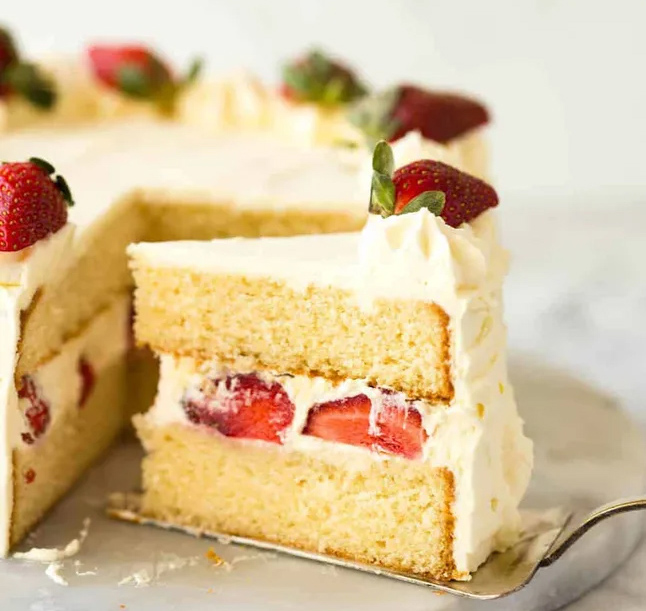
Sponge cake, a timeless delight, has captivated dessert lovers across the globe for centuries. This airy classic is renowned for its light texture and subtle sweetness, achieved through a simple yet effective blend of eggs, sugar, flour, and occasionally, a hint of baking powder or butter. The hallmark of sponge cake lies in its airy crumb, accomplished by whipping eggs to incorporate air, allowing the cake to rise beautifully without relying on heavy fats or chemical leaveners.
Versatility on the Dessert Table
Whether enjoyed plain, lightly dusted with sugar, or transformed into elaborate layered confections filled with jam, cream, or fresh fruit, sponge cake’s understated elegance makes it a versatile base for a multitude of recipes. From the classic Victoria sponge to the delightful Swiss roll, there’s no shortage of imaginative creations stemming from this beloved cake.
A Historical Perspective
The origins of sponge cake can be traced back to Renaissance Europe, particularly in Italy and Spain during the 15th and 16th centuries. It was during this period that the innovative technique of creating aerated cakes using beaten eggs began to gain prominence. The very word ‘sponge’ captures the essence of the cake’s porous texture, which has been celebrated for its lightness and fluffiness.
One of the earliest recorded recipes for sponge cake appears in a 1615 English cookbook authored by Gervase Markham. This recipe describes a light cake leavened solely by eggs and infused with sugar, marking a significant culinary advancement at a time when baking predominantly relied on yeast or chemical leavening agents that produced denser results.
The Art of Whipping Eggs
Creating the perfect sponge cake requires a degree of skill and precision, particularly in the technique of whisking eggs. Achieving the right volume and incorporating sufficient air into the batter is crucial. This innovation symbolised a leap in baking technology, allowing for a cake that was both light and flavourful, paving the way for countless variations.
The Spread of Sponge Cake Across Europe
As sponge cake evolved, its popularity spread throughout Europe, adapting to local ingredients and cultural preferences. In England, the sponge became synonymous with teatime treats, epitomised by the Victoria sponge, named in honour of Queen Victoria, who had a fondness for afternoon tea. The traditional Victoria sponge incorporates butter and baking powder, yielding a denser yet richly flavoured cake that remains a staple at tea gatherings.
In contrast, French variations such as the génoise embraced a lighter approach, traditionally using whole eggs and relying solely on air for leavening. Often soaked with syrups to enhance moisture and flavour, génoise has become a favourite in the world of patisserie.
Cultural Significance and Regional Variations
Regional adaptations highlight the cultural significance of sponge cake across different communities. For instance, in Cyprus and the broader Eastern Mediterranean, sponge cakes frequently incorporate local flavours such as rosewater, orange blossom, or nuts. This fusion links the European import of sponge cake with indigenous culinary traditions, showcasing how food evolves through cultural interaction.
Modern Innovations in Baking
The resurgence of sponge cake’s popularity in contemporary baking can be attributed to advancements in kitchen technology. Improved ovens and mixers have made the precise techniques required to achieve the perfect airy texture more accessible to home bakers. The ability to whip eggs to the right consistency is now easier than ever, enabling a new generation of bakers to create this classic treat.
Alongside this, the widespread availability of refined sugar has transformed sweet baking from an occasional luxury into a common household pleasure. Today, sponge cakes are not only enjoyed in their traditional forms but have also inspired a variety of modern interpretations, including gluten-free and vegan options.
A Testament to Baking Artistry
In all its variations, sponge cake remains a testament to the artistry of baking, embodying the shared human enjoyment of simple yet refined pleasures. Whether served at celebrations or as an everyday treat, this light and airy classic continues to hold a cherished place on dessert tables around the world.