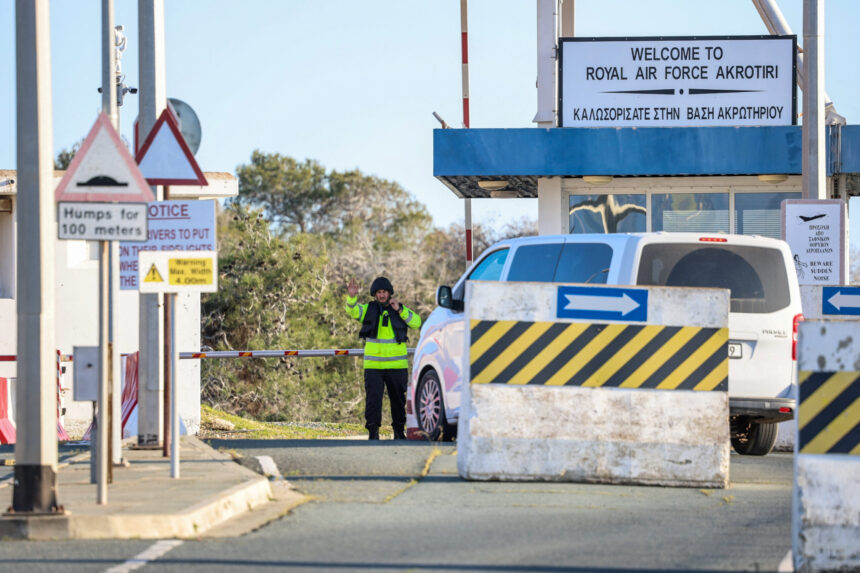
cyprus raf — cyprus raf — Cyprus has emerged as a focal point in discussions surrounding the British military’s role in the Eastern Mediterranean, particularly with the presence of RAF facilities on the island. These bases have long supported operations across the Middle East, but the intensifying conflict involving Iran has led to renewed concerns about safety and security in the region.
Recent events have intensified these concerns. A drone strike attributed to pro-Iranian forces targeted the British RAF base at Akrotiri earlier this month. While the attack resulted in only minor damage, it marked the first direct assault on a British installation in Cyprus in decades, prompting local residents and officials to question the island’s vulnerability amidst escalating tensions.
Cyprus raf: The Historical Context of Military Presence
Cyprus has been home to British military installations since the mid-20th century. The RAF base at Akrotiri, established in the 1950s, serves as one of the UK’s most critical overseas air stations. Located within the British Sovereign Base Areas of Akrotiri and Dhekelia, these territories have allowed the UK to maintain a significant military footprint in the region following Cyprus’s independence in 1960.
Over the years, RAF Akrotiri has supported various operations, including missions during the Suez Crisis, NATO actions in Libya, and campaigns against extremist groups in Iraq and Syria. Its strategic location makes it a vital launch pad for both military and humanitarian missions in the surrounding areas.
Geopolitical Importance of Cyprus
Cyprus’s geographical position, nestled at the crossroads of Europe, the Middle East, and North Africa, adds to its strategic value. The RAF base at Akrotiri not only facilitates military operations but also plays a crucial role in intelligence gathering and logistics. The recent deployment of F-35 stealth fighter jets to the island reflects the UK’s commitment to fortifying its presence amid rising tensions with Iran.
This location offers military planners flexibility and rapid access to multiple regions, but it also places Cyprus in the crosshairs of geopolitical disputes. The ongoing conflict involving Iran has heightened these tensions, making military bases associated with Western powers potential targets for hostile actors.
Local Concerns Regarding Security
The drone strike on RAF Akrotiri has heightened anxiety among Cypriots about the implications of hosting British military facilities. Security experts warn that the evolving landscape of warfare, characterised by cyber attacks and drone technology, enables adversaries to target remote military installations, even those not directly engaged in conflict.
Local communities have expressed worries about the risks associated with being near military bases linked to regional security operations. While the British and Cypriot governments maintain that these bases serve defensive purposes, the reality remains that the presence of such installations can inadvertently attract unwanted attention.
Balancing Act of Military Presence
Despite the potential risks, there are arguments in favour of maintaining a British military presence in Cyprus. Gavin Cooper, a British army veteran and founder of the military consumer site Claims Bible, asserts that the presence of allied forces can enhance regional stability, support humanitarian efforts, and enable rapid responses to crises.
However, the recent drone incident underscores the precarious balance between the benefits of hosting strategic allies and the risks that accompany proximity to military operations. As conflicts increasingly encompass advanced technologies and non-traditional warfare, even nations hosting allied infrastructure may find themselves entwined in broader confrontations.
The Future for Cyprus and Its Military Bases
With over seventy years of hosting British RAF facilities, Cyprus remains pivotal to the UK’s defence strategy in the Eastern Mediterranean. Yet, the current conflict involving Iran has illuminated the fact that strategic assets can also draw significant risks.
While Cyprus itself is not an active participant in the war, its role as a host for military infrastructure means it cannot entirely shield itself from regional hostilities. The challenge ahead will be for Cyprus to navigate the complexities of its strategic alliances while ensuring the safety and security of its residents in an increasingly volatile landscape.