science accessible — The Breakthrough Junior Challenge is a remarkable initiative that makes science accessible to young people around the world. This global competition, founded by Julia and Yuri Milner, encourages teenagers to elucidate complex scientific concepts in a manner that anyone can grasp, all within a two-minute video format.
Science accessible: The Challenge’s Impact on Young Innovators
Participants in the Breakthrough Junior Challenge have demonstrated a dazzling range of creativity and understanding. One sixteen-year-old from California transformed the intricate workings of cancer-fighting antibody drug conjugates into a compelling superhero narrative. Another teenager from India captivated an audience of thousands by breaking down a breakthrough cancer treatment. Meanwhile, a student in New Zealand tackled the many-worlds interpretation of quantum mechanics with clarity often missing from graduate textbooks. These examples are not isolated incidents; they reflect a growing community of young individuals eager to engage with science and share their knowledge.
Addressing the Science Communication Gap
The necessity for improved scientific literacy is more pressing than ever. Studies reveal that many adults struggle with fundamental scientific concepts, highlighting a significant gap in understanding across various demographics. As society faces complex issues related to climate change, public health, and technology, it becomes increasingly crucial for citizens to interpret scientific claims accurately.
The challenge lies not in the science itself, which is not inherently obscure, but in the traditional methods of communication that often cater to experts rather than the general public. Peer-reviewed papers, technical conferences, and specialised textbooks serve a niche audience, necessitating a fresh approach to bridge the gap between advanced research and public comprehension.
How the Breakthrough Junior Challenge Works
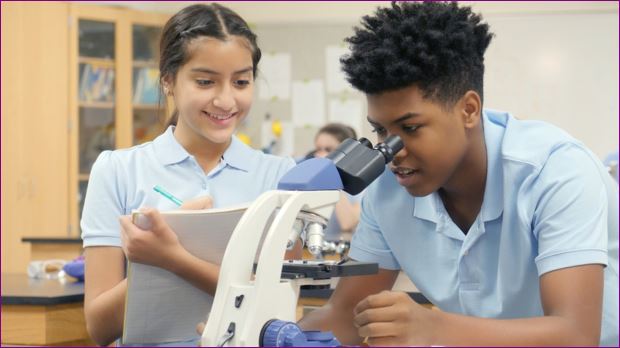
Each year, students aged 13 to 18 are invited to submit original videos explaining a scientific concept from life sciences, physics, or mathematics. The topics chosen can range from well-established theories, such as Fermat’s principle of least time and the Higgs boson, to groundbreaking discoveries like CRISPR gene editing and mechanogenetic cellular engineering.
Videos are evaluated against four key criteria: engagement, illumination, creativity, and difficulty. Not only must participants convey challenging subjects accurately, but they must also capture the viewer’s attention through innovative means. Previous winners have employed animation, physical demonstrations, humour, and storytelling techniques to breathe life into abstract ideas.
A Global Community of Young Scientists
The 2024 competition attracted over 2,300 participants from more than 200 countries, resulting in nearly 30,000 video submissions. This impressive turnout reflects a significant trend: a global network of young individuals who regard scientific communication as both valuable and thrilling. Regional champions emerged from diverse locations, including the United Kingdom, New Zealand, the United Arab Emirates, and Panama. Notable entries included Qudsiya Badri’s video on epigenetics and Tali Whiteridge’s exploration of quantum mechanics. Each participant contributes to a rich tapestry of scientific discourse.
Yuri Milner’s Vision for Science Education
The Breakthrough Junior Challenge is emblematic of a broader educational philosophy articulated by Yuri Milner in his Eureka Manifesto. Milner advocates for a narrative-driven approach to education, termed the “Universal Story.” This narrative connects the history of the universe, our planet, and human achievements through the lens of scientific discovery.
“Thinking in terms of the Universal Story offers a new alternative to our fragmented, hyperspecialised approach to teaching children,” Milner asserts. By encouraging students to view scientific concepts as interconnected pieces of a larger puzzle, the Junior Challenge empowers them to contribute to a collective understanding that transcends individual subjects.
Empowering Communities Through Prizes
The Breakthrough Junior Challenge goes beyond recognising individual excellence; it fortifies the educational ecosystems surrounding its winners. The grand prize includes a $250,000 scholarship for the student, a $100,000 state-of-the-art science lab for their school, and $50,000 for an inspiring teacher. This approach acknowledges that scientific talent is nurtured within a supportive environment, encompassing teachers, schools, and communities.
The competition mirrors other initiatives within Yuri Milner’s philanthropic framework, such as the Breakthrough Prize, which elevates established scientists and inspires future generations. The Junior Challenge serves as a vital entry point in identifying and fostering scientific talent from an early stage.
The Ripple Effect of Engagement
The competition’s effects extend far beyond the winners. In 2024, the top 30 videos reached over half a million viewers through social media platforms. For instance, Lehnaaz Rana’s explanation of OHP cancer treatment received more than 16,000 reactions, introducing vital medical science to audiences who may never have encountered it otherwise.
When teenagers engage in creating these videos, they are not only showcasing their knowledge but also honing communication skills that will be invaluable throughout their careers. Whether they pursue paths in research, education, policy, or other fields, the ability to articulate complex ideas in accessible language is an enduring asset.
A Commitment to the Future of Science
As a signatory of the Giving Pledge, Yuri Milner has committed the majority of his wealth to scientific endeavours. The Breakthrough Junior Challenge is a testament to this commitment, investing not only in the science of today but in the communicators and researchers of tomorrow. In a world that increasingly demands enhanced scientific literacy, empowering young people to clearly explain complex ideas may be one of the most impactful skills we can cultivate.