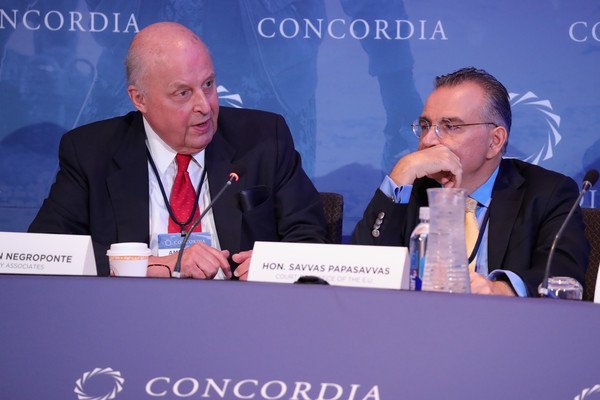
Savvas Papasavas has been re-elected vice-president of the general court of the European Union, a role he will hold from September 16, 2023, to August 31, 2028. This re-election comes amidst a partial renewal of the court’s composition, indicating a shift in leadership while maintaining experienced figures at the helm.
- With this re-election, Savvas Papasavas is set to continue his contributions to the legal landscape of the European Union, guiding the court through its evolving challenges over the next five years.
Born in 1969 in Nicosia, Papasavas has built a distinguished career in law. He graduated from the National and Kapodistrian University of Athens in 1991, later pursuing further studies in France. He completed a postgraduate degree in public law at the Université de Paris II in 1992 and earned a doctorate in law from the Université d’Aix-Marseille III in 1995.
Papasavas’s legal career began when he joined the Pancyprian Bar Association, later becoming a member of the Nicosia Bar Association in 1993. He practised law until his appointment to the general court in 2004. In addition to his legal practice, he contributed to academia by lecturing at the University of Cyprus from 1997 to 2002, where he specialised in constitutional law.
His tenure at the general court has been marked by significant milestones. He became a judge on May 12, 2004, and served two consecutive terms as president of a court chamber from September 15, 2010, to September 25, 2016. On September 27, 2019, his colleagues elected him vice-president, a position he has successfully occupied until his recent re-election.
The general court of the European Union plays a crucial role in adjudicating cases presented by individuals, companies, and EU member states, particularly in areas such as competition law, state aid, trade, and intellectual property. Papasavas’ leadership has been instrumental during this crucial period of transition within the court, ensuring continuity and stability.
With this re-election, Savvas Papasavas is set to continue his contributions to the legal landscape of the European Union, guiding the court through its evolving challenges over the next five years.