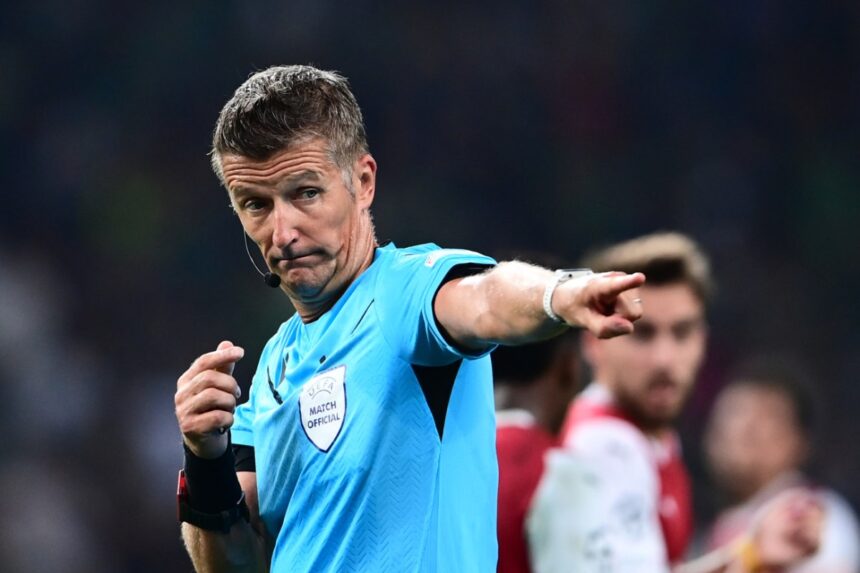
referees union — referees union — The ongoing dispute in Italian football has put the focus squarely on the Federation and the Referees’ Union, igniting tensions that have been brewing for some time. The clash revolves around financial constraints, with both sides pointing fingers over an inadequate budget of €53 million allocated for refereeing in 2025.
Recent revelations from the Corriere dello Sport have shed light on the severe implications of this budget shortfall. The Referees’ Union (AIA) has been forced to cancel training seminars for third-division referees, a move that underscores the financial strain they are experiencing. In a climate where every euro counts, the Federation (FIGC) has been adamant that it cannot provide any additional funds, fearing that overspending could invite external oversight.
Referees union: Escalating Tensions and Public Statements
As the situation escalates, the rhetoric has grown increasingly heated. Pier Paolo Perone, a member of the National Committee of the Referees’ Union, made a bold statement during a video conference aimed at third-division referees, asserting that the Federation is grappling with its own financial woes. This remark did not sit well with the Federation, which quickly responded with a formal letter addressing the concerns raised.
Marco Brunelli, the FIGC’s general secretary, clarified that the budget remains virtually unchanged, with only a minor discrepancy of €157,757 within the overall €53.3 million allocation. According to the Federation, the depletion of funds can be attributed solely to the management practices of the Referees’ Union, suggesting that the way the funds are utilised is at the root of the problem.
Calls for Transparency and Accountability
The Federation’s insistence on the need for accountability has sparked further debate. The Referees’ Union has taken issue with the Federation’s cuts, arguing that their operational challenges stem from a lack of financial support. This back-and-forth has not only highlighted the fractures within Italian football governance but also raised questions about the future of referee training and standards.
Furthermore, the Federation has requested that the letter be shared with all members of the Referees’ Union, indicating that they are keen on transparency in this matter. The ongoing public spat suggests that neither side is willing to back down, and further developments are likely as both parties prepare for the next round of negotiations.
What Lies Ahead for Italian Football?
As the footballing world watches, the implications of this financial dispute could extend beyond just the referees. The state of officiating in Italy may suffer if training and resources for referees continue to be compromised. With the Serie A season in full swing, the stakes are high, and the ability of referees to perform at their best is critical for maintaining the integrity of the game.
Statistics from the ongoing season reveal the importance of referees in crucial matches, with decisions potentially affecting outcomes and, consequently, team standings. The pressure is not just on the referees but on the Federation to find a resolution that ensures the smooth operation of the league.
In the end, the ongoing confrontation is a vivid reminder of the complexities of football governance in Italy. With both sides entrenched in their positions, the hope for a swift resolution may be dim, but the stakes remain incredibly high for the future of the sport in the nation.