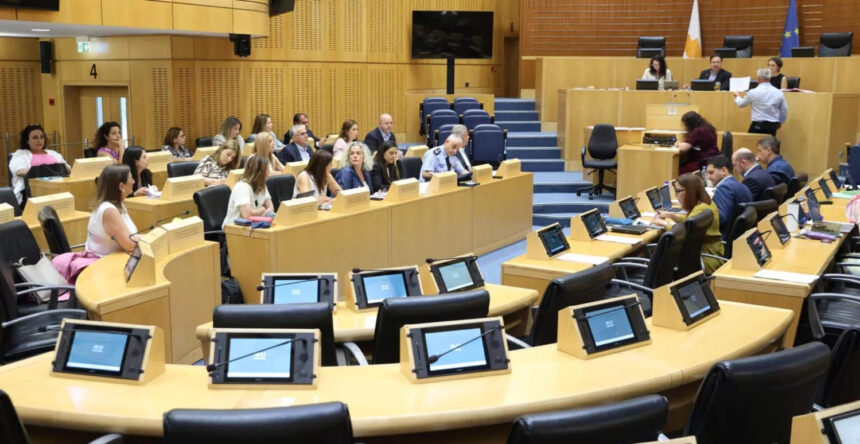
The alarming figure of 18,409 gender-based violence complaints recorded over six years highlights a growing crisis that has prompted urgent discussions within the Cypriot government. Police Chief Themistos Arnaoutis revealed this statistic during an emergency meeting of the parliamentary Human Rights and Equal Opportunities Committee held on July 6, following an attempted femicide in Limassol just a week prior.
Arnaoutis detailed the number of domestic violence complaints alongside the response from law enforcement: 3,674 arrests, 2,858 restraining orders issued against perpetrators, and 373 court orders enforced. The stark reality emerged that only one in six perpetrators is arrested, a statistic that raised eyebrows among committee members.
In response to concerns about the effectiveness of law enforcement, Arnaoutis remarked, “in some incidents, arrests are not necessary.” He also noted the introduction of the ELPIS app, which is designed to offer immediate assistance to victims of domestic violence. Currently, the app has 457 registered users, with 27 complaints reported through it so far.
Femicides have also been a critical issue, with the police chief outlining the grim statistics over the past six years: five victims in 2020, five in 2021, two in 2022, and one in 2023, with ongoing investigations into further cases. Eleni Nikolaou, head of the police’s Vulnerable Persons subdivision, highlighted that around 3,000 domestic violence complaints are received annually, with criminal files opened in 45% of these cases, 75% of which progress to court.
Maria Kyratzi, director of Social Welfare Services, reported a notable rise in referrals to the Women’s House, which offers support to victims of domestic violence. In 2022, 277 victims were referred, followed by 237 in 2023 and 236 in 2024, indicating a growing awareness and response to the issue. The Women’s House has been operational in Nicosia since 2020, and plans are underway to expand its reach.
Andri Andronikou, scientific director of SPAVO, emphasised the need for better resources, mentioning that 2025 saw a total of 110 emergency calls for domestic violence. The counselling service supports seven victims each month, while shelters accommodate around 64 victims, including both women and children.
Among the revelations was the absence of psychometric testing for police firearms possession, which has raised concerns about officer preparedness in handling domestic violence situations. Justice Minister Costas Fytiris has stated that the Ministry intends to amend the law to implement psychometric evaluations every three years for officers who carry weapons, addressing the critical need for preventive measures.
Fytiris acknowledged that while Cyprus has a robust legislative framework, improvements in prevention mechanisms are necessary. He highlighted the importance of timely responses to complaints and prioritising the adjudication of cases. The Minister also addressed a recent leak of video footage from the Limassol crime scene, asserting that such incidents must be thoroughly investigated and penalised.
In a follow-up to these discussions, the Human Rights Committee is expected to reconvene in late August or early September to assess ongoing actions in addressing gender-based violence. Chairman Christos Christofides pointed out that the committee’s focus is not to assign blame for specific incidents but to evaluate the effectiveness of state mechanisms in preventing violence before it escalates to tragedy.
Christofides stressed the necessity for a proactive approach, stating, “the state’s obligation does not begin when the crime is committed. It begins much earlier,” underscoring the critical need for early intervention in situations of potential danger.