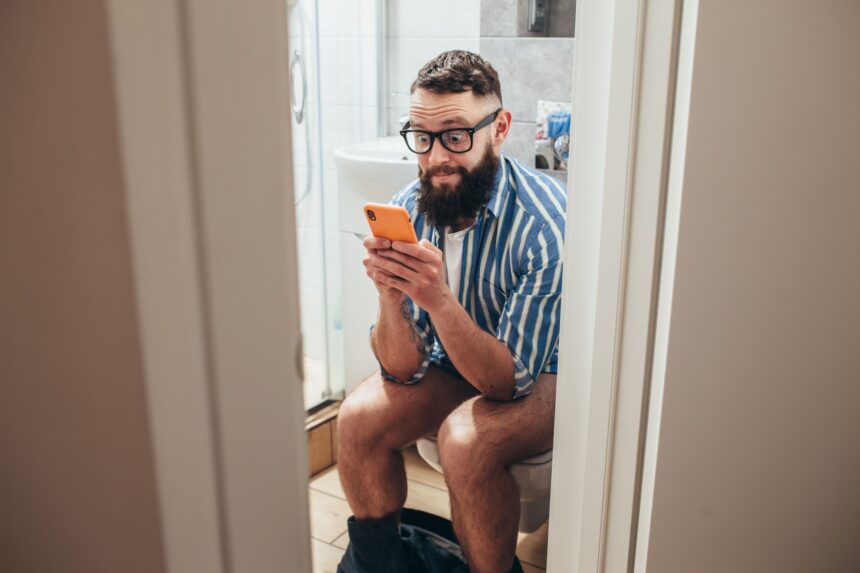
phone toilet — phone toilet — Using your phone on the toilet might feel like a harmless way to pass the time, but prolonged toilet visits can lead to serious health issues. Research indicates that spending too long on the loo, particularly while scrolling through your smartphone, can significantly increase your risk of various ailments.
Phone toilet: Haemorrhoids: A Common Concern
One of the most concerning risks associated with this habit is the development of haemorrhoids. A recent study revealed that individuals who use their phones during bathroom breaks are 46 per cent more likely to develop these uncomfortable conditions. Ideally, trips to the toilet should last no more than two to three minutes; however, the same study found that a staggering 37 per cent of participants spent over five minutes on the throne when distracted by their devices.
Haemorrhoids occur when the blood vessels around the anal opening become enlarged due to excessive pressure. This pressure is exacerbated by prolonged sitting and straining during bowel movements, which can lead to significant discomfort and, in severe cases, requires medical intervention.
The Pain of Fissures and Tears
Extended time spent sitting can also result in anal fissures—small, painful tears in the anal lining. These fissures are often accompanied by excruciating pain and visible bleeding, making the experience of defecation feel akin to passing broken glass. The delicate nature of the anal lining means that excessive pressure can stretch and weaken it, leading to tearing during bowel movements.
Prolapse: A Rare but Serious Condition
In some extreme cases, excessive sitting can lead to rectal prolapse, a condition where part of the rectum protrudes from the anus. This condition can arise in individuals who spend excessive time on the toilet, engrossed in mobile games or browsing social media. One documented case involved a man who, after frequently sitting for up to 30 minutes, encountered a shocking 14cm of his rectum protruding while attempting to relieve himself.
The increased abdominal pressure from prolonged sitting can weaken the pelvic floor muscles, which are crucial for maintaining the internal positioning of organs. Rectal prolapse not only causes significant discomfort but also necessitates immediate medical attention for treatment.
Pressure Sores: A Hidden Risk
Another potential consequence of spending extended periods on the toilet is the risk of pressure sores, particularly among the elderly. Sitting for too long compresses the tissues against the toilet seat, reducing blood flow and leading to painful sores. These sores can become serious if left untreated, highlighting the need to be mindful of our bathroom habits.
Hiatal Hernias and Their Implications
Prolonged toilet sitting and straining can also contribute to the development of hiatal hernias, particularly in those who are overweight or over the age of 50. This condition occurs when part of the stomach slips through the diaphragm into the chest cavity, often resulting in discomfort and digestive issues. Hiatal hernias affect around 20 per cent of the population and can lead to symptoms such as indigestion and chest pain.
The Numbness of Toilet Seat Neuropathy
Sitting too long can compress major nerves and blood vessels in the legs, leading to a condition known as toilet seat neuropathy. This temporary numbness usually resolves after standing up, but there have been concerning cases where individuals have fainted on the toilet after prolonged periods of sitting, particularly after consuming alcohol.
The Risk of Fainting
Straining during bowel movements can potentially lead to vasovagal syncope, a condition where blood pressure drops suddenly, causing dizziness or fainting. This reaction occurs when pressure on the vagus nerve is prolonged, affecting heart rate and blood flow. Such incidents underscore the importance of maintaining a healthy bathroom routine.
Healthy Bathroom Habits
To mitigate these health risks, it’s advisable to keep toilet visits brief. If you find yourself taking longer than five minutes regularly, consider increasing your fibre intake and drinking more water to facilitate smoother bowel movements. By adopting healthier habits, you can significantly reduce the likelihood of encountering these uncomfortable and potentially serious health issues.