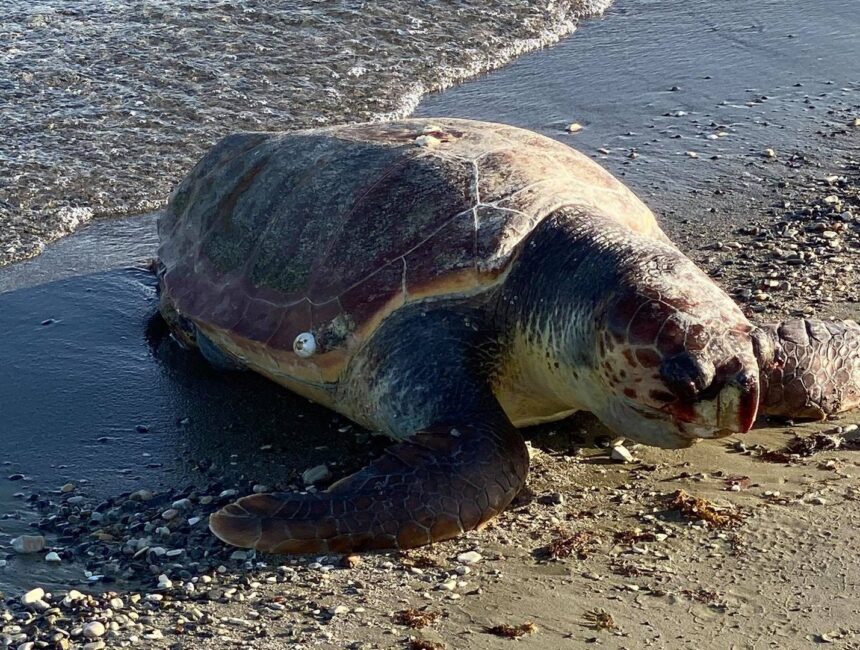
chloraka turtle — chloraka turtle — The recent abuse of a dead turtle in Chloraka has prompted parliamentary action to address the gap in laws governing the treatment of dead animals. A disturbing video showing workers kicking and throwing the carcass of a sea turtle has circulated widely, leading to widespread outrage and calls for immediate legislative reforms.
Following the incident, Charalambos Theopemptou, chairman of the parliamentary environment committee and an ecologist, highlighted a significant legislative oversight. While current laws protect live endangered species, they lack explicit provisions for the treatment of dead animals, even in protected areas. Theopemptou expressed concern over the incident, stating, “After we saw the unacceptable video about the turtle in Chloraka, it became clear that there is a gap both in legislation and in the training of local personnel on the protocols that must be followed when dead animals are found.” He pointed out that in other countries, such actions could lead to prison sentences.
The video, which showed four men, later identified as employees of the Chloraka community council, abusing the turtle, triggered a wave of condemnation from various sectors, including parliament. Police confirmed that an autopsy conducted by veterinary services revealed the turtle had died approximately 48 hours prior and was in a state of decomposition.
Marina Nikolaou, an Akel MP, voiced the collective disgust felt by society, particularly given that the perpetrators were local authority employees. She stated, “Animal abuse is not just a violation; it is an attack on the way we perceive and respect life itself.” Nikolaou called for immediate action from the animal police, environment ministry, and justice ministry to establish prevention and penalty mechanisms.
Further escalating the call for accountability, Diko MP Christos Orphanides demanded “exemplary punishment” for the offenders, highlighting that the brutality displayed in the video is offensive to the moral fabric of society. He expressed frustration that the case was being treated merely as a public nuisance, insisting that the public deserved a clear message of zero tolerance towards such behaviour.
In response to the outcry, Chloraka community leader Nikolas Liasides expressed regret over the incident and announced that Paphos municipality had appointed two investigating officers to conduct a disciplinary inquiry. Liasides explained that the workers involved had been tasked with removing the turtle but lacked the necessary equipment and knowledge of proper procedures. He noted that while dead turtles are not uncommon on local beaches, established protocols demand that the fisheries department be notified and that carcasses be handled with dignity.
Officials from the fisheries department condemned the workers’ actions as “unacceptable and deplorable.” They affirmed that clear guidelines exist for managing injured or dead turtles and acknowledged that the existing regulatory framework is inadequate regarding dead animals, a matter currently under parliamentary review.
During the committee session, several MPs raised concerns regarding whether merely implementing harsher penalties would effectively address the issue. Discussions highlighted broader cultural and enforcement challenges, with worries about the recurring nature of animal abuse cases and the inconsistent response from animal police across different districts. Environmental organisations presented to the committee that the problem is systemic, citing a history of repeated incidents involving protected wildlife and a lack of consistent accountability measures.