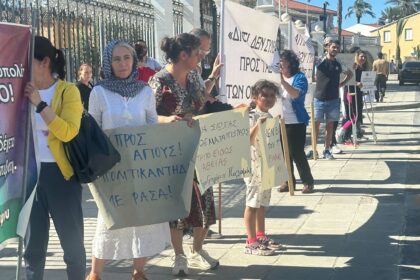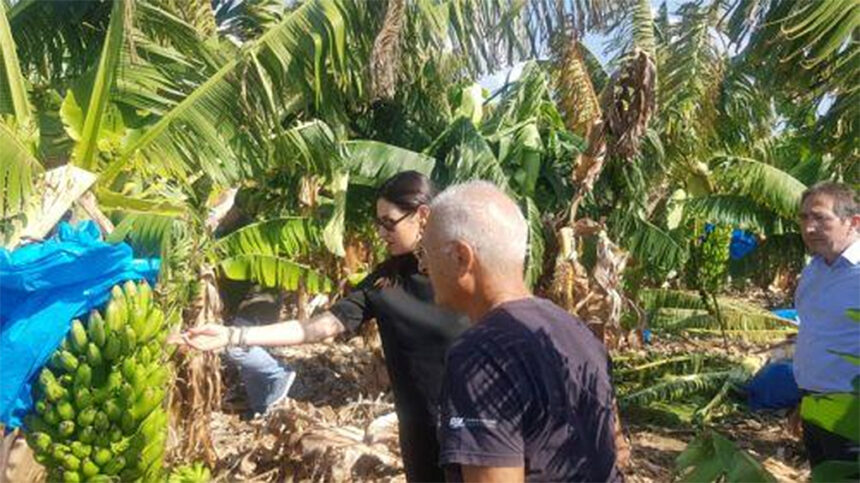
paphos banana — Paphos banana farmers face significant challenges as the EU-Mercosur trade deal approaches implementation. Nikolas Theodosiou, deputy mayor of Kissonerga, emphasised the need for local producers to be safeguarded against an influx of cheaper imports from Latin America.
Theodosiou expressed concerns that without robust protective measures, local farmers might struggle to compete with imported products that are often less expensive to produce. “The products coming in are often much cheaper than what local producers can afford to produce,” he stated. This sentiment echoes a broader worry among European farmers about the potential economic impact of the agreement.
The trade deal, set to be signed by European Commission President Ursula von der Leyen in Paraguay, represents a significant shift in international trade relations. It aims to create the world’s largest free trade area, involving over 700 million people, and will gradually eliminate tariffs on more than 90% of bilateral trade.
While the agreement has been welcomed by some sectors, such as automotive and alcohol, which currently face tariffs as high as 35%, it has raised alarms in European agriculture. Both Argentina and Brazil, prominent agricultural exporters, are poised to increase their market presence in Europe, leading to fears of being undercut.
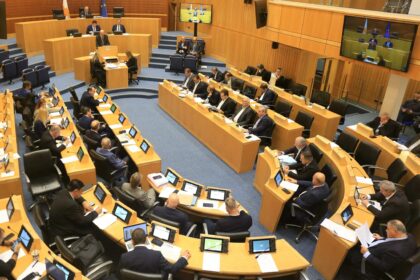
Recent developments have somewhat alleviated these concerns. The inclusion of safeguard clauses allows the EU to suspend tariff-free imports on specific products if local producers face undue pressure. Despite this, many in the Cypriot agricultural community remain sceptical. Akel MP Yiannakis Gavriel voiced that the deal could have disastrous implications for Cyprus, a small island with limited agricultural capacity.
The European Council’s approval of the deal last Friday was not without dissent, as Austria, France, Hungary, Ireland, and Poland voted against it, while Belgium abstained. Italy’s shift from opposition to support highlights the complexities of intra-European negotiations regarding trade.
President Nikos Christodoulides hailed the approval as a historic milestone, framing it as part of a broader commitment to an open and robust trade policy. Trade Minister Michael Damianos reinforced this sentiment, stressing the importance of strengthening political cooperation amidst global uncertainties.
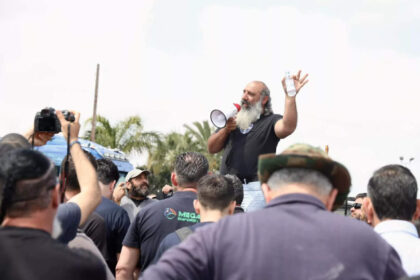
Farmers across Europe are not holding back their discontent. On Tuesday, over 350 tractors converged on Paris as part of a protest against the deal, while in Ireland, an estimated 20,000 people demonstrated in Athlone, voicing their opposition.
Despite the EU’s ability to provisionally implement the deal without a vote in the European Parliament, there is still uncertainty. MEPs are expected to vote on the deal in February or March, leaving the future of this significant trade agreement in a state of flux. As discussions continue, the concerns of local farmers like those in Paphos remain at the forefront of the debate.