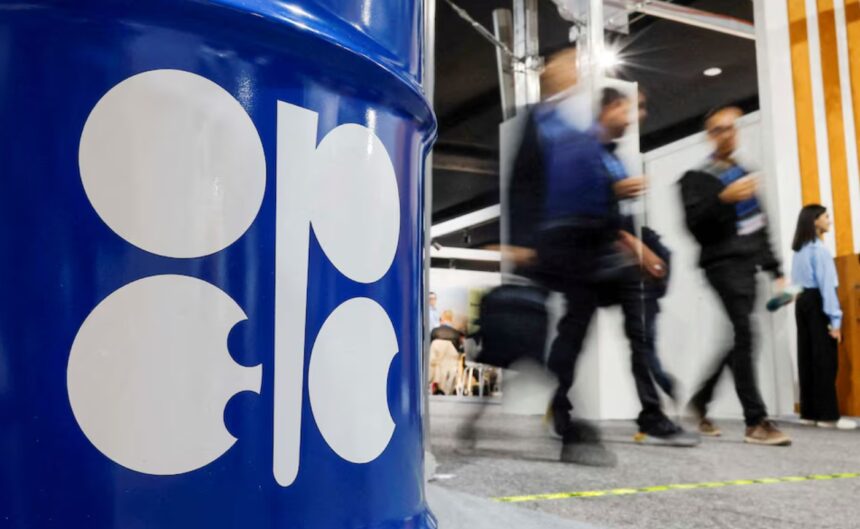
output hikes — Oil producers are pausing output hikes as fears of oversupply loom large over the market. OPEC+ has decided on a modest output increase for December, but plans to hold off on further increases in the first quarter of the next year.
In a recent meeting, OPEC+ agreed to raise output targets by 137,000 barrels per day for December, maintaining the same increment as in October and November. This decision comes after a period of increased output that saw targets raised by approximately 2.9 million barrels per day, equating to about 2.7 per cent of global supply since April.
However, the pace of increases has slowed significantly due to growing concerns about a potential supply glut. The situation has been complicated further by new sanctions imposed by Western nations on Russian oil producers, which may hinder Moscow’s ability to boost output.
Among the eight OPEC+ members participating in the meeting—Saudi Arabia, Russia, the United Arab Emirates, Iraq, Kuwait, Oman, Kazakhstan, and Algeria—the decision to pause production increments from January to March 2026 reflects a cautious approach to managing the market.
As oil prices fluctuated, dipping to a five-month low of around $60 a barrel on October 20 due to oversupply fears, they have since recovered to approximately $65 a barrel, mainly driven by sanctions on Russia and renewed optimism surrounding US trade discussions.
Industry analysts have noted that OPEC+ is taking a strategic step by pausing production increases. Jorge Leon from Rystad commented, “OPEC+ is blinking—but it’s a calculated blink. Sanctions on Russian producers have injected a new layer of uncertainty into supply forecasts, and the group knows that overproducing now could backfire later.”
Amrita Sen from Energy Aspects highlighted that the January to March period typically represents the weakest quarter for oil demand and supply balances. By pausing, OPEC+ is not only trying to protect prices but also demonstrating its proactive management of the market.
As the group plans to meet again on November 30 for a full OPEC+ discussion, market watchers will be keenly observing the developments. Giovanni Staunovo from UBS noted that oil prices are unlikely to move significantly when trading resumes on Monday, as the modest production increase for December had already been anticipated.
Previously, OPEC+ had been reducing output for several years until April, with cuts peaking in March at a total of 5.85 million barrels per day. This included voluntary cuts of 2.2 million barrels per day and additional reductions from eight members and the entire group. While the group has begun to unwind these voluntary cuts, the last elements of the cuts are set to remain in place until the end of 2026.