The Nikkei 225 remains in a bullish trend, evidenced by the Japan 225 CFD Index rallying by 5.3% to achieve a new all-time high of 45,956 last Thursday, following the FOMC meeting. This upward momentum reflects a growing confidence among investors in the Japanese market, driven by positive macroeconomic indicators and earnings revisions.
Photo: financialmirror.com
However, this bullish sentiment faced a temporary setback as the index underwent a corrective pull-back of 3.2%, printing an intraday low of 44,485 on Friday, September 19. This decline coincided with the Bank of Japan’s (BoJ) announcement regarding the unwinding of its significant ETF holdings, valued at approximately ¥79.5 trillion as of mid-September. The BoJ’s decision to gradually sell its ETF assets, targeting an annual pace of around ¥620 billion (€3.56 billion) by market value starting in 2026, marks a pivotal shift in its long-standing ultra-easy monetary policy.
Nikkei 225: Market Reaction to Monetary Policy Changes
The market’s immediate reaction to the BoJ’s announcement indicated a degree of apprehension among investors, as they weighed the implications of this long-term unwinding process. Analysts suggest that the unwinding could potentially extend over a century, raising questions about how this will influence liquidity in the market and the trajectory of the Nikkei 225.
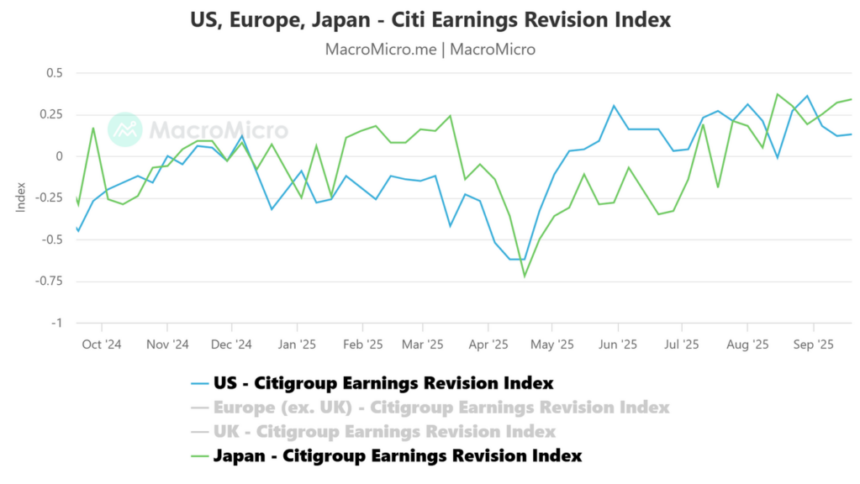
Despite the short-term volatility, the broader market outlook remains optimistic. The Citigroup Earnings Revision Index for Japanese equities, a key indicator of analyst sentiment, has shown significant improvement. As of September 19, the index rose to 0.34 from a previous reading of 0.19 on August 29, indicating that analysts are increasingly bullish on corporate earnings prospects in Japan. This persistent upward trend, which began on June 20, when the index was at -0.35, reinforces the narrative that the Japanese stock market is poised for growth.
Analysts Optimistic on Earnings Growth
The consistent upgrades in earnings forecasts are crucial for sustaining investor confidence. The pace of these upgrades has accelerated notably since late August, suggesting that investors are betting on a robust recovery and profitability within Japanese companies. This sentiment is further bolstered by expected fiscal policy shifts as the ruling Liberal Democratic Party (LDP) prepares for leadership elections in early October.
With leading candidates like Sanae Takaichi and Shinjiro Koizumi advocating for more liberal fiscal policies and increased government spending, the potential for enhanced economic stimulus adds to the bullish outlook. Analysts anticipate that whichever candidate emerges victorious will likely foster an environment conducive to growth, further supporting the performance of the Nikkei 225.
Looking Ahead
As the market digests these developments, the Nikkei 225’s ability to maintain its bullish trend will depend on the interplay between macroeconomic data, corporate earnings, and shifts in monetary policy. While the BoJ’s ETF unwind poses a new challenge, the underlying fundamentals suggest that the index has the potential to recover and continue its ascent. Investors will be closely monitoring the situation as they assess the implications of political changes and economic data releases in the coming weeks.