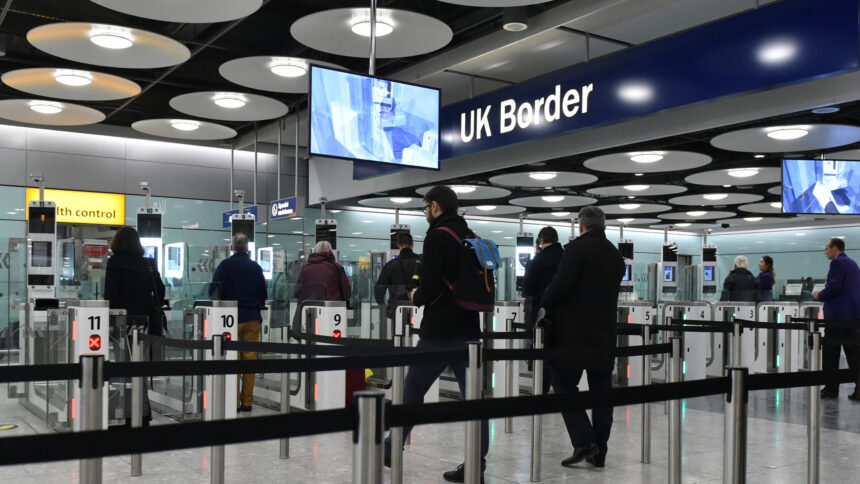
New regulations regarding British passports for dual nationals entering the UK have sparked confusion among citizens. Many British citizens who also hold citizenship in Cyprus and other countries are concerned about a supposed new requirement to present a valid British passport upon arrival in the UK. However, the British government has clarified that this has technically always been the case.
A spokesperson from the UK Home Office stated, “They have always been required to have a valid British passport to enter the UK.” Despite this, the official acknowledged that British dual nationals could previously enter the UK using their non-British passports without facing enforcement actions.
British passports: Clarifying the Rules Amidst Changes
As the UK prepares to fully implement its electronic travel authorisation (ETA) system in February, dual nationals are encouraged to understand how the updated rules will affect their travel. The Home Office spokesperson confirmed that British dual nationals can obtain an ETA through the online portal, allowing them to enter their non-British passport details and pay a fee of £16 (€18.47).
However, there is a significant catch. The application process includes a question about the applicant’s nationality. If they indicate they are a British national, they cannot proceed with the application. “They would have to lie,” the spokesperson remarked, highlighting the potential legal ramifications of such an action. Lying on a visa application is a criminal offence, akin to illegally entering the country, though the spokesperson reassured that enforcement is minimal.
Advising Caution to Dual Nationals
The spokesperson advised against travelling to the UK without a valid British passport, referencing the government’s official guidance. Dual nationals who do not present a valid passport may encounter delays at the border, potentially facing lengthy processes to prove their British nationality if stopped by officials.
The only alternative to a valid British passport for entering the UK is a certificate of entitlement, which will also be fully digitised by February. Previously, this certificate was issued as a vignette sticker in a non-British passport. It serves as proof of the individual’s right to reside in the UK, but obtaining one requires applying for a new certificate each time the passport is renewed. The cost for the certificate is £589 (€679.65), and applications are available online for British nationals and those with the right of abode in the UK, excluding residents of North Korea.
Understanding Documentation Requirements
The House of Commons library has offered insights into why only valid British passports or certificates of entitlement are accepted for travel. While certificates of naturalisation are acknowledged as legal evidence of British citizenship, they are not valid for travel. Concerns over fraud, misuse, and the security of documentation contribute to this restriction. Passports are deemed more secure due to their inclusion of the holder’s photo and biometric data, while certificates of entitlement are linked to the owner’s passport.
As dual nationals navigate these regulations, the emphasis remains on ensuring compliance with the established rules to avoid complications during travel. The upcoming changes to passport and travel documentation policies highlight the importance of understanding one’s rights and responsibilities when entering the UK.