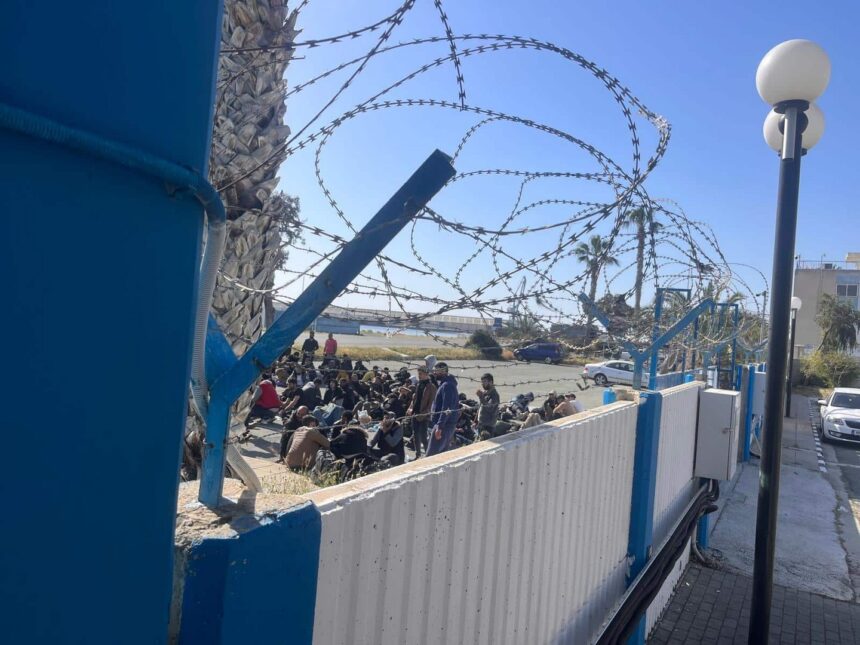
asylum status — Under a newly passed law, migrants granted asylum in Cyprus face the potential loss of their international protection status if they commit crimes. This significant legislative change, ratified by the parliament on Thursday, seeks to streamline deportation processes for those who violate legal norms.
- “It depends on the circumstances of the case, for example whether the offence has been committed repeatedly,” the ministry explained.
- “If they challenge the revocation in court, a final judgment must be issued before they definitively lose the right to remain,” the ministry noted, ensuring that due process is upheld.
- “I prefer that such decisions are issued by a court of law,” she stated, stressing that her opposition is grounded in principle, not political affiliation.
Asylum status: Amendments to Refugee Law
The new bill modifies existing refugee legislation and includes technical provisions related to the establishment of a deputy ministry of migration, set to commence operations in summer 2024. This ministry will assume responsibilities previously managed by the interior ministry.
Conditions for Revocation of Asylum
According to the amendments, individuals with international protection may have their status revoked and subsequently be deported if they are convicted of criminal acts. However, the law does not specify which crimes will trigger this revocation.
The deputy ministry of migration has clarified that it cannot provide an exhaustive list of qualifying offences. Instead, it stated that each case will be assessed individually, considering relevant legal precedents. This means that the spectrum of offences could range from serious crimes like murder or rape to lesser crimes such as illegal employment or repeated theft.
“It depends on the circumstances of the case, for example whether the offence has been committed repeatedly,” the ministry explained.
Alignment with EU Standards
The amendments align Cyprus with EU Directive 2011/95/EU, which sets out common standards for asylum procedures and qualifications for international protection. This alignment is crucial for Cyprus to adhere to broader European migration policies and standards.
Rights of Affected Individuals
The deputy ministry has indicated that individuals whose asylum status is revoked will also forfeit their right to remain in Cyprus. However, the ministry emphasised that these changes do not entail automatic deportation for migrants who commit crimes. Affected individuals have the right to appeal the revocation in court, and a final judgement must be reached before they permanently lose their right to remain.
“If they challenge the revocation in court, a final judgment must be issued before they definitively lose the right to remain,” the ministry noted, ensuring that due process is upheld.
Decision-Making Authority
The authority to revoke protection status will reside with either the Deputy Minister of Migration, Nicholas Ioannides, or the asylum service. This decision-making structure has raised concerns among some political figures regarding the potential for subjective interpretations of the law.
Political Reactions to the New Bill
The bill was passed with a tally of 27 votes in favour and 15 against, with opposition from the political parties AKEL, the Greens, Edek MP Kostis Efstathiou, and Volt MP Alexandra Attalides. Attalides voiced her discontent, highlighting that such critical decisions should be made by a court rather than a minister, expressing her concern over the potential misuse of authority.
“I prefer that such decisions are issued by a court of law,” she stated, stressing that her opposition is grounded in principle, not political affiliation.
Conversely, Disy, the ruling party, welcomed the bill, describing it as a necessary measure for managing migration and enhancing public safety. They advocated for strict measures against third-country nationals who commit serious crimes and argued that revocation of refugee or subsidiary protection status is essential for effective immigration control.
Statistics on Asylum in Cyprus
According to data released in February 2025 by the United Nations Office for the Coordination of Humanitarian Affairs (OCHA), approximately 23,300 individuals have been granted international protection in Cyprus from 2002 to the end of 2024. This figure includes around 18,700 who received subsidiary protection and 4,600 who were granted refugee status.
In addition, Cyprus is currently home to about 24,000 refugees from Ukraine, who benefit from temporary protection. This special category of international protection has seen over €39 million allocated in the initial two years of the war, covering accommodation, language classes, psychological support, and legal services.
International Protection Principles
The UNHCR in Cyprus emphasises the principle of non-refoulement, which prohibits returning individuals to countries where they may face torture or inhumane treatment. This principle applies to all individuals with international protection, including refugees and asylum seekers.
The UNHCR states that revocation of protection status is permissible only under stringent conditions, primarily if deemed necessary for public interest or policy reasons. They further assert that deportation to countries where individuals may face danger is strictly prohibited, even if the deportation is justified on grounds of public security.
Future Implications
As Cyprus prepares to implement these amendments, the balance between migration management and the protection of human rights will be closely scrutinised. The upcoming establishment of the deputy ministry of migration will play a pivotal role in managing these complex issues, amid ongoing tensions regarding immigration policy across Europe.