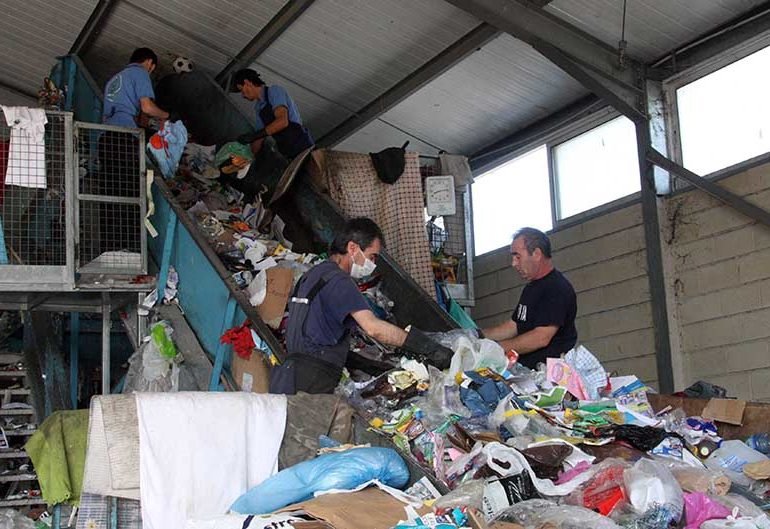
The new landfill tax has ignited criticism regarding Cyprus’ waste management failures, as officials warn that it may exacerbate existing problems. Ecologists Movement MP Charalambos Theopemptou characterised the situation as “frustrating” and raised concerns about the impact on residents. On Thursday, he stated, “If they increase the price per tonne at Koshi, they will need to increase the cost of the pay-as-you-throw system,” highlighting the delicate balance between taxation and waste management strategies.

Photo: cyprus-mail.com
Landfill tax: Koshi’s Role in Waste Disposal
Koshi serves as a primary waste disposal site in Cyprus, where municipal rubbish is weighed and charged per tonne. Theopemptou noted that due to inadequate infrastructure, household waste often contains excessive materials, with organic waste alone accounting for 40 per cent of what is disposed of at Koshi. This inefficiency raises serious questions about the effectiveness of the current waste management policies.
Concerns Over Pay-as-You-Throw System
The introduction of the landfill tax coincides with plans to implement a pay-as-you-throw system, which aims to incentivise residents to recycle. Theopemptou observed that the timing of the tax could complicate this initiative, stating, “The landfill tax comes at a time when we are supposed to be implementing a pay-as-you-throw system, where residents are given incentives through lower fees if they recycle packaging, paper, hazardous household waste and organic waste.”
Government’s Waste Policy Under Scrutiny
The new tax has been framed within the broader context of government waste policy, which has come under fire from various stakeholders. Theopemptou suggested that earlier “green taxes” on water, energy, and waste may have been introduced to cover potential fines linked to infringement cases filed against Cyprus by the European Commission. He stated, “These taxes are the result of EU obligations and coincide with the areas where the EU was preparing to start infringement proceedings against us.”
Infringement Procedures and Government Accountability
Currently, Cyprus faces three infringement procedures related to its waste management practices. Theopemptou expressed concern that the new landfill tax announced on Wednesday is merely an additional burden on citizens, stating, “In my opinion, they were included simply to collect money to pay future fines.”
Municipalities Respond to Tax Introduction
The Union of Cyprus Municipalities has publicly condemned the new landfill tax, arguing that it unfairly shifts the financial burden of the government’s mismanagement onto municipalities and citizens. They commented, “Despite our well-documented positions and repeated interventions, the government has made a decision that essentially transfers the cost of a long-standing state failure to municipalities and citizens.”
Call for Fair Transition in Waste Management
The union has accused the government of delayed planning and mismanagement, asserting that Cyprus lacks adequate waste management infrastructure, which has led to infringement cases. They emphasised, “The green transition must be fair and based on timely planning and state responsibility, not on new burdens for citizens.” They have urged the government to reconsider the landfill tax, calling for a more equitable approach to waste management.
Environmental Organisations Weigh In
The Federation of Environmental Organisations (Opok) echoed similar sentiments, stressing that solid waste management in Cyprus is a critical issue with significant environmental implications. They pointed out that the absence of sufficient recycling facilities has contributed to the proliferation of illegal dumping sites, which pose serious environmental risks. Opok stated, “Solid waste management in Cyprus remains one of the most critical environmental issues, with serious impacts on the environment and society.”
Statistics Highlight Waste Challenges
Recent data from the statistical service Cystat revealed that per capita waste reached 650 kilos in 2023, totalling 625,000 tonnes of municipal solid waste. Despite Cyprus being one of the highest waste-producing countries in Europe, recycling rates remain substantially below European targets, with much waste still being sent to landfills. Opok added, “The lack of adequate control and implementation leads to illegal dumping and the creation of a landscape of waste sites.”
Understanding the Pay-as-You-Throw System
The pay-as-you-throw system requires residents to purchase designated municipal bin bags, eliminating flat annual garbage fees, which can exceed €200 in some areas. This system is intended to incentivise residents to pay only for the waste they produce, thereby encouraging recycling and reducing general waste. However, its implementation has faced criticism, particularly from residents in the Aglandja district of Nicosia, who find themselves paying for bags they do not fully use.
Government’s Financial Projections and Future Plans
Agriculture Minister Maria Panayiotou announced that the landfill tax will initially drop from €35 to €10 per tonne, with a planned increase of €5 annually starting in 2028, eventually reaching a maximum of €70. She emphasised that the increase is not necessarily a burden, as it is expected that waste volume will decline with effective recycling initiatives. The government anticipates that without the pay-as-you-throw scheme, the additional burden on annual garbage fees could significantly rise, potentially reaching €26.50 by 2030. However, if recycling and landfill reduction targets are met, this figure could decrease considerably.
Future Steps for Waste Management Improvement
Panayiotou reassured that the government aims to prevent passing these fees onto residents, pledging a total of €48 million to local authorities for implementing necessary waste management schemes. She acknowledged ongoing challenges, such as finalising action plans and enhancing infrastructure at green points. “Of course, unfinished business remains,” she concluded, stressing the importance of a cohesive approach to resolving Cyprus’ waste management issues.