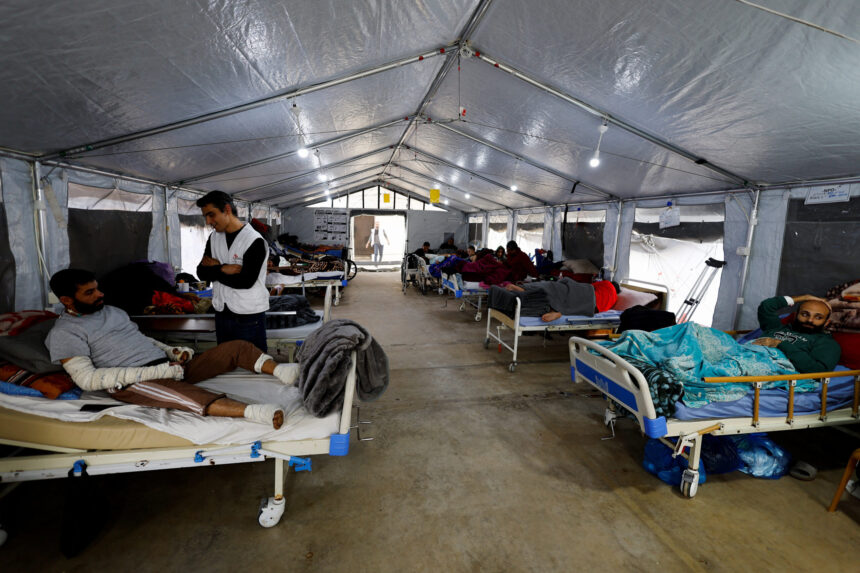
Medical charity Medecins Sans Frontieres (MSF) has firmly stated it will not provide the staff details demanded by Israel to maintain its access to Gaza and the West Bank. This decision comes after the organisation was unable to secure assurances regarding the safety of its teams operating in these regions.
MSF, which plays a crucial role in supporting hospitals in the beleaguered Gaza Strip, is among 37 international organisations that Israel has ordered to cease operations unless they comply with new regulations, which include submitting comprehensive employee lists. The charity is deeply concerned that sharing such information could jeopardise the safety of its personnel, particularly in a context where hundreds of aid workers have suffered casualties amidst ongoing conflict.
In a recent statement, Israel’s diaspora ministry has taken a strong stance, accusing Hamas of pressuring MSF to avoid compliance. However, this assertion remains unsupported by concrete evidence and appears to be based on a declaration from the Gaza health ministry that rejected the idea of sharing personal data of health staff due to concerns about their safety.
Israel’s ministry, which oversees the registration process, claimed that the intention behind these regulations was to prevent the diversion of humanitarian aid by Palestinian armed factions. Yet, aid agencies have contested this narrative, arguing that there is insufficient evidence to suggest that significant aid has been misappropriated.
Last week, MSF had indicated a willingness to share a partial list of Palestinian and international staff who were agreeable to releasing their information, provided this was strictly for administrative purposes and did not endanger their safety. The organisation emphasised the necessity of retaining control over the distribution of medical humanitarian supplies to ensure their effective delivery.
Despite MSF’s willingness to cooperate under stringent conditions, the charity has expressed frustration over the lack of constructive engagement with Israeli authorities to achieve the necessary safety assurances. As a result, MSF has concluded that its operational capacity in Gaza and the West Bank is at serious risk, which could lead to catastrophic consequences for humanitarian services in these areas.
As the situation develops, the potential fallout from Israel’s demands on humanitarian organisations like MSF raises significant concerns regarding the future of aid delivery in regions already facing dire humanitarian crises.