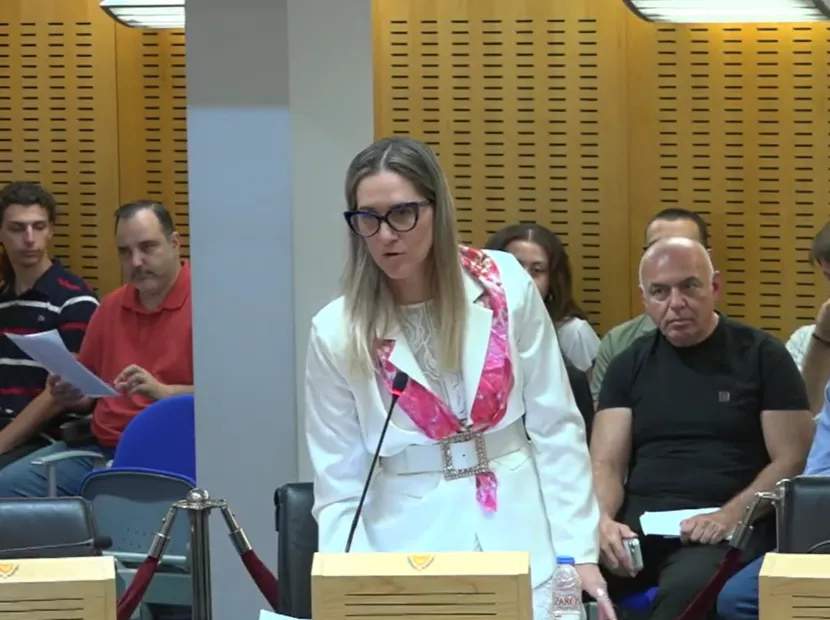
MP Diana Constantinide has shared her deeply personal experience of loss, stating that she is a collateral loss in the ongoing conversation about femicide. Her mother was murdered in 1993, a tragedy that has shaped her perspective on the impact of violence against women. This revelation comes as discussions surrounding femicide are reignited following a recent attempted murder case in Limassol, where a police officer shot his wife before taking his own life.

Photo: en.philenews.com
Personal Loss and Lasting Impact
Constantinide’s poignant comments reveal the profound emotional scars left by such tragedies. “I am one such collateral loss. In 1993 I lost my mother, in a murder case. I have lived, and continue to live, the collateral loss part of it, even though it was not a case of domestic violence,” she stated. Her words underscore the idea that the ramifications of murder extend beyond the immediate victims to their families, often leaving them to navigate their grief alone.
Beyond Legal Implications
The MP emphasised that the loss of a mother is not merely a legal issue; it is a deeply personal tragedy that affects the emotional well-being of those left behind. “Having your mother taken from you, the person we all need so much, is not just a legal matter. It is a deeply personal matter,” she expressed. Constantinide highlighted the importance of providing support to children who must cope with the aftermath of femicide or attempted murder, stressing that their experiences must be recognised and addressed.
Support in Times of Grief
Reflecting on her own journey, Constantinide spoke of the essential support she received from her father and husband after her mother’s murder. “In this murder, in 1993, two men took my mother’s life. But two men, my father and my husband, stood by me so that I could be here today. They became my legs when I fell to my knees. They became my voice when I lost my voice, my belief in myself,” she recounted. This support system highlights the critical role that family and loved ones play in helping individuals cope with profound loss.
Empowering Women to Speak Out
Addressing women who might be experiencing abuse or living in fear, Constantinide urged those affected to find the courage to seek assistance. “Gather up whatever crumbs of strength you have inside you. And if you don’t have any, give birth to strength. We women can give birth. Give birth, and speak,” she encouraged. Her call to action is a powerful reminder of the importance of solidarity and support among women facing violence.
Historical Context of Femicide in Cyprus
The renewed debate on femicide in Cyprus has been significantly influenced by the tragic events of 1993, when the murders of Christine Constantinide and Oxana Lisna shocked the nation. Christine’s disappearance was reported on June 7, 1993, but it wasn’t until October 26 that her body was discovered at the Kotsiatis rubbish dump, following tips from the perpetrators who were later apprehended. This investigative effort involved the deployment of ten excavators to retrieve her body, which had been concealed under a significant amount of refuse.
Convictions and Ongoing Issues
Oxana Lisna, a 21-year-old of Romanian origin, disappeared shortly after Christine, on June 20, 1993. Her remains were found on October 31, 1993, in a dry well in Livadia, Larnaca. Both victims were discovered in a state of decomposition. Antonis Prokopiou Kitas, known as ‘Al Capone,’ and Michalis Iacovides were ultimately convicted in 1994 for the rape and murder of these two women, receiving life sentences. Their case was marked by Kitas initially attempting to divert blame onto another individual, but it was Iacovides’s confession that led to the truth coming to light.
Current Trends in Gender-Based Violence
The recent attempted murder in Limassol, which has drawn public attention, has led to an emergency session of the Human Rights and Equal Opportunities Committee of Parliament. During this session, Police Chief Themistos Arnaoutis highlighted the pervasive nature of gender-based violence, stating that the issue is “much bigger than we believed.” The statistics he presented were alarming: between 2021 and 2026, there were 18,409 domestic violence complaints recorded, yet only 3,674 arrests were made.
A Call for Change
This disparity points to the urgent need for systemic change in how cases of domestic violence are handled and prioritised. Constantinide’s remarks and the recent events serve as a catalyst for renewed discussions on femicide and the necessary steps to safeguard women in Cyprus. As more voices join the conversation, it becomes clearer that addressing the root causes of violence against women is essential for creating a safer society.
The stories of victims like Christine Constantinide and Oxana Lisna, and the lived experiences of survivors, must not be forgotten in the push for change. The legacy of loss can drive the movement towards a future where women are protected and supported, rather than left to navigate their grief alone.