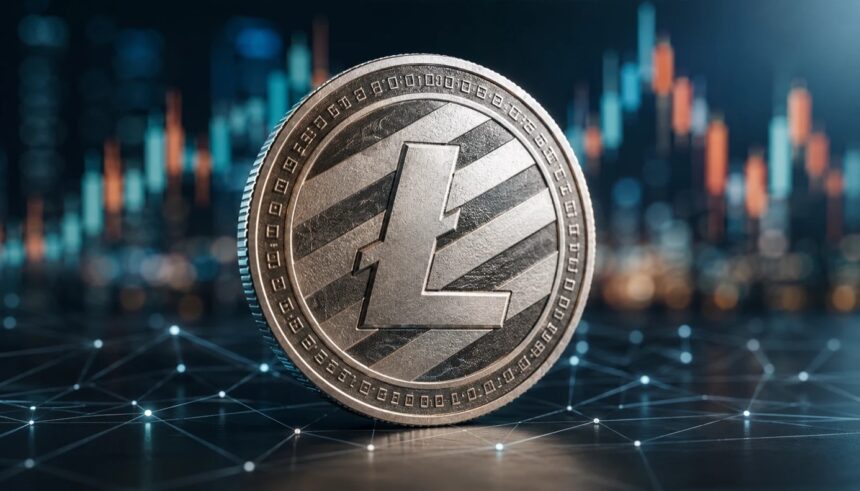
Litecoin continues to stand out as a reliable payment method in the evolving cryptocurrency market. Unlike many newer cryptocurrencies that chase trends and innovations, Litecoin has carved its niche through consistency and practical utility since its inception in 2011.
Stability in a Changing Landscape
In an industry often dominated by fleeting projects, Litecoin’s enduring presence highlights its effectiveness as a digital asset. For over a decade, the Litecoin network has consistently processed transactions while maintaining extensive support across various exchanges and wallets. This stability is increasingly rare in a space where many cryptocurrencies fail to achieve lasting adoption.
Designed for Efficient Transactions
When Litecoin was launched, its creators aimed to enhance the existing frameworks used for digital payments rather than reinventing the wheel. A key differentiator for Litecoin is its transaction speed; while Bitcoin generates a new block approximately every ten minutes, Litecoin does so every two and a half minutes. This quicker block generation facilitates faster transaction confirmations, making Litecoin particularly suitable for payment-oriented use cases.
Transaction costs are another area where Litecoin has excelled. Historically, fees associated with Litecoin transactions have remained low, which is vital during periods of high blockchain activity. This cost efficiency makes Litecoin a practical option for smaller purchases and recurring payments.
Widespread Adoption Among Businesses
However, technology alone does not dictate the success of a cryptocurrency as a payment method; accessibility and user adoption are equally important. Litecoin enjoys extensive support across the cryptocurrency ecosystem. It is readily available on major exchanges and supported by numerous wallets, making it a familiar choice for users who have engaged with digital assets over the years.
This familiarity translates into practical advantages for businesses. Customers are more inclined to complete transactions using a cryptocurrency they already understand, rather than being required to learn a new digital asset. As a result, Litecoin often appears alongside Bitcoin and stablecoins in discussions about cryptocurrency payment options.
Versatile Use Cases for Litecoin
Litecoin’s practical design enables its adoption across various payment scenarios. E-commerce platforms often accept Litecoin as an additional checkout option, catering to customers who prefer to use digital currencies. Additionally, many digital service providers, software companies, and online platforms have integrated Litecoin into their payment offerings over the years.
International transactions also highlight Litecoin’s utility. Businesses and individuals engaging in cross-border payments often seek efficient methods that simplify the transfer of funds without introducing unnecessary complications. Litecoin’s reliability in facilitating diverse transaction types underlines its value beyond just being a digital currency.
The Complexities of Accepting Litecoin
While accepting Litecoin may appear straightforward—generating an address, receiving payment, and completing the transaction—the reality can become more complicated as transaction volume increases. Businesses that aim to accept Litecoin on their platforms often realise that payment acceptance is just one aspect of a broader operational framework.
As transaction volumes rise, businesses must consider payment monitoring, address generation, transaction verification, fund management, reconciliation, and reporting. Handling these processes manually may suffice at a small scale, but inefficiencies quickly emerge as cryptocurrency payments become integral to daily operations.
Streamlining Cryptocurrency Payment Operations
The growing complexity of managing cryptocurrency payments has led many organisations to adopt specialised software designed to centralise and automate payment activities. Rather than relying on disparate tools, businesses are increasingly seeking solutions that integrate payment operations into their existing workflows.
Platforms like BitHide have surfaced to tackle these operational challenges, providing businesses with the necessary tools for payment management and automation. Such solutions enable companies to create structured environments for cryptocurrency payments without complicating their daily processes.
The Lasting Relevance of Litecoin
The cryptocurrency landscape is continually evolving, with new networks and technologies regularly entering the market, each promising improved solutions. Yet, Litecoin’s longevity serves as a reminder that practical utility remains a critical factor in maintaining relevance. Its blend of transaction efficiency, accessibility, and broad support has allowed Litecoin to endure long after many other projects have faded away.
While it may not command the same level of attention as the latest cryptocurrencies, Litecoin continues to fulfil a vital role that both businesses and users require: reliable digital payments. In a world where noise often overshadows substance, Litecoin exemplifies how enduring technologies can quietly lead the way in functionality and reliability.
For those interested in further developments in the cryptocurrency sphere, including updates on payment management platforms like BitHide, following their official communications can provide valuable insights.