The local news in Cyprus has recently been overshadowed by one of the most devastating wildfires in half a century, wreaking havoc in the Limassol district. Over 120 square kilometres of land have been scorched, cutting through the countryside and tragically resulting in two fatalities, alongside widespread destruction of homes and businesses.
Current Impact of the Limassol Wildfire
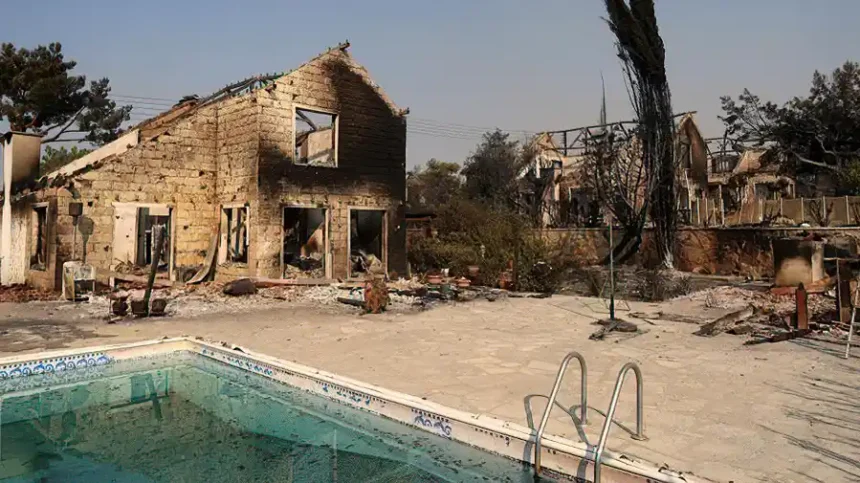
The Limassol wildfire has caused significant damage, with authorities reporting that 32 homes were completely destroyed and 53 others damaged. Initial assessments indicated that as many as 72 homes might have been affected, reflecting early tallies that may require further verification.
The blaze ignited around midday on a Wednesday, rapidly escalating amid brutal temperatures of 43–44°C, fueled by severe drought conditions and gale-force winds. Tragically, the inferno led to the loss of two elderly residents, aged 77 and 84, found deceased in their vehicle while attempting to escape. Numerous others were injured, with seven individuals needing hospital treatment—two of whom remain in serious but stable condition.
The chaotic scenes prompted evacuations from at least a dozen villages, including Souni, Omodos, Vasa Koilaniou, Alassa, Lofou, Malia, and Agios Therapon. Over 100 local residents were temporarily housed in emergency accommodations, with some relocated to hotels, indicating the severe strain on local resources.
Community Response and Support Efforts
The urgency of the situation has spurred community-driven initiatives to provide essential supplies for those displaced. NGOs, alongside organisations such as the Rotary Club, are rallying resources to assist affected families. The Cyprus government has established a dedicated bank account for donations aimed at supporting wildfire victims:
- Beneficiary: Republic of Cyprus
- Account Name: Wildfire Support Account
- Bank: Central Bank of Cyprus
- Account Number: 6001027
- IBAN: CY42 0010 0001 0000 0000 0600 1027
- Swift (BIC) Code: CBCYCY2N
Emergency Services and Infrastructure Challenges
The scale of the wildfire necessitated an urgent response, employing over 250 firefighters alongside 75 fire engines and 14 aircraft, including water-bombing planes from various nations. The cooperative effort highlights the critical importance of international support in combating such natural disasters.
Recent satellite analysis by ESA indicates severe ecological destruction, with approximately 50% of the affected area comprising grassland, 31% hardwood forest, 16% tree cover, and around 1% residential spaces completely burnt. Communities like Souni-Zanakia, Agios Therapon, Lofou, and Vouni were particularly hard-hit, leaving considerable damage in their wake. Furthermore, around 400 power poles were destroyed, resulting in prolonged disruptions to essential services including electricity and telecommunications. This prolonged damage poses a significant concern for local economies and the livelihoods of residents who depend on these services.
Long-Term Implications for the Real Estate Market
The fallout from such a devastating event points to multifaceted implications for the Cyprus real estate market. The immediate destruction, coupled with loss of land, homes, and agricultural resources, is likely to lead to a downturn in property values in the most affected areas, at least in the short term. Investors should consider how natural disasters can alter market dynamics and property desirability.
Furthermore, with the prospect of decreased demand in the immediate aftermath, potential buyers may seek bargains in the market, presenting opportunities for savvy investors. However, buyers should tread carefully; any investment in the vicinity of the current devastation comes with heightened risks, including potential future wildfires, problems with insurance coverage, and decreased quality of life due to ongoing recovery efforts.
Environmental Considerations and Community Resilience
The current wildfire catastrophe serves as a poignant reminder of the increasing vulnerability of Cyprus’s natural environment amid escalating climate change. Community resilience will be tested as local leaders encourage solidarity among residents. Yiannis Tsouloftas, a prominent community leader, has urged neighbours to open their homes to those displaced, fostering a spirit of unity and support that has historically defined Cypriot culture.
Authorities have also indicated that investigations into the fire’s origins will continue. Early reports have suggested suspected arson near landfill sites may have contributed to the rapid spread of the flames, underscoring the need for proactive measures in sustainable land management and fire prevention.
Conclusion
The wildfires in Limassol represent a complex intersection of humanitarian crisis and economic transition for Cyprus. The community faces daunting challenges in recovery, while investors must navigate the shifting landscape of the real estate market in the wake of such calamity. Future policies surrounding environmental management and disaster response will be crucial as Cyprus builds resilience against the threats posed by climate change and natural disasters.