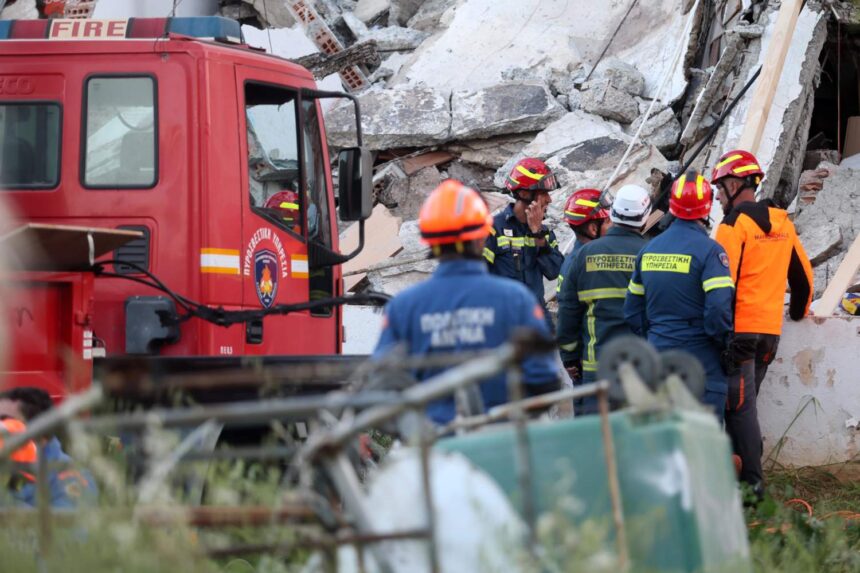
limassol building — The Limassol building that collapsed on Easter Saturday and resulted in the tragic deaths of two individuals had been marked as dangerous weeks prior, highlighting a visible risk of collapse. The incident has drawn significant attention as police investigators begin to unravel the circumstances surrounding this devastating event.
On the day of the collapse, local authorities and police were quick to respond, forming an investigative team from the Limassol Criminal Investigation Department (CID) to examine the events leading up to the tragedy. They are currently gathering a multitude of statements from witnesses, survivors, and officials, with plans to submit their findings to the Law Office next week.
Limassol building: Inspection Flags Imminent Danger
A technical inspection carried out by the Limassol District Local Government Organisation (DLGO) in early March 2026 rated the building on Aeschylou Street in Germasogeia as Category C. This classification indicates the highest danger level, and inspectors noted an imminent risk of collapse. In light of these findings, letters were dispatched to all nine owners, warning them of the perilous state of the structure and urging immediate action.
Ownership and Structural Concerns
The building, constructed in 1982, consists of six apartments on the first floor and four on the second, with one unit having been converted into two separate apartments. Among the nine owners is a Greek Cypriot resident who highlighted serious structural issues in correspondence with the DLGO. Frustrated by a lack of consensus among the other owners regarding urgent repairs, this appeal seems to have prompted the inspection that led to the building’s dangerous classification.
Gathering Evidence and Statements
The investigation has already amassed a wealth of testimonies, including those from survivors who escaped the building, neighbours who witnessed the collapse, and friends of the deceased. Additionally, officials from the Germasogeia Municipality and the DLGO have provided statements, with some deputy mayors still pending. The police are meticulously reviewing the building’s administrative files, which include documentation dating back to its original construction application in 1979.
Next Steps for Investigators
While investigators are currently focused on understanding the circumstances surrounding the collapse and the resulting fatalities, they have not yet pinpointed specific criminal offences. The findings from this investigation will be crucial, as any potential criminal responsibilities will be assessed in collaboration with the Law Office, which will decide on subsequent actions.
The Limassol community is now left grappling with the aftermath of this incident, as they await further updates from the ongoing investigation. The tragic loss of life has raised urgent questions about building safety and owners’ responsibilities in maintaining their properties.