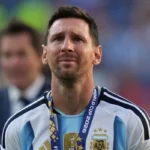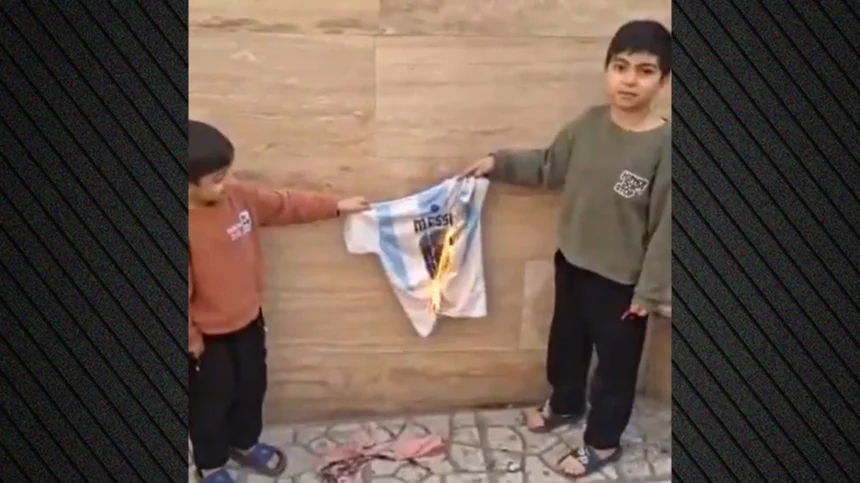
The recent incident of Iranian children burning Messi jerseys has sparked significant outrage, igniting a wave of protests against the United States. This act was triggered by the events of 5th March, when players from Inter Miami visited the White House following their victory in the MLS Cup.
Messi jerseys: Context of the Controversy
On that notable day, Lionel Messi and his teammates were celebrated by former President Donald Trump, who used the occasion to discuss military operations in the Middle East. The alignment of Messi, a global sports icon, with Trump’s controversial rhetoric has led to backlash from fans and critics alike, particularly in Iran where sentiments against U.S. policies run deep.
Emotional Reactions and Social Media Fallout
The sight of children burning Messi jerseys was emblematic of a broader discontent. Social media erupted with comments condemning Messi’s actions, with many expressing feelings of betrayal. A common refrain among frustrated fans was, “I hope you lose the World Cup,” reflecting a deep sense of disappointment. Others lamented, “I’ve lost my idol,” drawing comparisons to the late Diego Maradona, who was often seen as a figure of integrity.
Protests Across Iran
The protests were not just limited to the burning of jerseys but included larger demonstrations against U.S. influence in the region. These gatherings saw participants vocally expressing their disdain for American military interventions and the perceived betrayal by a player they once admired. The anger towards Messi was palpable; it was as if his visit to the White House had rendered him a symbol of capitulation.
The Broader Implications of Sports and Politics
This situation raises critical questions about the intersection of sports and politics. Athletes often find themselves in the spotlight not just for their performances on the field but also for their off-field actions. In this case, Messi’s presence alongside Trump during a politically charged moment has transformed him from a sports hero into a contentious figure in geopolitical discussions.
Statistics and the Bigger Picture
While the protests centred around Messi, they were also indicative of the larger socio-political landscape in Iran. The country is grappling with numerous issues, including economic hardships and rising tensions with the West. The anger directed at Messi is a reflection of this frustration, where sports figures are often caught in the crossfire of political disputes.
The Role of Media in Shaping Narratives
The media played a significant role in amplifying the sentiments surrounding the protests. Videos of the jersey burnings circulated widely, garnering international attention and sparking debates about athlete responsibility and the impact of their affiliations. The online discourse has been fierce, with many calling for a re-evaluation of how athletes engage with political figures.
Messi’s Legacy and Future Reactions
As the dust settles on this controversy, the question remains: how will this affect Messi’s legacy? Once viewed as a universal symbol of excellence and sportsmanship, his reputation has taken a hit, particularly among fans in Iran who feel betrayed. The long-term consequences of this incident may shape not only Messi’s career but also how athletes navigate their public personas in politically charged environments.
Looking Ahead: What This Means for Athletes
This incident serves as a stark reminder of the responsibilities athletes carry beyond the pitch. As global icons, their actions can have repercussions that extend far beyond sports. The backlash against Messi illustrates how intertwined sports and politics have become, and it raises awareness about the need for athletes to be conscious of their public engagements.
Moving forward, it will be interesting to observe how Messi, and indeed other athletes, respond to such challenges. Will they take a more active stance in political matters, or will they strive to maintain a clear boundary between their sports careers and political affiliations? Only time will tell.