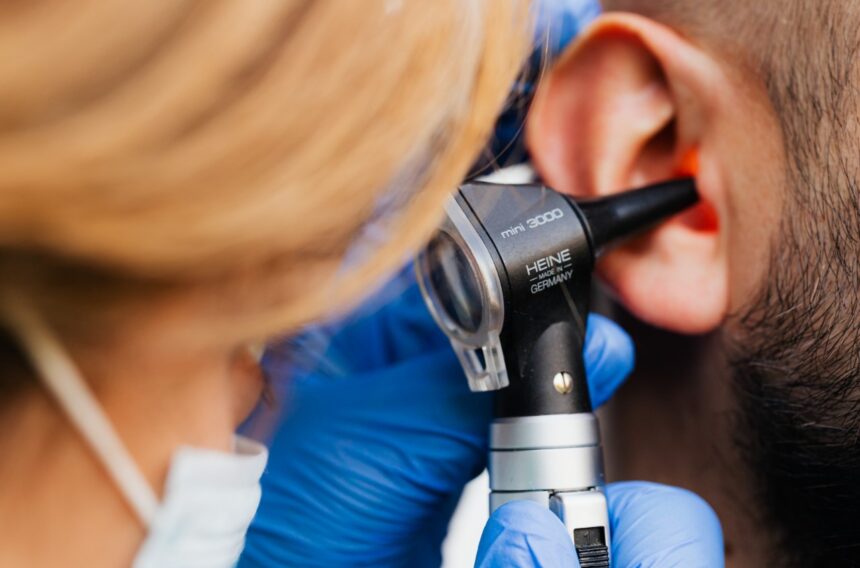
Hidden hearing loss affects millions, yet traditional hearing tests often fail to detect it. Researchers in Europe are unveiling groundbreaking tools that could transform diagnosis and treatment for this elusive condition.
The Struggles of Hidden Hearing Loss
Imagine the frustration of trying to engage in conversations in bustling environments, only to be told by medical professionals that your hearing is perfectly fine. This is the reality for many individuals suffering from cochlear synaptopathy, a condition that leads to hidden hearing loss and affects approximately 34 million adults across the EU, according to the Hearing Health Forum EU. The true scale of the issue is likely even greater, as conventional hearing assessments overlook this form of hearing impairment.
A Gap in Diagnosis and Treatment
Currently, there are no clinical methods to diagnose cochlear synaptopathy, nor are there approved treatment options. This gap leaves countless individuals grappling with significant hearing challenges without the necessary support. Professor Ingeborg Dhooge, who leads the Ear, Nose and Throat department at Ghent University hospital in Belgium, emphasises the debilitating nature of this condition, particularly in noisy settings like offices and shops where background sounds overwhelm conversations.
Breakthrough Research with EarDiTech
The EarDiTech research initiative, funded by the European Innovation Council, is actively addressing these challenges. Between 2022 and 2026, the project aims to develop diagnostic tools and treatments tailored for those affected by hidden hearing loss. Professor Sarah Verhulst, who leads the Hearing Technology lab at Ghent University, highlights a critical shift in understanding: rather than hair cell damage being the primary concern, it is the synapses connecting these cells to the auditory nerve that are often compromised. This new perspective is vital, as even one functioning synapse per hair cell is necessary to perceive sound, yet many are needed to decode speech amidst background noise.
The Limitations of Current Hearing Tests
The standard audiogram, which assesses hearing ability by playing various tones through headphones, fails to account for synaptic health. As a result, it does not accurately reflect the struggles faced by those with cochlear synaptopathy. The EarDiTech team has developed a novel test that combines electrodes placed on the forehead and earlobes with specifically designed audio stimuli, allowing for a more accurate assessment of synaptic function.
How the New Test Works
This innovative test aims to elicit a robust synaptic response. When individuals with healthy synapses are exposed to the audio stimulus, the electrodes capture a significant spike in neural activity. In contrast, those with synapse loss display a diminished response. By comparing these reactions, the researchers can gauge the extent of cochlear synaptopathy. Clinical trials conducted at Ghent University have demonstrated the test’s effectiveness across various age groups.
Portability and Future Implementation
Notably, this new diagnostic tool is compact and portable, making it suitable for everyday clinical use. With the goal of obtaining CE marking to certify compliance with EU medical standards, the team anticipates that it could be available in hospitals and clinics within the next two years, pending additional funding.
Advancing Beyond Diagnosis
Finding a solution to hidden hearing loss is another significant hurdle. Traditional hearing aids primarily amplify sound without addressing the challenges of distinguishing speech in noisy environments. Professor Dhooge notes that while hearing aids can assist, they often do not provide clarity, merely increasing volume.
Innovative Solutions Through Machine Learning
To tackle this issue, the EarDiTech team has employed machine learning to create a software algorithm designed to enhance sound processing for those with cochlear synaptopathy. By training the algorithm on two models—one for normal hearing and another for faulty sound processing—the researchers aim to optimise sound input tailored to the specific needs of patients. Clinical trials have already shown measurable improvements in patients’ ability to understand speech in noisy settings.
Looking Towards the Future
As the algorithm can run on low battery power and common hearing aid chips, it holds potential for integration into future hearing aids or even consumer earbuds. Imagine a scenario where users could simply instruct their devices to enhance their hearing in challenging acoustic environments. The EarDiTech team is currently seeking partnerships with hardware manufacturers to advance their software into market-ready products.
Understanding Hidden Hearing Loss
Despite the recent identification of hidden hearing loss, there remains much to learn about its prevalence and development with age. Professor Dhooge believes the new diagnostic tools will provide valuable insights into the condition, allowing for more extensive studies and a clearer picture of its impact.