Holguín advocates for an enhanced EU role in the ongoing Cyprus negotiations as she engages in diplomatic discussions in Brussels ahead of her return to the island. The UN Secretary-General’s personal envoy, María Ángela Holguín, is intensifying efforts to advance the Cyprus process, signalling a significant shift in her stance towards the European Union’s involvement in the negotiations.

Photo: en.philenews.com
Eu role: Diplomatic Engagement in Brussels
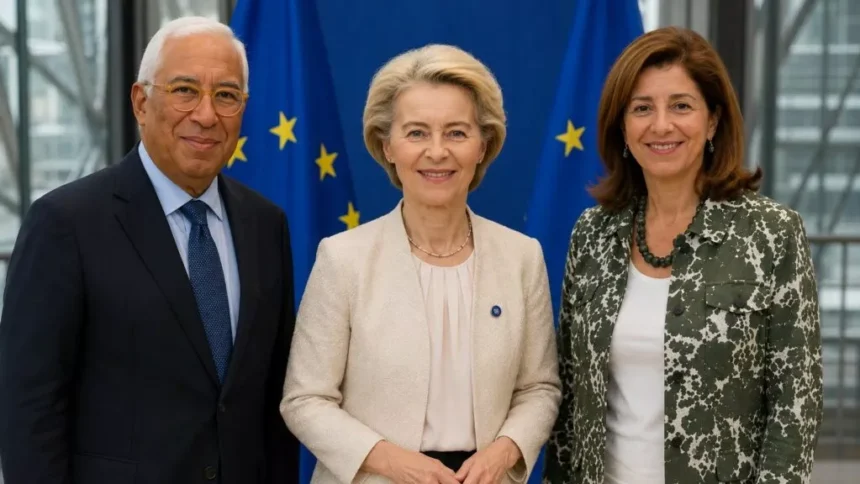
As part of her renewed engagement, Holguín is scheduled to meet with European Council President António Costa and European Commission President Ursula von der Leyen. These meetings are crucial for outlining the next steps in the Cyprus discussions and reflect an increase in diplomatic activity regarding the longstanding issue.
A Shift in Perspective
Previously, Holguín was cautious about the EU’s role, particularly regarding the appointment of an EU envoy. Her earlier term as UN envoy, which lasted only seven months, featured minimal interaction with proposals advocating for deeper EU involvement. This previous hesitance is now evolving, with indications that she sees the EU as a vital partner in the negotiation process.
Contrasting Views with Cyprus Leadership
Holguín’s evolving approach contrasts sharply with that of Cyprus President Nikos Christodoulides, who has consistently championed a proactive EU role in the talks. The differing perspectives highlight the complexities within the diplomatic landscape as both leaders navigate their respective mandates and responsibilities.
Challenges of Coordination
Adding to the complexity is the recent appointment of Johannes Hahn as the EU’s special envoy for Cyprus. His role was expected to facilitate closer coordination between the UN and EU envoys. However, Holguín reportedly demonstrated limited enthusiasm for this collaboration, questioning the overlap between her mandate and Hahn’s responsibilities. Hahn has since stepped down from his role to assume the presidency of Austria’s National Bank, which raises further uncertainty about the EU’s involvement.
Upcoming Geneva Meeting
Anticipation is mounting for an informal multilateral meeting set to take place in Geneva, involving the five parties engaged in the Cyprus discussions, along with the UN Secretary-General. Diplomatic sources indicate that there remains a lack of clarity regarding the objectives of this meeting and the subsequent steps in the process. Holguín’s push for renewed engagement aims to inject momentum ahead of this pivotal diplomatic event.
EU and Turkey Relations
Holguín’s renewed focus on EU institutions coincides with ongoing discussions concerning the European Union’s potential involvement in parallel tracks relating to EU–Turkey relations. Turkey has expressed interests that include visa liberalisation, the modernisation of the Customs Union, and participation in EU defence and security initiatives. Despite these aspirations, EU member states currently appear reluctant to advance Turkey’s accession process, favouring instead a reinforced partnership framework.
EU’s Competing Priorities
The Cyprus issue is not currently a priority on the EU’s agenda, which is largely dominated by the war in Ukraine. Cyprus has emphasised its position, stating it can only represent its own interests in EU discussions and cannot commit other member states to Turkish demands. The diverging views among EU member states, particularly between Germany and France, further complicate potential progress on issues such as customs union modernisation and visa liberalisation.
Navigating Diplomatic Complexities
Holguín is now tasked with balancing the UN-led efforts regarding Cyprus with the EU’s political framework, while also considering how Turkey’s demands relate to both processes. The meetings in Brussels will serve as a litmus test for the feasibility of coordination between the UN and EU, especially as the Cyprus negotiations approach significant informal discussions and possible new initiatives.
Future Dynamics of the Cyprus Process
These developments raise broader questions among diplomatic circles regarding the alignment and familiarity of the various international actors engaged in the Cyprus issue. The effectiveness of coordinating parallel tracks will be vital for the future of the negotiations. Holguín’s efforts to foster collaboration between the EU and UN could play a critical role in shaping the outcomes of the ongoing discussions.