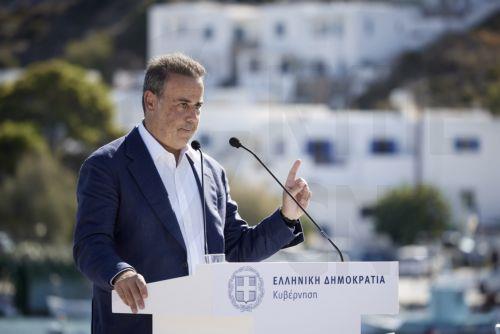
Greek Energy Minister Stavros Papastavrou has expressed his frustration over the ‘constantly conflicting messages’ from Cyprus regarding the Great Sea Interconnector, a pivotal project aimed at linking the energy grids of Cyprus, Greece, and Israel.
Interconnector: Concerns Over Project Viability
During a recent appearance on Open TV, Papastavrou highlighted comments made by Cypriot Finance Minister Makis Keravnos, who has raised questions about the project’s sustainability both prior to and following a meeting between Cypriot President Nikos Christodoulides and Greek Prime Minister Kyriakos Mitsotakis in New York. Papastavrou stated, ‘Keravnos is now telling the European Union that he is not going to abide by Cyprus Energy Regulatory Authority (Cera) decisions. All of this creates obstacles. The project is stuck in a constant questioning of its viability.’
Financial Commitments and Regulatory Challenges
The interconnector project is significant for Cyprus, promising to alleviate its energy isolation and reduce some of the highest energy prices in the European Union. However, the financial landscape is complicated. Cyprus agreed last year to make five annual payments of €25 million to the Greek independent transmission system operator, Admie, to ensure that the project has stable funding while it is under construction. Yet, these payments have been withheld by the Cypriot government, citing a lack of progress and disagreements over funding sources.
Statements from Government Officials
In a critical exchange, Papastavrou remarked, ‘Fifty-one per cent of Admie belongs to the Hellenic Republic. The Hellenic Republic does not engage in blackmail. It only speaks institutionally.’ This comment was aimed at Christodoulides, who previously suggested that Cyprus would not be ‘blackmailed’ by Admie regarding the payments necessary for the interconnector.
Project Financing and EU Involvement
The Great Sea Interconnector is co-financed by the EU, which indicates its perceived viability. Papastavrou mentioned that the project has thus far cost €300 million, fully covered by Admie. He emphasised the necessity of overcoming any reservations about the project’s viability, asserting, ‘All outstanding issues must be resolved immediately.’
Upcoming Discussions Among EU Ministers
With the EU’s 27 energy ministers set to convene later this month, discussions surrounding the interconnector will be pivotal. Papastavrou and Papanastasiou, the Cypriot Energy Minister, are expected to address the project’s future during this meeting.
Technical Challenges and Future Steps
One ongoing concern is the transfer of the project’s permit from Cyprus to Admie, which has not occurred two years after Cypriot company EuroAsia Interconnector Ltd withdrew from the project. Papastavrou noted that reservations must be lifted for work to proceed effectively. He stated, ‘The project is important and must proceed. Reservations must be lifted for the project to proceed.’
Disputes Over Project Viability
Keravnos recently cited two unnamed independent organisations that have reportedly concluded the project is not sustainable. This has led to mounting frustration among Greek officials, with Greek Deputy Prime Minister Kostis Hatzidakis urging the Cypriot government to clarify its stance on the interconnector. Keravnos described the financial situation as a ‘pseudo-dilemma,’ pointing out that taxpayers are also consumers of electricity.
Completion of Seabed Surveys
Technical surveys needed to determine cable placements have reportedly not been completed yet, which is crucial for the project’s cost assessment. Keravnos indicated that these surveys are decisive, but Greek Foreign Minister Giorgos Gerapetritis countered that such research had been conducted as planned, disputing the claims made by his Cypriot counterpart.
Implications for Regional Energy Security
The Great Sea Interconnector is seen as a critical step towards enhancing energy security and reducing costs for Cyprus, which has been reliant on expensive energy imports. The project is not just vital for Cyprus, but it also holds implications for regional energy cooperation among Greece, Cyprus, and Israel.
As discussions continue and tensions rise regarding the project’s future, both countries face the challenge of aligning their positions to ensure that the interconnector becomes a reality. The coming weeks will be crucial in determining how these conflicting messages can be reconciled and how the project can move forward.