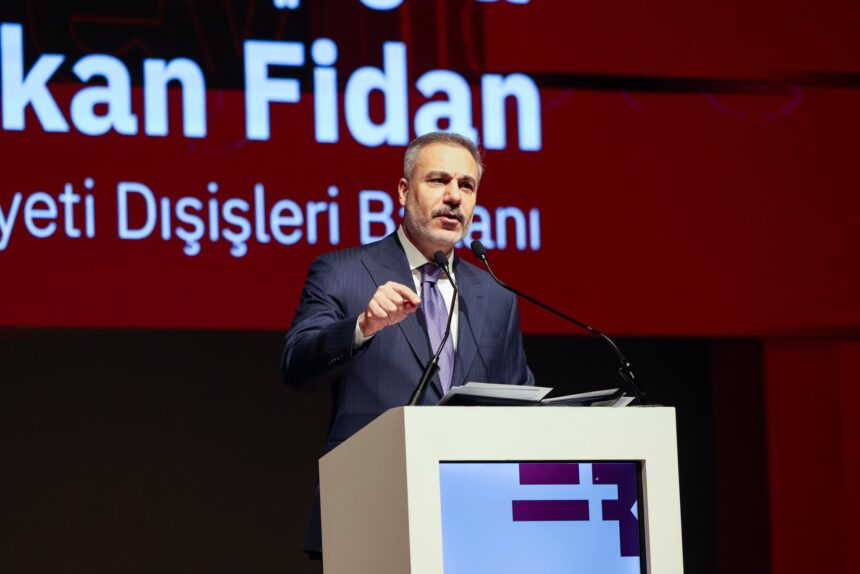
A solution to the Cyprus problem is up to the Greek Cypriots, according to Turkish Foreign Minister Hakan Fidan, who emphasised the need for a shift in mindset during a recent interview.
- A solution to the Cyprus problem is up to the Greek Cypriots, according to Turkish Foreign Minister Hakan Fidan, who emphasised the need for a shift in mindset during a recent interview.
Cyprus problem: Turkish Foreign Minister’s Strong Stance
In an interview with Turkish public broadcaster TRT on Thursday, Fidan addressed the long-standing dispute over Cyprus, asserting that Greek Cypriots are unlikely to agree to a settlement that involves equal sharing of power, wealth, and authority.
Fidan stated, “Greek Cypriot officials would never say ‘yes’ to an agreement with equal power, wealth, and authority sharing for Cyprus. They know this, we know this, the Europeans know this. This is a fact.” His comments highlight a persistent belief that the Greek Cypriot leadership remains resistant to compromise.
Advocating for a Two-State Solution
With this perspective, Fidan proposed a two-state solution as a viable alternative, stating, “Therefore, the alternative is a two-state solution. We can do this, and after a two-state solution, they can establish all kinds of cooperation or a political union. It’s up to them.” This suggestion aims to provide a fresh approach to addressing the divided island’s future.
Seizing Opportunities for Cooperation
Fidan also urged both Greek Cypriots and the international community to stop isolating Turkish Cypriots, which he believes hampers potential collaboration. He stated, “We can initiate quality cooperation. While the political issue is frozen, we can all benefit together from economic development, regional development, the use of energy resources, tourism, industry, and everything else.” His emphasis on economic cooperation reflects a desire for practical benefits that could arise from improved relations.
Challenging Old Mindsets
During the interview, Fidan stressed the importance of moving beyond entrenched views. “Clinging on to old goals and mindsets is not helping us address the issue positively,” he remarked, calling for bravery in confronting the realities of the current situation. He noted that the long-standing conditioning of Greek Cypriot society poses challenges for politicians seeking to change course.
Fidan expressed the urgency of recognising missed opportunities and the risks associated with the existing status quo. He stated, “Someone has to tell the truth about the realities on the island, the opportunities we have all missed, and the risks we have created due to the current de facto situation.” This call for honesty aims to encourage a more open dialogue about the future of Cyprus.
Historical Context and Future Prospects
Reflecting on past efforts, Fidan referenced Turkey’s support for the Annan plan and the Crans Montana process, noting that Turkish Cypriots had voted in favour of the United Nations’ plan while Greek Cypriots rejected it. This historical context underscores the complexities of the ongoing negotiations and the differing perspectives between the communities.
Upcoming EU Presidency as a Possible Opportunity
Fidan also pointed out that the Republic of Cyprus is set to take over the Council of the European Union’s rotating presidency next month. He suggested that this situation could provide an opportunity for Turkey to engage more meaningfully with the EU. “This situation could also be an opportunity for Turkey,” he mentioned, highlighting the potential for improved relations amidst political challenges.
Obstacles and Hope for Change
Despite expressing frustration over what he perceives as Greek Cypriot obstructionism on the international stage, Fidan remains hopeful for a change in stance. He remarked, “They obstruct us whenever they get the chance. However, I think that in the face of the current threats which Europe is facing, cooperation and relations between the European Union and Turkey have become more meaningful than ever.” This sentiment reflects an understanding of the broader geopolitical landscape and the potential for collaboration amidst challenges.
Fidan’s comments underline the complexity of the Cyprus problem and the significant role that Greek Cypriots play in any potential resolution. As discussions evolve, the emphasis on cooperation and a willingness to reassess long-held positions may be crucial for moving towards a lasting solution.