Tax reform: Finance Minister’s Positive Outlook
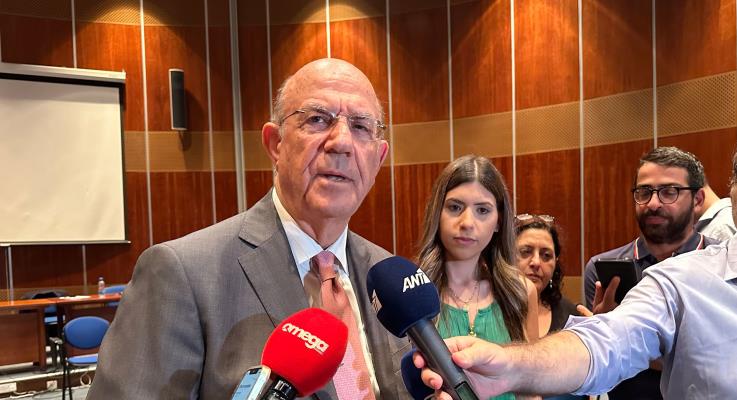
Finance Minister Makis Keravnos expressed optimism regarding the government’s tax reform plans following a recent meeting with political party leaders. During a two-and-a-half-hour discussion, he highlighted the potential for cooperation among various stakeholders to implement the proposed changes effectively.
Commitment to Timely Implementation
Keravnos emphasised the importance of maintaining a rapid pace in the dialogue, asserting that achieving the set timeline for the reforms to be in place by January 1 next year is a collective goal. He stated, “We can all move together and implement the tax reform,” reinforcing the necessity for a convergence of opinions from all social partners and political parties involved.
Planned Tax Changes
The government’s tax reform plans aim to relieve taxpayers and bolster the Cypriot economy’s competitiveness. Key proposed changes include raising the tax-free income threshold from €19,500 to €20,500, the first increase since 2008. Additionally, the top income tax rate of 35 per cent will only apply to individuals earning more than €80,000 annually, up from the previous threshold of €60,001.
Support for Middle-Class Families
President Nikos Christodoulides has underscored the importance of these reforms in supporting the middle class, which he identifies as the foundation of a prosperous society. The reforms include significant tax deductions that cater to the needs of households, with particular emphasis on families with dependents.
Incentives for Families and Young People
The proposed reforms feature additional incentives for parents, including €1,000 in tax-free income for each dependent child. For parents purchasing their first home or renting, there is an added €1,500 in tax-free allowances. Furthermore, parents making “green investments” will benefit from an additional €1,000.
Single parents stand to receive double the designated tax-free amount, while the government aims to provide tax relief incentives to support young people and encourage employment among women, addressing long-standing social challenges.
Changes to Corporate Taxation
In line with European Union regulations, the corporation tax will rise from 12.5 per cent to 15 per cent. This adjustment is part of a broader effort to enhance the fiscal framework and ensure compliance with EU standards.
Addressing Tax Evasion
In addition to the tax reforms, the government is introducing measures aimed at combating tax evasion. These include enhanced powers for tax authorities to close businesses that repeatedly fail to issue receipts or invoices. Furthermore, the government plans to criminalise the non-payment of income tax and increase penalties for tax offenders, reinforcing the commitment to a fair tax system.
Open Dialogue with Stakeholders
Keravnos acknowledged the concerns raised during the meeting regarding the powers of the tax commissioner, clarifying that the government does not intend to grant arbitrary powers. He assured that the commissioner’s role would be clearly defined and transparent, addressing stakeholders’ apprehensions.
As discussions progress, the Finance Minister remains committed to fostering an inclusive dialogue, stating, “I have heard very good opinions, positive views, and approaches” from the political leaders. He aims to integrate these perspectives into the reform process, ensuring that it meets the needs of all parties involved.
Aiming for Consensus
With the government’s timeline for implementation set for the start of next year, the focus remains on securing consensus among stakeholders, which Keravnos views as crucial for the success of the planned reforms. He reiterated that the collaborative effort is essential to achieving the desired outcomes for the Cypriot economy and its citizens.