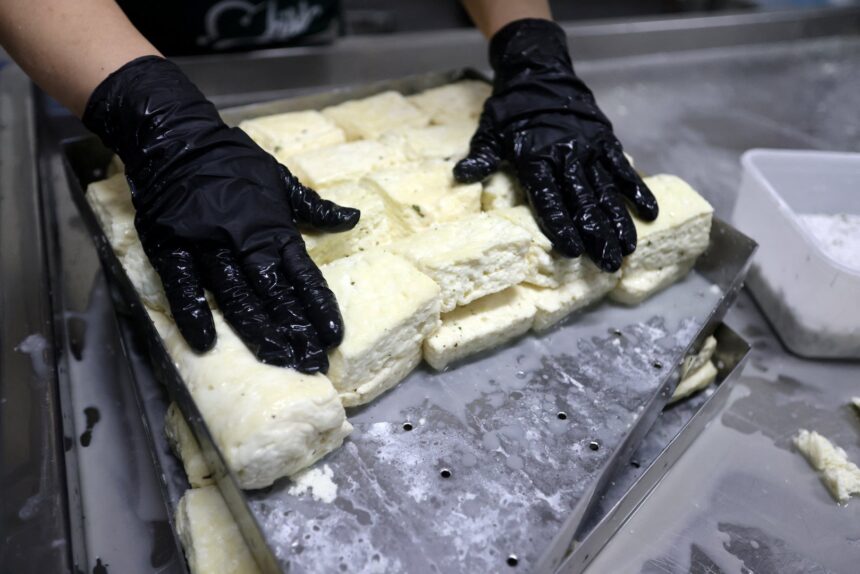
The focus keyword, PDO halloumi, has become a pivotal topic as sheep and goat farmers express strong opposition to any alterations in its Protected Designation of Origin (PDO) standards. The sheep and goat farmers association has reiterated its commitment to ensuring that at least 51 per cent of the final product consists of sheep’s and goat’s milk. This requirement is seen as essential for maintaining the cheese’s authenticity and its cultural significance to Cyprus.
Authenticity and Cultural Significance
In a statement released on Sunday, the association highlighted the importance of adhering to the PDO framework, which is designed to safeguard the historical and cultural integrity of halloumi. The cheese is not just a staple in Cypriot cuisine; it is also regarded as one of the island’s most significant export products.
The association emphasised that halloumi’s unique characteristics stem from its traditional production methods and its connection to the local culture. “Halloumi is not a common cheese product that can be adapted according to market or export needs,” the association stated, insisting that the traditional ratio of sheep’s and goat’s milk is fundamental to the product’s identity.
The EU’s Transitional Period
The European Union has allowed a 15-year transitional period for producers to adapt to the PDO requirements, which underscores the importance of a gradual approach to compliance. The association is advocating for measures that will not only promote adherence to the standards but also strengthen the sheep and goat farming sectors, increasing the volume of milk produced.
According to the farmers, achieving full compliance with the PDO standards will help preserve the authenticity of halloumi while supporting the livelihoods of those involved in traditional sheep and goat farming in Cyprus.
Concerns Over Mixed PDO Halloumi
In their statement, the association firmly rejected proposals for what has been termed “mixed PDO halloumi.” They argue that there are no legally recognised categories of halloumi under the European framework that would support such a classification. “The only product that can bear the name PDO halloumi is one that fully meets the approved European specifications,” they asserted. This position reinforces the need for strict adherence to the current standards, which they believe are vital for maintaining the quality and reputation of the product.
Implications for Local Farmers
The farmers’ association has voiced concerns that any weakening of the PDO standards could have dire consequences for family farms and communities reliant on sheep and goat farming. They warn that production challenges should not be used as a justification for altering established specifications. “European regulations cannot be selectively applied,” they stated, emphasising that the integrity of PDO halloumi must be preserved.
This issue is particularly pressing for small-scale farmers who may struggle to compete if the PDO standards are diluted. The association believes that a commitment to maintaining these standards is essential for ensuring the sustainability of the agricultural sector in Cyprus.
Future of PDO Halloumi
Moving forward, the sheep and goat farmers association is calling on all stakeholders in the halloumi production chain to unite in their efforts to uphold the PDO standards. They argue that achieving compliance should be a collective priority, fostering a commitment to quality that will enhance the reputation of halloumi both locally and internationally.
As the debate continues, the association remains firm in its stance, advocating for policies that protect the integrity of PDO halloumi while promoting the welfare of farmers and the preservation of Cypriot heritage. With the upcoming years being crucial for the adaptation period, stakeholders will need to collaborate effectively to ensure that halloumi retains its status as a cherished product.