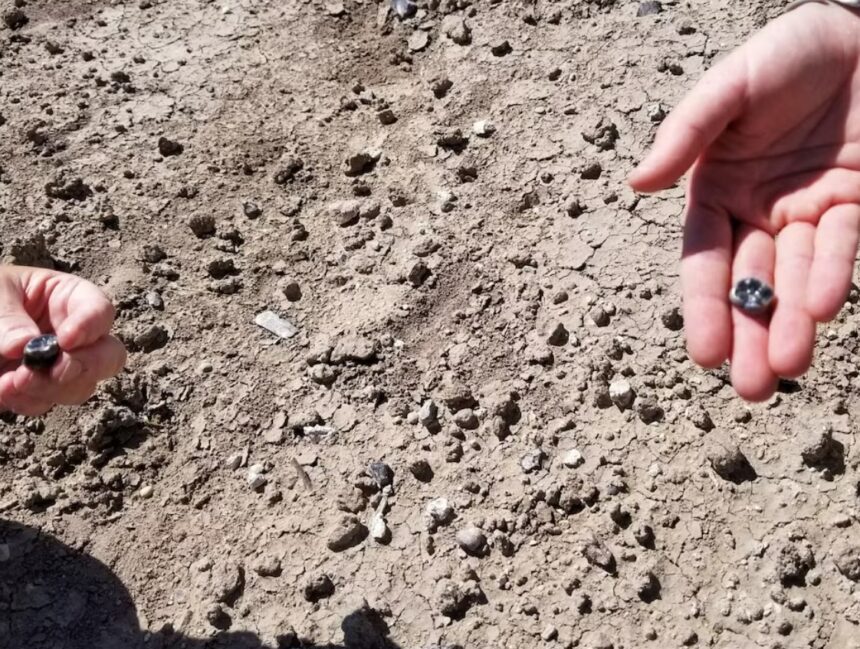
ethiopian fossils — Researchers have made a significant discovery of Ethiopian fossils that reveal a previously unknown species in the human evolutionary lineage. These tooth fossils, dated to approximately 2.65 million years ago, were found in the Ledi-Geraru research project area in northeastern Ethiopia’s Afar Region, alongside the earliest-known member of the genus Homo.
- As additional research unfolds, the implications of these findings will continue to deepen our understanding of the intricate tapestry of the human evolutionary story.
Ethiopian fossils: Discoveries from the Afar Region
The research team unearthed a collection of ten teeth, which included six molars, two incisors, one premolar, and one canine, belonging to two distinct individuals. This finding suggests the existence of a seventh species within the Australopithecus genus, a crucial early human ancestor characterised by a blend of ape-like and human-like features.
Previously, six species of Australopithecus had been identified from various African fossil sites. The newly discovered teeth exhibited distinctive traits, indicating they belonged to a separate species that has yet to be named.
Insights into Early Hominins
In addition to the Australopithecus fossils, the researchers also found three additional teeth dating back to 2.59 million years ago. These teeth are associated with the oldest-known species of Homo, which was initially identified from a jawbone discovered in the same area in 2013. The precise names for both the Australopithecus and Homo species represented by these teeth have yet to be assigned due to the incomplete nature of the fossil remains.
According to the researchers, this new dental evidence sheds light on a poorly understood era in human evolution. The close dating of these fossils indicates that the newly identified Australopithecus species coexisted with early Homo species in the same geographical region, raising intriguing questions about potential competition for resources.
The Complex Nature of Human Evolution
The presence of these hominins in East Africa at the same time adds complexity to our understanding of human evolution. Current evidence suggests there were four different hominin species living in the region during this timeframe. Previous fossil findings have indicated the existence of another Australopithecus species and a species of Paranthropus, noted for its specialised skull adapted for heavy chewing.
This discovery highlights that at least five hominins inhabited the African continent during this period, illustrating the intricate and branching nature of human evolutionary history. Brian Villmoare, a paleoanthropologist at the University of Nevada, Las Vegas, and lead author of the study, commented, “This reinforces the idea that the story of human evolution is not of a single lineage changing slowly through time. Rather, the pattern of human evolution is similar to that of other organisms, repeatedly branching into multiple species throughout the fossil record, many of whom lived at the same time.”
Future Research Directions
The researchers are currently analysing the teeth to determine whether the Australopithecus and Homo species shared similar diets. Kaye Reed, a paleoecologist and co-director of the project at Arizona State University, expressed interest in understanding the interactions between these species. “We are currently analysing teeth to see if we can tell if they ate the same thing,” she explained. If evidence suggests dietary overlap, it could indicate competition between the two species for resources.
Nearby, crude stone tools dating to approximately the same period have been discovered, likely made by the Homo species. This context adds further layers to the ongoing research regarding early human behaviour and interaction.
The Environment of Early Hominins
The Afar Region, known for being one of the hottest and lowest places on Earth, was once a verdant landscape with flowing rivers and shallow lakes, teeming with wildlife. Fossils show that this area was home to a diverse array of animals, including giraffes, horses, pigs, elephants, hippos, and antelopes, alongside predators such as saber-toothed cats and hyenas.
It is widely believed that the genus Homo descended from a species of Australopithecus, although the specific species and timeline remain subjects of ongoing debate. The Australopithecus genus includes the well-known fossil Lucy, a member of Australopithecus afarensis who lived around 3.18 million years ago. The newly discovered teeth have been determined not to belong to Lucy’s species.
Revisiting Human Evolution’s Narrative
Villmoare emphasised that the new Australopithecus species does not serve as a “missing link.” He noted, “We actually don’t think that it was necessarily ancestral to any known species.” Kaye Reed further elaborated, stating, “Species arose and many went extinct. Each find is a piece of the puzzle that puts human evolution into a twiggy tree, rather than a linear graphic.” This perspective reinforces the idea that human evolution is characterised by a complex web of interrelated species, rather than a straightforward progression.
As additional research unfolds, the implications of these findings will continue to deepen our understanding of the intricate tapestry of the human evolutionary story.