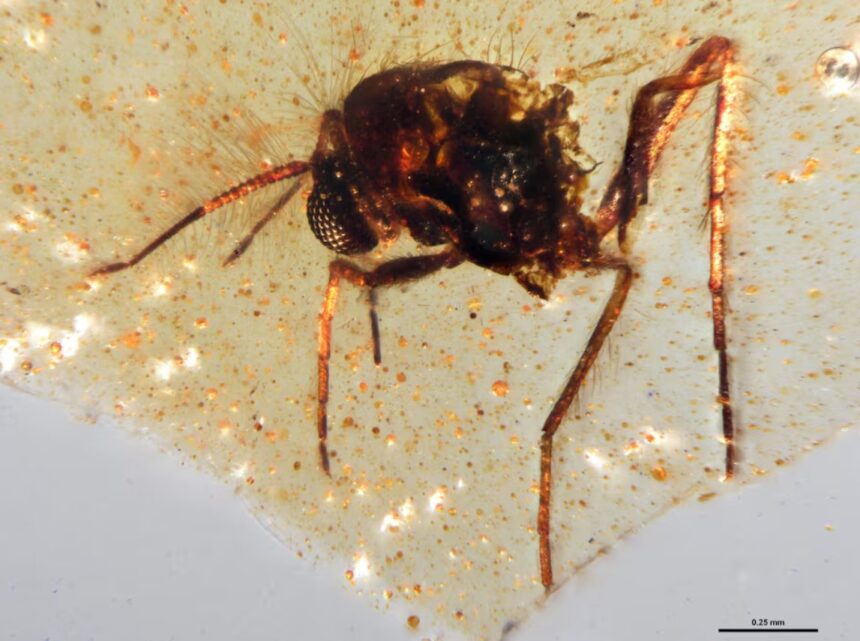
ecuador amber — ecuador amber — Amber from Ecuador is shedding light on a vibrant ecosystem that thrived 112 million years ago during the Cretaceous Period. Found in the Amazon forest region, this remarkable amber contains a wealth of well-preserved fossils, including wasps, midges, flies, beetles, and other insects, providing a unique window into a prehistoric world.
- The amber deposit not only enriches our understanding of the past but also reinforces the importance of preserving such natural treasures for future generations of researchers.
Ecuador amber: Significance of the Discovery
This significant discovery, unearthed near the town of Archidona in Napo Province, marks the largest known amber deposit from the age of dinosaurs in South America. Amber, which is fossilised tree resin, occasionally contains bioinclusions—organisms that became trapped within the sticky substance before it hardened. These bioinclusions have preserved the intricate details of ancient life, revealing a bustling ecosystem.
Fossils and Their Implications
The pieces of amber collected by researchers also included parts of a spider’s web and fossilised plant remains found in nearby sediment. The presence of nearly all major insect groups, including biting and non-biting midges, aphids, wasps, caddisflies, and beetles, suggests a rich biodiversity that existed in the area millions of years ago.
Paleoentomologist Xavier Delclòs from the University of Barcelona, the lead author of the study published in Communications Earth & Environment, emphasised the importance of this find. He stated, “Finding a new site of this importance in the ancient continent of Gondwana provides very valuable information from a region where we previously had little data about the organisms that lived there.”
A Glimpse into Cretaceous Life
The insects discovered in the amber offer insights into the ecological dynamics of the time. According to co-author Mónica Solórzano Kraemer from the Senckenberg Research Institute, the characteristics of the insects can inform scientists about the ecosystem they inhabited. For example, the biting midges likely fed on the blood of the dinosaurs that roamed the region.
Exceptional Preservation of Organisms
Delclòs elaborated on the preservation process, explaining that amber effectively maintains the exoskeletons of small organisms. “Amber essentially preserves the exoskeletons of small organisms from the past. The preservation of these outer structures is so excellent that, under a microscope, they can look like freshly dead organisms, yet they are millions of years old,” he remarked.
This unique preservation is due to the resin’s sticky nature, which helps trap living organisms and eventually hardens, transforming into amber over millions of years in an oxygen-free environment. This process allows for the exceptional condition of organisms that lack mineralised skeletons, making amber an invaluable resource for paleontological studies.
A Shift in Flora Dominance
The fossils also date back to a critical transitional period in Earth’s history, when flowering plants were starting to dominate the landscape. Fossilised remains found at the site indicate that flowering plants, or angiosperms, comprised approximately 37 per cent of the flora at that time. Angiosperms are now the largest and most diverse plant group, accounting for about 80 per cent of the world’s plant species.
Delclòs noted that the discovery opens a window into how the transition from gymnosperm forests to today’s angiosperm-dominated forests occurred. He explained, “The discovery of the fossils in Ecuador opens a window into how the transition from gymnosperm forests to today’s forests dominated by angiosperms took place.”
The Evolution of Plant Life
Angiosperms, which produce flowers and generate seeds in fruits, first emerged during the Cretaceous Period, representing a significant evolutionary advancement. Their closest relatives, the gymnosperms, such as conifers, predate them and contributed to the prehistoric landscape.
The findings in Ecuador are not only crucial for understanding the insects of the time but also for comprehending the broader shifts in plant life that have shaped the Earth’s ecosystems over millions of years.
Future Implications of the Research
This discovery of amber in Ecuador is a testament to the rich natural history of the region and provides a rare opportunity for scientists to study ancient ecosystems in South America. As researchers continue to analyse these fossils, they hope to uncover more about the interactions between species and the environmental conditions of the past.
The implications of this research extend beyond the specific findings in Ecuador. By examining the preserved organisms and their relationships, scientists can gain insights into evolutionary processes and the resilience of ecosystems in the face of change.
The amber deposit not only enriches our understanding of the past but also reinforces the importance of preserving such natural treasures for future generations of researchers.