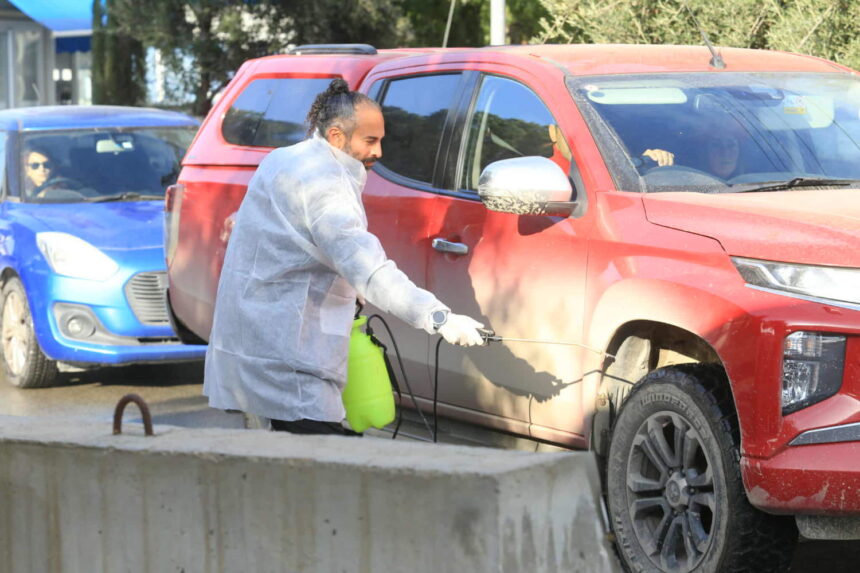
Vehicles crossing from government-controlled areas into the occupied north are undergoing disinfection at crossing points as part of measures to combat the foot-and-mouth outbreak. This initiative was confirmed by the Turkish Cypriot agriculture and natural resources minister, Hüseyin Çavuş, following his inspection of the Pergamos and Strovilia crossings yesterday.
- During the visit, Pergamos mayor Bülent Bebek highlighted the thorough disinfection process for all vehicles passing through, emphasising the urgent need to prevent further spread of the disease.
During the visit, Pergamos mayor Bülent Bebek highlighted the thorough disinfection process for all vehicles passing through, emphasising the urgent need to prevent further spread of the disease.
Çavuş revealed that the first case of foot-and-mouth disease was identified in the occupied areas, linked to an infected animal whose owner had contact with individuals in the government-controlled regions. He noted that the Turkish Cypriot administration was only informed of the virus’s presence in those areas on 20 February, suggesting that the delayed detection was a factor in the outbreak’s escalation.
In response to the outbreak, the Republic of Cyprus requested 20,000 vaccine doses from the Turkish Cypriot authorities. Çavuş stated that the first shipment of 10,000 doses has already been dispatched, with the remaining doses expected to follow shortly. He stressed the importance of vaccination, citing the virus’s highly contagious nature and its potential to spread rapidly through cold weather, rain, and wind.
As the situation develops, local farmers face the grim reality that around 170,000 animals may be at risk of culling or vaccination, highlighting the critical nature of swift action in managing this outbreak.