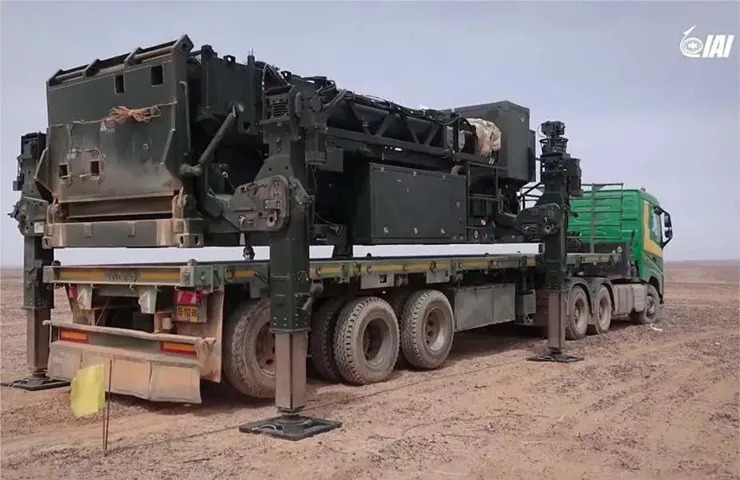
The Israeli Barak MX air defence system will not be abandoned despite Turkish reactions, according to Defence Minister Vasilis Palmas, who made a comparison to the 1997-98 S-300 missile crisis.
- The Israeli Barak MX air defence system will not be abandoned despite Turkish reactions, according to Defence Minister Vasilis Palmas, who made a comparison to the 1997-98 S-300 missile crisis.
Palmas addressed the heightened Turkish responses to Cyprus’s acquisition of the Barak MX system, noting they mirror the intensity of reactions observed during the previous crisis involving the S-300 missiles. Turkish media has been actively portraying the system in action, creating a narrative that suggests the targets being engaged are of Turkish origin.
For the current government led by Nikos Christodoulides, the echoes of the 1998 crisis serve as a historical lesson. Palmas underscored that the circumstances surrounding the Barak MX acquisition are markedly different from those of the late 90s. He highlighted that back then, the political landscape was charged, with pre-election competition influencing decisions over the S-300s, which ultimately resulted in significant pressure on Cyprus.
Reflecting on the past, Palmas stated, “The result was ultimately unbearable pressure on the Republic of Cyprus and throwing away 300 million pounds, which was the amount the S-300s cost then, which were installed in Crete.” Today, he asserts that the government has chosen a more measured approach, opting for a strategy of silence and low-key diplomacy regarding the Barak MX.
Palmas expressed confidence in the capabilities of Cyprus’s defence, stating, “I can declare to you with full responsibility that we have the capabilities to defend the Republic of Cyprus anti-aircraft and anti-missile, if and when this is needed.” He emphasised that the hope remains that such military capabilities will not have to be deployed.
In addressing the Turkish reactions, Palmas characterised them as hypocritical, citing the prolonged presence of Turkish troops in Cyprus. “I consider them absolutely hypocritical in the sense that for 51 years, 40,000 Turkish troops have been in occupied Cyprus. Cyprus is a victim of invasion. And the self-evident right to defend its territorial integrity and sovereignty through its deterrent power, through its defensive armour, is an obligation we have towards the Cypriot people and towards ourselves,” he stated.
Palmas also commented on the EU SAFE programme, acknowledging the complexities of Turkey’s participation in European defence initiatives. He noted the necessity for Cyprus to express a unified stance within the EU, particularly regarding defence matters. He remarked, “We have been expressing our position with one mouth, one voice” alongside Greek Defence Minister Nikos Dendias during EU Defence Councils over the past year.
As the defence landscape shifts in Europe and the region, Palmas indicated that Cyprus is committed to ensuring that any engagement with third countries in defence matters does not jeopardise the security of EU member states. He reiterated the importance of scrutinising any potential involvement of Turkish interests in EU defence projects, emphasising that decisions must be made with unanimous agreement from member states.