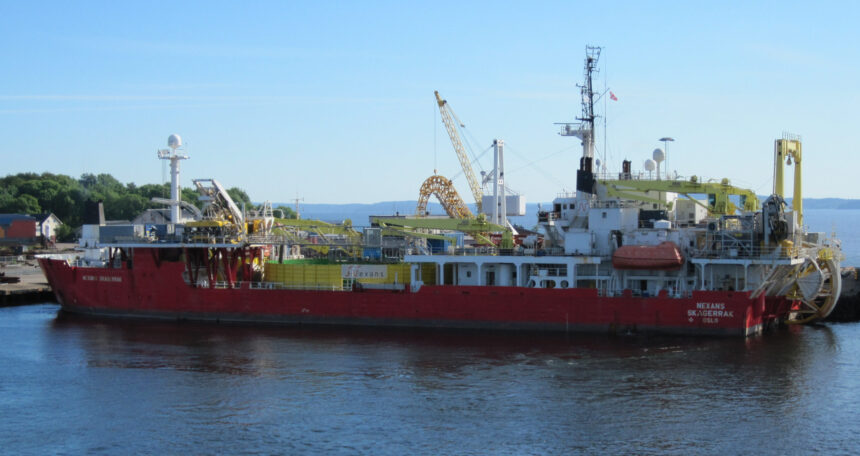
Cyprus has officially handed over the interconnector permits for the Great Sea Interconnector to Admie, Greece’s independent transmission system operator. This transfer occurred on Friday, as confirmed by the Cyprus Energy Regulatory Authority (Cera).
- The decision to transfer these permits was made by Cera’s senior management on September 3 and was published in the official government gazette on Friday, making it legally binding from that date.
The permits include the interconnection line owner permit and the interconnection line operator licence, previously held by EuroAsia Interconnector, the project’s former implementing body, which withdrew from the initiative in October 2023.
The decision to transfer these permits was made by Cera’s senior management on September 3 and was published in the official government gazette on Friday, making it legally binding from that date.
Greece’s Energy Minister, Stavros Papastavrou, had previously highlighted the importance of these permits for Admie, which until now had operated without them. He responded to comments made by Cypriot President Nikos Christodoulides regarding the ongoing negotiations, asserting that reservations about the project’s viability must be resolved to move forward.
“Reservations must be lifted for the project to proceed. It is a necessary condition that reservations about its viability be lifted and all technical and financial issues be resolved,” Papastavrou stated. He further expressed concerns over conflicting messages from the Cypriot government regarding the project’s future.
Complications have arisen from the Cypriot government’s initial commitment to make five annual payments of €25 million to Admie before the interconnector becomes operational. Thus far, these payments have not been made, which Admie relies on for financing the project. The Cypriot government has cited a lack of tangible progress and differing opinions on funding as reasons for withholding the payments.
Cypriot Energy Minister George Papanastasiou previously indicated that the first instalment of €25 million would be paid only when the project is fully implemented, stating that “the construction of cables alone is not enough” to meet that criterion. The government had planned to use funds from the European Union’s emissions trading system to facilitate these payments, aiming to avoid burdening taxpayers.
Admie has warned that this funding model may breach EU state aid regulations, prompting a request to Cera to start charging consumers instead. The situation has generated calls for clarity from Greek officials, including Deputy Prime Minister Kostis Hatzidakis, who stressed the need for a definitive stance from Cyprus after concerns were raised about the project’s sustainability.
Adding to the tension, Papanastasiou’s remarks about the project’s viability come amid differing accounts from Greek officials regarding the completion of seabed surveys crucial for the project’s cost estimation. While some claim these surveys have not progressed, Greek Foreign Minister Giorgos Gerapetritis contended that they were completed as planned.
The complex dynamics between the two nations highlight the importance of cooperation in advancing this significant energy project, as both sides express their commitment to its successful implementation.