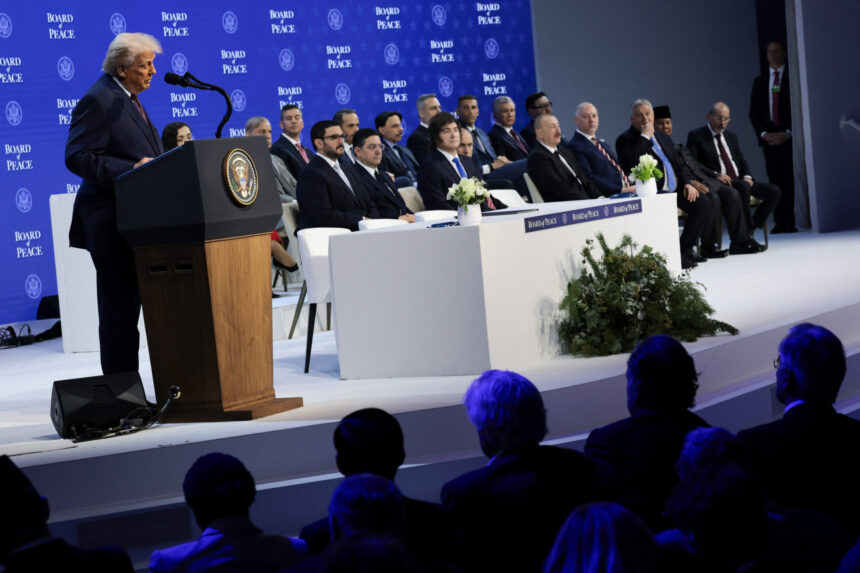
Cyprus has recently walked back its initial enthusiasm regarding its invitation to join US President Donald Trump’s Board of Peace, recognising that it may not be the most prudent decision. Initially, the invitation thrilled Nicosia, with President Nikos Christodoulides expressing that it showcased the Republic’s significance in the broader Middle East context.
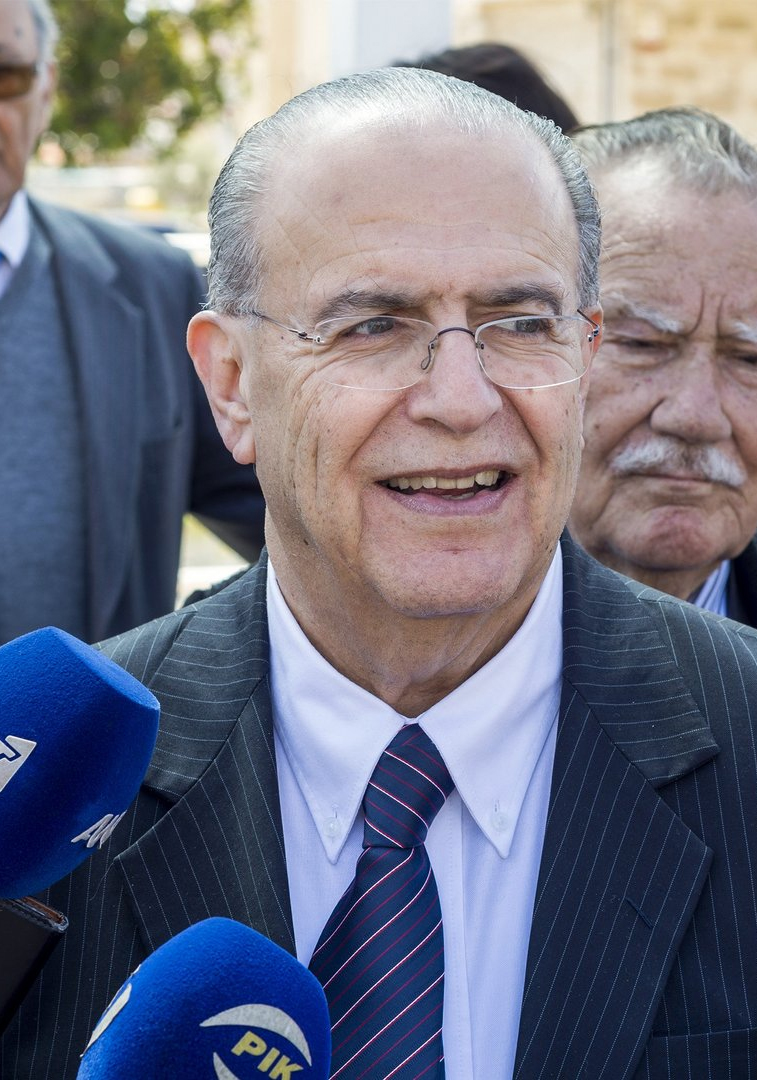
Photo: cyprus-mail.com
However, as details about the Board of Peace emerged, the government appeared to have second thoughts. Former diplomats noted that the fate of the Cyprus problem is heavily tied to UN Security Council resolutions, making it unwise for Cyprus to align with an initiative that seems poised to rival the UN.

Photo: cyprus-mail.com
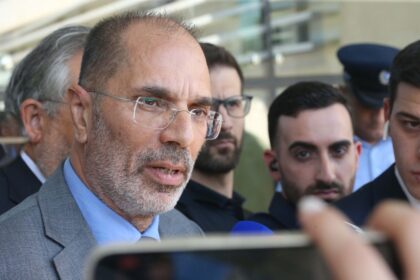
Foreign Minister Constantinos Kombos later adopted a more cautious tone, thanking Trump for the invitation but asserting that Cyprus would consult with its EU partners before making any commitments. This shift indicated a desire to avoid unilateral decisions and seek collective EU input on the matter.
The EU’s hesitance was evident, as many member states were absent from the Board’s founding ceremony in Davos, with only Hungary and Bulgaria choosing to participate. This absence highlights a broader scepticism among European nations towards Trump’s initiative, which has been criticised for lacking foundational principles such as human rights and self-determination.
Professor Costas Constantinou from the University of Cyprus outlined the significant risks involved in joining the Board. He pointed out that it is not merely an initiative for Gaza’s reconstruction but an international body that could intervene in various conflict zones. The Board’s structure grants the chairman, Trump, extensive powers over membership and decision-making, raising concerns about its autocratic nature.
As diplomatic sources spoke anonymously, they echoed Kombos’ sentiments, suggesting that while Cyprus has not ruled out participation, it is essential to weigh the implications carefully. Former foreign minister Ioannis Kasoulides remarked that the government had perhaps acted too quickly in expressing initial excitement over the invitation.
Amidst the unfolding discussions, the Board of Peace’s charter continues to generate debate. Critics have labelled it a mechanism designed to undermine established international laws and institutions, with political theorists like John Mearsheimer describing it as a “cockamamie” idea that reflects Trump’s disinterest in global governance.
The Board of Peace aims to create a new framework for international peace-building, promoting a vision of a reconstructed Gaza. However, many fear that this vision is more about Trump’s political aspirations than genuine humanitarian efforts. Observers note that the Board’s leadership structure, heavily influenced by Trump and his associates, raises concerns about its intentions and effectiveness.
Among those apprehensive about the initiative, independent journalist Patrick Henningsen highlighted the lack of input from the Palestinian population, arguing that any peace-building efforts would be fundamentally flawed without their involvement. The Board’s approach, he contends, risks bypassing established diplomatic norms and prioritising political expediency over genuine resolution.
As Cyprus navigates its position regarding the Board of Peace, it faces a delicate balancing act. The government must consider not only the potential diplomatic fallout from rejecting the invitation but also the importance of collective EU decision-making in addressing regional issues. This evolving situation underscores the complexities of international diplomacy, particularly in an era defined by shifting alliances and the influence of populist politics.