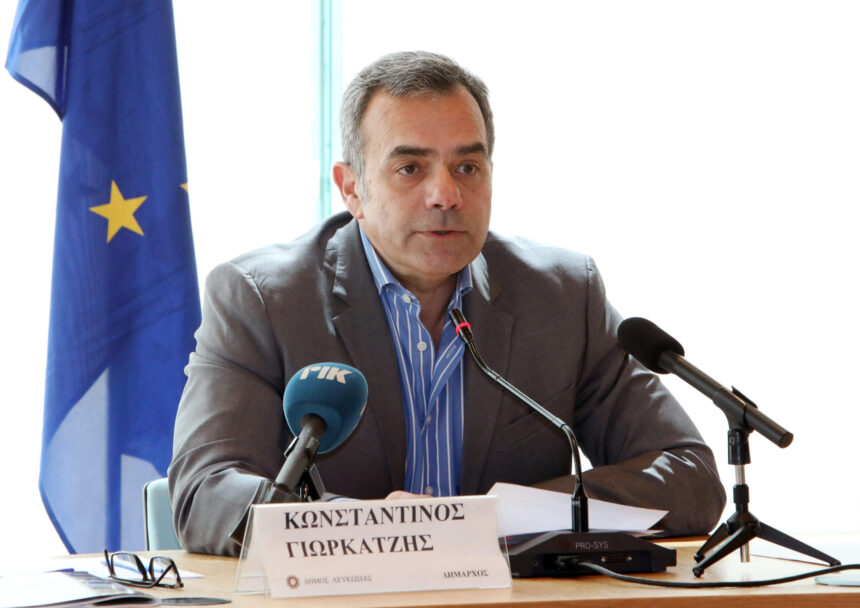
The focus keyword is water strategy, and Cyprus must adopt a modern approach to ensure its water resources are managed effectively for future generations. On Thursday, Constantinos Yiorkadjis, president of the Nicosia district government organisation (EOA), emphasised the need for a comprehensive national water management system that goes beyond mere rainfall predictions.
- “It is a foundation for development and social cohesion, and its management demands unified planning, clear responsibilities and a long-term vision,” he remarked in his recent statements.
- “We need to shift our perspective on rainwater as a critical resource that can contribute significantly to our water supply,” he asserted.
Water strategy: Modernising Water Management in Cyprus
Yiorkadjis stated that the infrastructure and expertise to manage water effectively already exist in Cyprus. However, what is lacking is a unified strategy that recognises water not just as a natural resource but as a crucial component of environmental sustainability and national security.
“It is a foundation for development and social cohesion, and its management demands unified planning, clear responsibilities and a long-term vision,” he remarked in his recent statements.
Proposal for a Unified Water Authority
To achieve this vision, Yiorkadjis proposed the establishment of a unified water management authority. This body would possess administrative, financial, and operational independence, allowing it to oversee all aspects of water management. The authority would be responsible for drafting policies that coordinate the various organisations involved in water management.
Such an authority would create a comprehensive plan that incorporates existing reservoirs, desalination units, irrigation networks, and recycling systems. Additionally, it would implement an invoicing policy designed to protect average households and vulnerable groups, discouraging unnecessary consumption of water resources.
Enhancing Transparency and Accountability
Yiorkadjis explained that distinguishing between the authorities responsible for water production and administration would improve transparency and accountability within the water sector. He noted that 15 EU member states have successfully implemented similar policies, citing Greece as the most recent example.
Despite significant investments in water management over the past decades, Cyprus’s current model remains fragmented, which complicates coordination. Yiorkadjis pointed out that while every district has its own unique needs, measures must be tailored to suit these specific requirements rather than applied uniformly across the board.
Strategic Planning Beyond Consumption
Strategic planning in water management must extend beyond mere consumption management; it should also encompass infrastructure planning. Yiorkadjis remarked that many future water needs can be anticipated, yet the necessary investments are often delayed, shifting management from a preventive approach to one focused on crisis management.
He highlighted a common misconception that there is insufficient water for irrigation. In reality, there are substantial water resources that remain untapped. For example, he referenced various sewerage treatment projects in Nicosia, such as those in Vathia Gonia, Anthoupoli, and Mia Milia, which collectively generate approximately 17 million cubic metres of water annually. Yet, only 24 per cent of this treated water is used for irrigation, with the remainder flowing into natural water recipients like reservoirs and rivers.
Utilisation of Natural Water Resources
Nationwide, Cyprus produces around 45 million cubic metres of water each year. Of this, only 40 per cent is effectively utilised, while 60 per cent is discharged into natural recipients. Yiorkadjis underscored the potential of rainwater, describing it as an underutilised resource that is often overlooked in discussions about water management.
“We need to shift our perspective on rainwater as a critical resource that can contribute significantly to our water supply,” he asserted.
Looking Ahead: A Call for Action
The call for a unified water strategy is not merely an administrative suggestion; it is a pressing necessity for Cyprus’s future sustainability. Yiorkadjis’s insights reveal a clear path forward that involves not only the establishment of a dedicated authority but also a commitment to strategic, tailored planning that addresses the unique needs of each district.
As the climate continues to change and water scarcity becomes an increasing concern, Cyprus must act decisively to protect its water resources. A modern water strategy, underpinned by effective governance and community involvement, will be crucial to ensure that future generations inherit a sustainable and secure water supply.