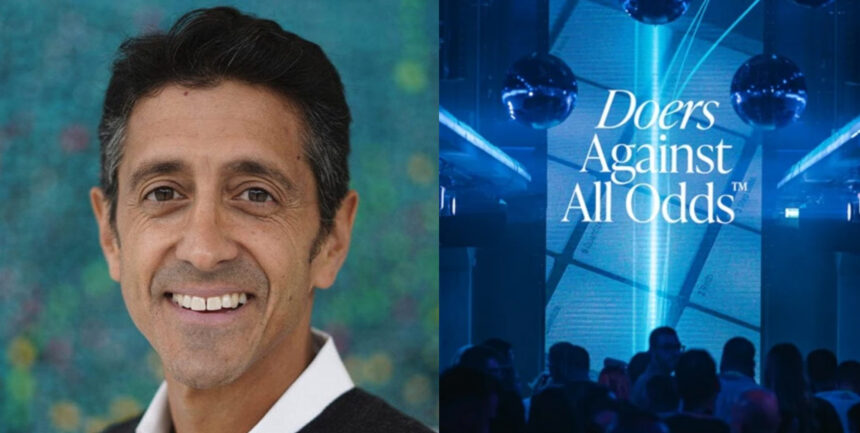
Cyprus must focus on commercialising research into market-ready products, according to Rana K. Gupta, Executive Director of the MIT Deshpande Centre. His remarks came ahead of the Cyprus Seeds Innovation Showcase in Limassol, set for May 22, 2026, as part of the 2026 DOERS Summit. The event aims to unite researchers, entrepreneurs, and international mentors to explore how innovation ecosystems can foster growth.
The Role of International Networks
Gupta will participate in discussions regarding how international networks and diaspora connections can aid small, fast-evolving innovation hubs like Cyprus in scaling effectively. While acknowledging the progress Cyprus has made in research and technology, he emphasised that the primary challenge lies in translating scientific output into tangible economic and social value.
Talent and Ideas Abound
“Cyprus has no shortage of talent, ideas, or scientific research,” Gupta noted, underscoring the country’s growing presence in international rankings that reflect its strengthening research base. However, he cautioned that mere invention is insufficient to drive real impact.
Bridging the Gap Between Discovery and Application
According to Gupta, the gap between discovery and real-world application is a persistent challenge not only in Cyprus but across many advanced research economies. He highlighted Cyprus Seeds as a critical mechanism in addressing this gap, calling it a key player in the nation’s technology ecosystem.
The Importance of Cyprus Seeds
“That gap between invention and impact is where Cyprus Seeds has emerged as one of the most important organisations,” Gupta stated. He explained that while academic systems are adept at producing discoveries, publications, and patents, they often lack the necessary tools to bring these innovations to market.
Essential Skills for Commercialisation
“Transforming an invention into something the market adopts requires a completely different process,” he explained. Gupta pointed out that most researchers are not trained in crucial areas such as identifying customer needs, validating demand, or engaging with investors, which are essential steps in the commercialisation process.
Supporting Early-Stage Ideas
Gupta stated that Cyprus Seeds distinguishes itself by operating at an earlier stage than traditional investors or accelerators. It supports researchers before their ideas mature into fully formed business propositions. “This distinction matters enormously,” he said.
Building Towards Viability
Unlike accelerators that expect a degree of market readiness, Cyprus Seeds collaborates with individuals who may not yet possess entrepreneurial skills or a defined product. “It helps researchers bridge the gap between academic excellence and commercial readiness,” Gupta added.
A Model for Real-World Impact
Gupta drew parallels with the model pioneered by the MIT Deshpande Centre, which focuses on creating venture-ready technologies capable of delivering real-world impact. He emphasised that funding alone does not suffice; researchers must also undergo a mindset shift in how they perceive impact beyond academic publishing.
The Unique Challenges of Smaller Ecosystems
According to Gupta, the challenge of commercialisation is particularly acute in smaller ecosystems like Cyprus, which lack the dense networks found in established innovation hubs such as Boston or Silicon Valley. “Successful research economies are not built solely on research funding,” he asserted.
Adapting Best Practices
Gupta noted that Cyprus Seeds has adapted international best practices to local conditions, including building mentor networks that leverage diaspora expertise and international knowledge. He highlighted efforts to enhance mentoring structures through models inspired by MIT’s Venture Mentoring Service, which prioritises long-term guidance and collaborative support.
Rethinking Innovation Metrics
Gupta also raised concerns that traditional innovation metrics often fail to capture the true effectiveness of an ecosystem. These metrics typically measure inputs such as spending or publications rather than meaningful outcomes. “Commercialisation is the missing middle,” he stated, warning that without effective mechanisms to bridge this gap, valuable discoveries risk remaining confined to laboratories.
The Urgency for Cyprus
For Cyprus, this issue is urgent due to its size, necessitating reliance on agility, talent, and specialisation rather than scale. “Cyprus cannot compete globally on scale alone,” Gupta remarked. He concluded that organisations like Cyprus Seeds play a foundational role in ensuring that research leads to real-world outcomes, ultimately helping to build a stronger and more competitive innovation economy.
“They are helping build the foundations of a stronger technology economy,” Gupta summarised, underscoring the critical need for Cyprus to enhance its commercialisation efforts to realise the full potential of its research capabilities.