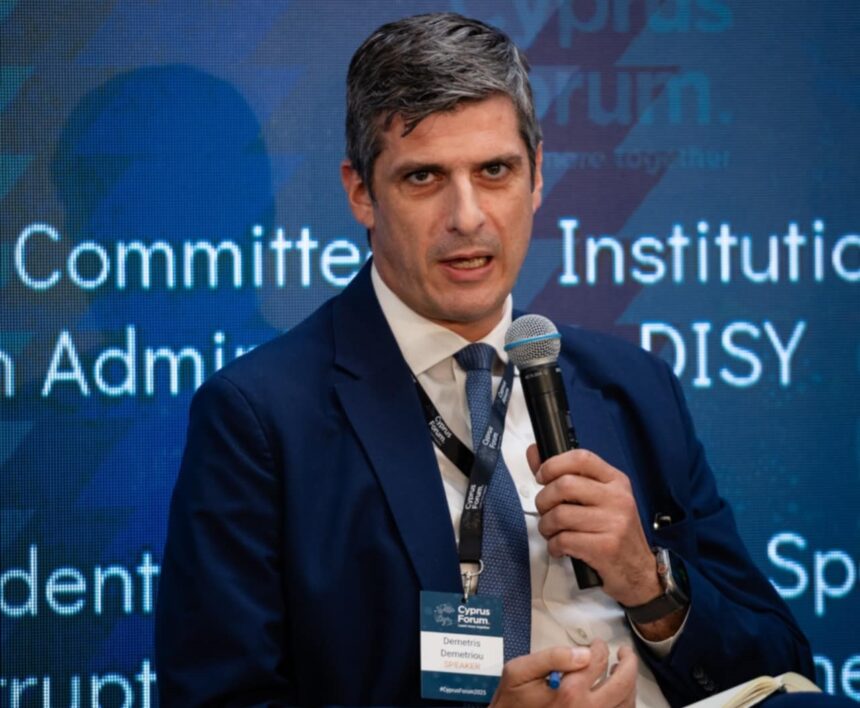
A debate on the Attorney General’s sweeping powers took centre stage at the Cyprus Forum, prompting urgent calls for reform and greater oversight. Lawmakers and officials voiced their concerns over the unchecked authority of the Attorney General, highlighting the need for constitutional changes to safeguard democratic institutions.

Photo: in-cyprus.philenews.com
Attorney general: Calls for Reform and Institutional Balance
During the event, DISY MP Demetris Demetriou and AKEL MP Irene Charalambides, along with former Auditor General Odysseas Michaelides, raised alarms about the risks of institutional imbalance in Cyprus. They argued that without new controls over the executive and the Law Office, the country could face serious democratic deficiencies.
Demetriou, who chairs the House Institutions Committee, expressed that Cyprus has been operating with a power imbalance since its independence in 1963. He described the powers wielded by the President as ‘imperial’ and suggested that the Attorney General’s authority may even surpass that. To rectify this, Demetriou proposed that all appointments of independent officials undergo parliamentary approval, advocating for a horizontal requirement of 29 votes to ensure necessary checks and balances.
Addressing Prosecutorial Discretion
While welcoming proposed bills to separate the advisory and prosecutorial functions of the Law Office, Demetriou cautioned that reforms would be incomplete without regulating the Attorney General’s discretion in prosecutorial decisions. He labelled the current situation as ‘half a reform’ without oversight on decisions to suspend or initiate prosecutions.
Demetriou noted that 38 draft laws are pending in parliament, emphasising that the House Institutions Committee would not advance the Law Office bills until the government introduces measures addressing the Attorney General’s unchecked powers. ‘We cannot reform one pillar and leave a basic problem untouched,’ he asserted.
Corruption’s Toll on Democracy and Investment
Charalambides underscored the intertwined nature of corruption and economic health, stating, ‘Corruption undermines democracy, erodes the economy, and creates an environment that does not inspire trust for investment.’ She called for robust accountability frameworks to attract foreign investment and insisted that even the judiciary should fall under scrutiny.
Reflecting on the controversial citizenship-by-investment scheme, Charalambides highlighted the conflicting roles of ministers who were involved in cabinet decisions and later found themselves as prosecutors. She praised external oversight during the Vasilikos LNG affair as crucial in revealing significant scandals.
The Need for Independent Oversight
Michaelides, now leading ALMA, shared his experiences of facing pressures during his tenure as Auditor General. He pointed out the flaws in the current system, which does not allow independent officials to seek full judicial review after dismissal, leaving them vulnerable to political pressures. He stressed, ‘Cyprus cannot be the exception forever’ in terms of lacking scrutiny over prosecutorial discretion.
On Audit Office reform, Michaelides supported the introduction of term limits and financial autonomy. However, he was critical of a government proposal for external oversight of the service, arguing that no global precedent exists for such external intervention.
Empowering Citizen Participation
Audience engagement during the forum highlighted the importance of citizen participation in the reform process. Demetriou mentioned ongoing discussions about modernising the Institutions Committee to better represent citizens’ voices, similar to the European Parliament’s Petitions Committee. Charalambides added that institutional frameworks should empower independents to drive change, emphasising that a strong message from citizens is vital for reform.
Safeguarding Democracy Through Checks and Balances
Moderator Christophoros Christophi closed the discussion by reiterating the significance of clearer separations of powers and the need for safeguards against political interference. He noted that while external mechanisms like the European Public Prosecutor’s Office can act as backstops, the effectiveness of domestic checks and balances remains paramount for the health of democracy in Cyprus.