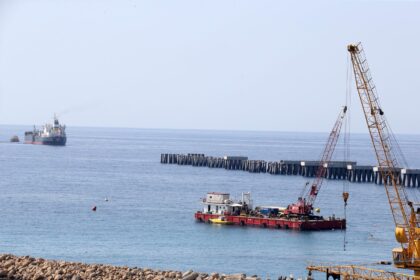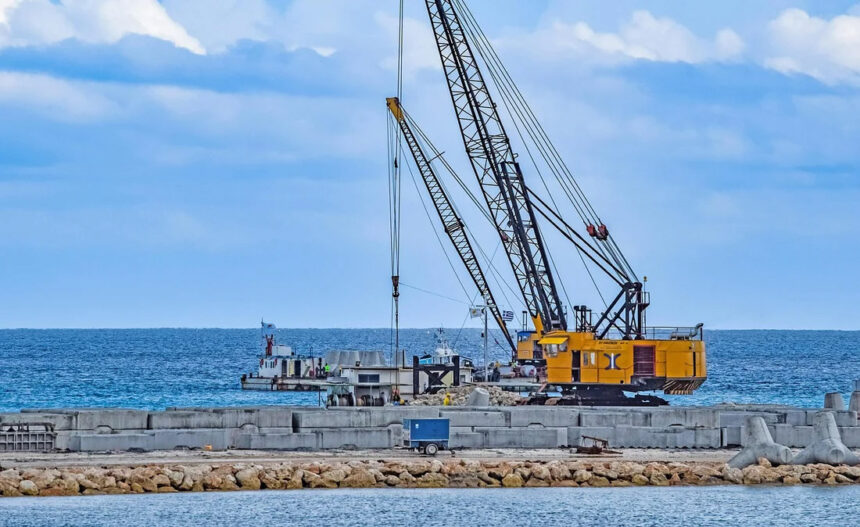
Breakwaters are becoming a common sight along the coast of Cyprus as the island grapples with severe coastal erosion. At Governor’s Beach, large tetrahedron-shaped blocks have been stacked on the shore, raising questions about their purpose and effectiveness.

Photo: cyprus-mail.com
Traditionally submerged, these breakwaters are now being used as a primary defence against the increasing threat of erosion affecting Cyprus’ coastline. With a recent tender issued for 16 new breakwaters in the Paphos district, the reliance on this solution is becoming more pronounced.
However, environmentalists are increasingly concerned that this approach may do more harm than good. As Xenia Loizidou, a civic engineer and United Nations ambassador for coastal protection in the Mediterranean, pointed out, while breakwaters can protect one beach, they may inadvertently endanger another further down the coast. This domino effect raises questions about the sustainability of such interventions.
Loizidou highlighted that approximately 80 per cent of Cyprus’s soft-coastal areas are experiencing severe human-made erosion, driven by factors like tourism, sand mining, and construction within coastal zones. The construction of dams has also disrupted natural sediment flow, exacerbating the problem.
Though breakwaters are seen as a viable technical solution, Loizidou cautions against their indiscriminate application. “It’s like having a flu and instead of taking Panadol, you have open-heart surgery,” she remarked, emphasising the need for tailored solutions based on comprehensive studies of each coastal area.
Environmental officer Georgios Nikolaides explained that breakwaters function as barriers, reducing the energy of incoming waves and, in theory, decreasing potential coastal erosion. However, their construction can significantly alter local hydrographic conditions and sediment transport patterns, leading to increased erosion on adjacent coastlines.
Klitos Papastylianou, head of environment at Terra Cypria, reinforced the idea that relying on breakwaters could be counterproductive. He noted their negative impact on marine habitats, potentially leading to the loss of vital ecosystems such as reefs and sandbanks. The materials needed for breakwater construction also contribute to environmental degradation, as they often require extensive quarrying.
Despite these concerns, plans for new breakwaters are advancing. In Paphos, a project involving 11 parallel and five transverse breakwaters is set to commence in spring 2027, which reflects a broader trend in coastal protection strategies. Meanwhile, Kypros Andronikou, mayor of Dromolaxia-Meneou, has called for urgent measures to address the worsening erosion crisis, indicating that local authorities are feeling the pressure to act swiftly.
Warnings about the future of Cyprus’s beaches have also emerged from experts like Stavros Malas, president of the Cyprus Institute, who stated that nearly half of the island’s beaches are at risk of extinction by the century’s end due to rising sea levels.
As the debate over breakwaters unfolds, it raises critical questions about decision-making processes in coastal protection. The environment department insists on a holistic evaluation of projects to ensure they do not harm local ecosystems. However, the final decisions often rest with the public works department, which evaluates requests from public authorities.
With the stakes high and the coastline under threat, Cyprus stands at a crossroads, balancing immediate needs for coastal protection against the long-term health of its marine and coastal environments.