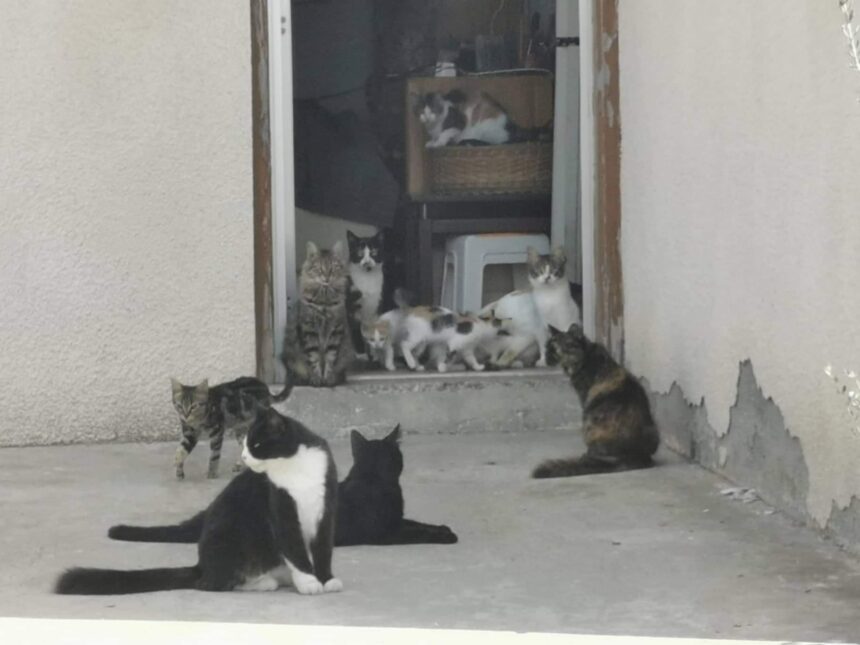
Cyprus is grappling with a cat overpopulation crisis, with strays now numbering around one million—equivalent to the island’s entire human population. This alarming figure has prompted the government to significantly increase its sterilisation funding, as reported by the Associated Press.
On 4 October, Environment Minister Maria Panayiotou announced that the annual budget for cat sterilisation would rise to €300,000, up from the previous €100,000. However, this funding currently only allows for around 2,000 sterilisation procedures each year, which many experts believe is insufficient to address the growing issue.
Despite the increase in funding, officials and animal welfare advocates argue that without a coordinated national strategy involving municipalities, veterinary clinics, and conservation groups, the additional resources may not yield significant results. Charalambos Theopemptou, chairman of the parliamentary environment committee, expressed concern, stating, “We can’t just go ahead with sterilisation without having a plan.”
Cat overpopulation: Warnings from Animal Welfare Groups
Animal rights organisations suggest that the actual stray cat population could be much higher than estimates, potentially exceeding one million. Environment Commissioner Antonia Theodosiou acknowledged Cyprus’s growing reputation for its large feline population, though no international comparisons exist to validate the local figures.
The unchecked cat population poses significant threats to the island’s delicate ecosystems, as predation disrupts local wildlife. Additionally, thousands of strays face dire risks from traffic, hunger, and disease in urban areas.
A Complex Historical Relationship with Cats
The cat overpopulation issue in Cyprus is ironically rooted in the island’s long-standing affection for felines. Archaeological evidence suggests that cats have been integral to Cypriot life for over 9,500 years, with historical records indicating that Saint Helen introduced cats to the island to control snake populations. Today, feeding stations and cat shelters are commonplace, with many local residents taking it upon themselves to care for strays.
This cultural sentiment has inadvertently led to a rapid increase in the stray cat population. Demetris Epaminondas, president of the Veterinary Association, noted that improved care and feeding have contributed to higher kitten survival rates, resulting in an explosion of the stray population.
A Flawed Sterilisation Framework
The current sterilisation framework is seen as inadequate, as government funds are distributed to municipalities that then reimburse private veterinarians for procedures. State veterinary officials have admitted that this system falls short of meeting the actual needs.
To improve the situation, authorities have asked municipalities to conduct surveys identifying areas with high concentrations of stray cats. However, Elias Demetriou, who runs the Friends of Larnaca Cats sanctuary, pointed out that simply tripling the budget will not solve the problem without the involvement of experienced conservation organisations.
Cats are particularly difficult to trap, especially females, who are crucial for controlling population growth. The cost of sterilising feral cats is €55, while domesticated cats can cost upwards of €120.
Proposed Solutions and the Road Ahead
Experts like Epaminondas believe Cyprus could achieve effective population control within four years if a unified approach is adopted. His association has proposed a plan that would streamline the sterilisation process by allowing private clinics to perform procedures free of charge. This plan also includes the use of a smartphone application to help residents report areas with large cat populations.
To help finance the initiative, Epaminondas suggested the creation of a donation fund to attract contributions from the public and businesses. The recent budget increase could also encourage corporate sponsorship, he added.
Commissioner Theodosiou revealed that her team is working on a comprehensive long-term strategy, which would involve collaboration among government agencies, conservation groups, and volunteers to accurately assess the cat population before mass sterilisation efforts begin. This initiative would also aim to legalise private sanctuaries that currently operate in a grey area of the law.
Despite the challenges ahead, Eleni Loizidou, director of Cat Alert, remains cautiously optimistic. “There are solutions,” she stated, reflecting a shared hope among advocates that a concerted effort could finally address the pressing issue of stray cats on the island.