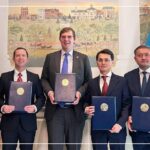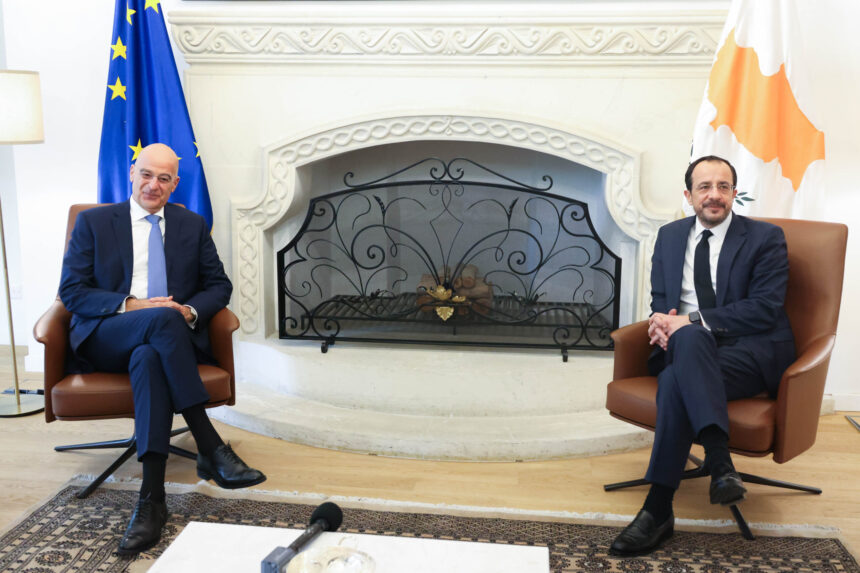
defence industries — Cyprus’ upcoming EU presidency is seen as a pivotal moment for the defence industries of both Cyprus and Greece. President Nikos Christodoulides made this assertion on Monday while welcoming Greek Defence Minister Nikos Dendias to the presidential palace. He highlighted that the six-month term will enable both nations to advance discussions surrounding defence and security.
Defence industries: Strategic Importance of Defence Cooperation
Christodoulides emphasised the significance of these discussions, particularly in light of ongoing Turkish provocations and the region’s geostrategic relevance. The president noted that Cyprus and Greece are situated in an area that requires robust defence strategies due to external pressures.
Funding Opportunities from the EU
Under the EU’s Security Action for Europe (Safe) defence procurement instrument, Cyprus has secured over €1 billion while Greece has received nearly €788 million. This funding is critical for enhancing the defence capabilities of both nations and represents a significant opportunity to bolster their military readiness.
Ministerial Discussions Focused on Safe Programme
Following their meeting, Defence Minister Dendias echoed Christodoulides’ sentiments, stating that Cyprus’ presidency will create substantial opportunities for cooperation between the two countries. Cypriot Defence Minister Vasilis Palmas mentioned that their discussions were primarily centred around the EU’s Safe programme, which aims to strengthen the defence industry across Europe.
Enhancing Defence Capabilities
Palmas highlighted the need for collaboration between the two ministries to upgrade their defensive capabilities and secure sovereignty and territorial integrity. He noted that the geopolitical landscape is rapidly evolving, particularly in the eastern Mediterranean, making such cooperation more vital than ever.
Complex Geopolitical Landscape
Dendias acknowledged the complexities of the current geopolitical situation in the region and underscored how the Safe programme can deepen the cooperation between Cyprus and Greece. He also addressed concerns regarding Turkey’s potential participation in the Safe programme, indicating that discussions surrounding this issue are intricate and nuanced.
Turkey’s Role in the Safe Programme
When questioned about Turkey’s involvement, Dendias stated that both he and Palmas have thoroughly reviewed the regulation governing the Safe programme. He described the regulation as complex and noted that it is designed to ensure understanding across various stakeholders. Dendias was clear that any country posing a threat to EU security should not be eligible for participation in the programme.
Commitment to European Values
During his remarks, Dendias expressed hope that all EU member states would unite to protect European values, democracy, and human rights. He reiterated the importance of maintaining the integrity of the EU’s security framework and ensuring that those who threaten it are held accountable.
Challenges with Turkish Participation
European Council President Antonio Costa previously stated that the Safe programme’s rules are explicit; participation is only open to third countries that do not threaten EU member states’ security. The Greek Foreign Ministry’s spokeswoman, Lana Zochiou, confirmed that Greece intends to veto Turkey’s involvement unless the latter rescinds a parliamentary resolution regarding claims in the Aegean Sea. This resolution, established in 1995, declares any unilateral actions by Greece beyond 12 nautical miles as a ‘casus belli’.
Funding Allocation Under the Safe Programme
In addition to Cyprus and Greece, 17 other EU member states are set to benefit from the €150 billion allocated by the European Commission earlier this year for the Safe programme. This funding could significantly enhance the capabilities of various European nations in terms of defence and security.
Looking Ahead: Opportunities and Challenges
As Cyprus prepares to assume the EU presidency, the focus on defence will likely remain at the forefront of discussions. The collaboration between Cyprus and Greece may serve as a model for how smaller nations can work together to address shared security concerns, especially in a region fraught with challenges.
With a significant amount of funding on the table and a strategic partnership in the making, the coming months will be crucial for both nations as they navigate the complexities of European defence and security.