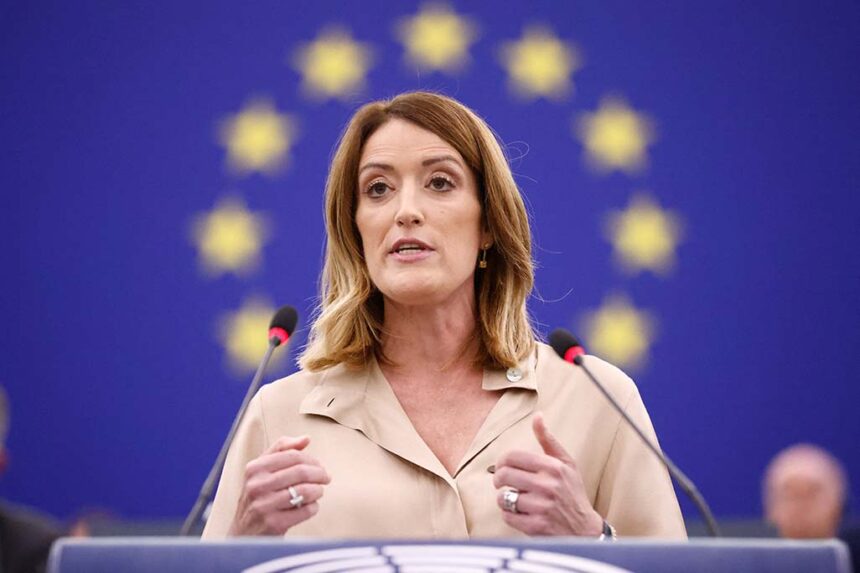
cyprus eu — cyprus eu — Cyprus’ role in the rotating presidency of the Council of the European Union comes at a crucial time for Europe, European Parliament President Roberta Metsola stated on Thursday. During an interview with newspaper Politis, Metsola expressed confidence in Cyprus’ preparedness to undertake this significant responsibility.
- New regulations will also establish faster processing of asylum claims, with more stringent criteria, and uniform reception standards for asylum seekers concerning housing, education, and healthcare.
Cyprus eu: High Expectations from the Cypriot Presidency
Metsola remarked on the high expectations surrounding Cyprus’ presidency, emphasising the island’s readiness to tackle pressing EU issues. She noted that her discussions with President Nikos Christodoulides revealed a serious commitment to preparation and prioritisation by the Cypriot government.
Cyprus’ Valuable Experience
According to Metsola, Cyprus brings a wealth of experience to the European table, positioning it uniquely to guide the EU on critical matters. These include supporting Ukraine, promoting stability in the Middle East, managing migration, and enhancing energy resilience. She highlighted the island’s strategic position and its understanding of challenges faced by frontline states.
Strengthening EU Cohesion through Shared Challenges
Metsola discussed how Cyprus can contribute to strengthening the EU’s cohesion and effectiveness during its six-month presidency. She pointed out that frontline states often face challenges earlier and more intensely, allowing Cyprus to leverage this experience to foster unity among member states.
“It is vital to focus on what unites us: security, stability, and tangible results for our citizens,” Metsola stated. She outlined practical steps Cyprus could take to guide the implementation of the migration and asylum pact, complete the formation of a common European return system, advance negotiations on the EU’s long-term budget, and bolster Europe’s competitiveness agenda.
The Migration Pact and Its Implications
Addressing the issue of migration, Metsola referred to it as a “common European challenge” and stressed that it should not fall solely on frontline countries like Cyprus. She expressed optimism about the new migration pact, stating that it has the potential to significantly improve cooperation among member states through solidarity, responsibility, and clarity.
Metsola explained that under the new migration pact, Cyprus would benefit from the “solidarity pool”, which includes EU funding, operational support, and opportunities for relocating migrants from other member states. This support is crucial for Cyprus, which has been facing increased migration pressures.
Recent Agreements to Enhance Asylum Efficiency
Furthermore, Metsola referenced an agreement reached between the European Parliament and the Council regarding a common list of safe countries of origin and revised rules on safe third countries. This agreement aims to enhance the efficiency and harmonisation of the European asylum system, expediting procedures and reinforcing borders to alleviate pressure on member states such as Cyprus.
“This is a significant step forward,” she said, noting that the European Parliament is eager to collaborate with the Cypriot presidency to finalise the return regulation that will streamline the asylum process.
Implementation Timeline for the Migration Pact
The migration pact, which was agreed upon in 2024, is slated to begin implementation this year, fundamentally redesigning the bloc’s migration framework. This redesign encompasses ten separate pieces of legislation aimed at establishing a stricter and more unified approach to processing and settling asylum seekers across the EU.
Metsola highlighted that the new legislative provisions include measures for “solidarity” among member states. This encompasses voluntary acceptance of asylum seekers by states capable of doing so, as well as financial contributions and operational assistance. Additionally, provisions are set to assist EU countries in managing surges in migrant flows.
Enhanced Procedures and Standards for Asylum Seekers
Key changes also involve the screening of third-country nationals upon entry into the EU, which includes identity checks, biometric data collection, and other necessary verifications. This process could take up to seven days, ensuring a thorough vetting of individuals entering the EU.
Moreover, adjustments to the Eurodac database will allow for the indefinite storage of fingerprints and photographs of those entering the EU illegally. This move is intended to facilitate better tracking and management of asylum claims.
New regulations will also establish faster processing of asylum claims, with more stringent criteria, and uniform reception standards for asylum seekers concerning housing, education, and healthcare.
A Collaborative Future for Cyprus and the EU
As Cyprus prepares to lead the Council of the EU, the focus remains on addressing immediate challenges while fostering long-term collaboration among member states. Metsola’s confidence in Cyprus suggests a proactive approach to not only managing migration but also promoting broader European unity and stability.